
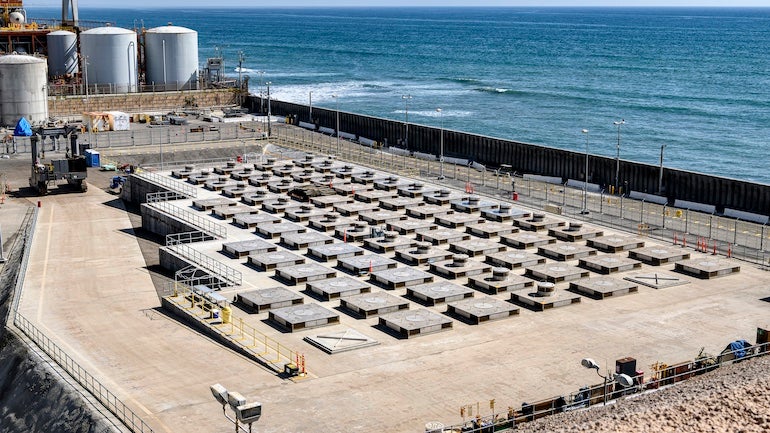
By the end of 2024, the IAEA estimates that more than 400,000 heavy metal tonnes (ktHM) of spent fuel had been discharged from nuclear power plants. Of this, 106 ktHM is in dry storage, and this option for long-term storage is becoming more common, as compared with wet storage.
Most IAEA Member States are still decades away from building permanent stores for spent nuclear fuel, and as a result dry storage systems are likely to be required to operate safely over long periods of time, potentially beyond their original design lifetime. Wet storage has been used for several decades, and the IAEA has said ageing management of these facilities is generally well understood. Utilities opted for dry storage because of its passive safety and many dry stores already have extended licenses for continued operation. The IAEA anticipates that more dry stores will be required for continued use and for periods significantly longer than the 20-40 year original licence period. Now it believes they may be needed for 120 years or more and, as a result, ageing management programmes (AMPs) will be required to verify continued safe operation.
This year the IAEA published “Ageing Management Programmes for Spent Fuel Dry Storage Systems”, the final report of the Coordinated Research Project on Ageing Management Programmes for Spent Fuel Dry Storage Systems. The project aimed to gather national experience in developing and applying methodologies for the implementation of ageing management programmes specifically for dry storage systems. It was based on research efforts carried out by participating Member States between October 2016 and October 2021. It is intended to support states implementing ageing management plans, with examples from different countries and reference cases.
Breaking down the elements of an AMP
With tens of different dry storage designs in use, the IAEA says ageing management programmes should be specifically designed for the storage systems to which they are applied. As some designs are dual purpose casks (DPCs) licensed for both storage and transport, the IAEA Transport Safety Standard Committee (TRANSC) has also started a working group to discuss aging management for transport packages.
The IAEA report lists a variety of the different technologies. It says the first step is to differentiate between casks – which can obtain a type B(U) package approval for transportation – and storage structures, which are not intended to be transported.
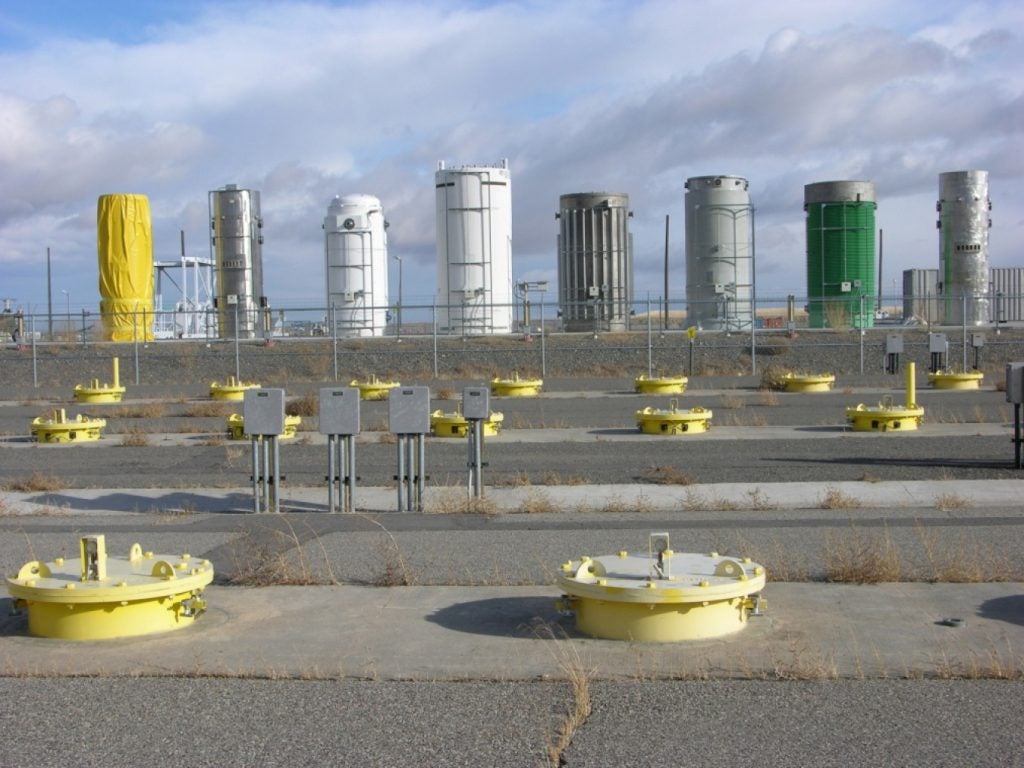
For casks, there are currently two different types based on the cask body material: metal, or concrete with a metal liner. In either type, spent fuel is stored either in canisters or as bare fuel in a basket. For storage structures, the differentiator is equipment and complexity. Spent fuel may be simply held in canisters, whether ventilated or not ventilated. Alternatively, canisters or bare fuel may be held in a storage building (or vault), with additional equipment like cranes. Storage units may have the fuel in either vertical (single or multiple units) or horizontal orientation and may be above or below ground.
The first step in the AMP approach is to identify materials and the environment (e.g., humidity, temperature, salt content) for each in-scope structure, system or component (SSC), referring to the information on which safety assessment and licensing was based. Environments named in the report include: outdoor air, demineralised water, helium, groundwater/soil, sheltered, fully encased or lined, and embedded in concrete, metal or neutron shielding.
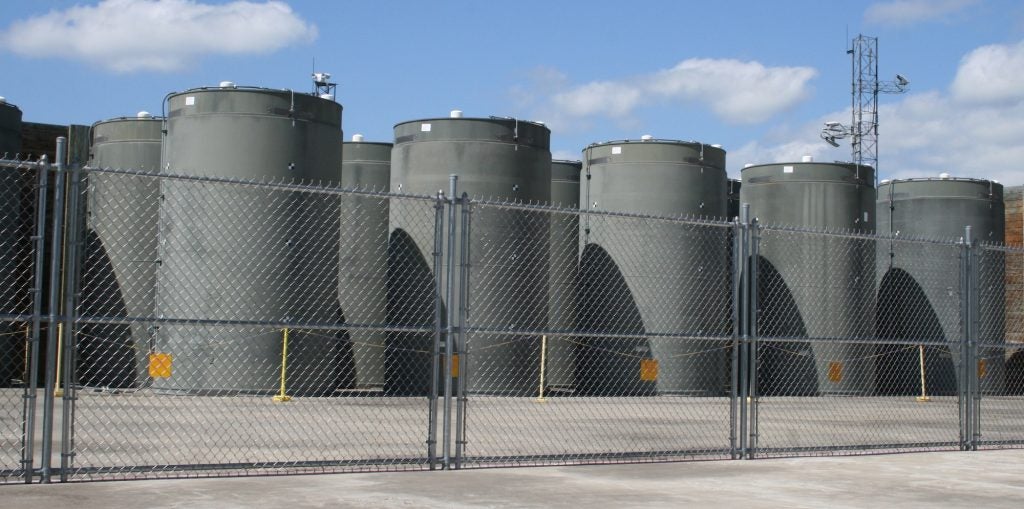
For each, the AMP should identify credible ageing effects and plans for managing them for various components: concrete overpacks and support pads; materials for spent fuel assemblies; and materials for various components in dry cask storage systems. A programme based exclusively on detecting SSC failures is not regarded as an effective AMP. Effective inspection, testing and monitoring methods are needed to detect ageing effects before a structure or system suffers any loss of function or fails.
It is important to know when, where, and how programme data are collected and to justify, the method or technique (such as visual, volumetric, or surface inspection) and frequency with codes and standards referenced.
In an effective performance monitoring programme, the ‘detection of ageing effects’ programme element discusses and establishes the monitoring methods that will be used for performance monitoring. In addition, the ‘detection of ageing effects’ programme element also establishes and justifies the frequency with which these performance monitoring activities will be implemented.
What is ‘important to safety’?
These ‘Important to Safety’ SSCs (and associated subcomponents) ensure that the following safety functions are fulfilled: criticality, shielding, confinement, heat transfer, structural integrity and retrievability. Another way of defining these functions is as:
- Confinement Boundary: Retaining radioactive material under normal, abnormal and accident conditions
- Criticality Control: Maintaining a subcritical configuration under normal, abnormal and accident conditions
- Radiation Shielding: Reducing radiation emitted by the contents under normal, off normal and accident conditions
- Heat Transfer: Removing decay heat under normal conditions and protecting temperature sensitive components such as lead shielding and seals under abnormal and accident conditions
- Structural Support: To maintain the contents in a safe condition during normal, off normal and accident conditions
- Fuel Retrievability: For operations support for example loading, unloading, maintenance, monitoring, or transporting, which if it fails could preclude removing individual or canned fuel assemblies from wet or dry storage or removing a canister loaded with assemblies from a storage cask or overpack or from the storage location.
Operating experience
In the USA alone, there are over 50 different types of dry stores approved by the US NRC for general use. The wide range of canister sizes and concrete overpack designs, mean there are a wide range of potential accessibility issues, such as different annulus gaps and widths, entry pathways, welding processes, materials or weld locations. However, 95% of the global inventory is either bolted cask systems that contain bare fuel, or concrete storage overpacks that contain welded canisters. Bolted cask systems are more common in the USA and welded canisters outside the USA. Bolted cask systems have developed over the last 30–35 years. The report says, “They are established industrial technology and none has been involved in serious incidents or accidents, even loaded casks at Fukushima Daiichi during the accident”.
Regulatory inspections of bolted cask systems are less technically challenging because all external components of bolted casks are accessible to visual inspections. There may be opportunistic inspections of the bottom if the cask is lifted for operational reasons. Inner components are protected by a nitrogen or helium atmosphere with pressure monitoring to detect leakage.
Routine inspections are performed in situ, usually without the need for lifting and handling systems although the cask may be moved to a dedicated area for a more detailed visual inspection every 10 years. The casks are accessible at any time during normal operation so corrosion on the external surfaces is detectable without special inspections. Experience to date finds only signs of wear and tear and locally limited corrosion due to paint damage incurred during handling operations.
Several operational occurrences have been reported of corrosion of trunnion bolts, which may affect safe handling of the cask. It is controlled by inspecting for corrosion and if necessary bolts are replaced and resealed. New casks have a modified design in which all trunnion bolts are protected by a stainless steel ring with sealing, preventing the intake of borated water into the bolt shafts during loading.
The Nuclear Energy Institute tasked the Institute of Nuclear Power Operations (INPO) with establishing a clearinghouse of ageing related information relevant to dry cask storage SSCs. It contains positive information about inspection results that confirm storage integrity along with lessons learned that might require industry-wide corrective action. No significant repair actions have been taken to date after 33 inspection reports.
There are examples of other actions:
In September of 2016, evidence of corrosion was discovered on the carbon steel outer shell of a Holtec HI–STORM 100 overpack at Plant Hatch. The corrosion had occurred behind a radiation placard that had fallen off and it was remediated by sandblasting away rust and repainting the cask. In October 2020, direct and camera inspections of the standardised NUHOMS HSMs and stainless steel canisters at Susquehanna observed chloride deposits on the canister but sampling showed no challenge to safety function
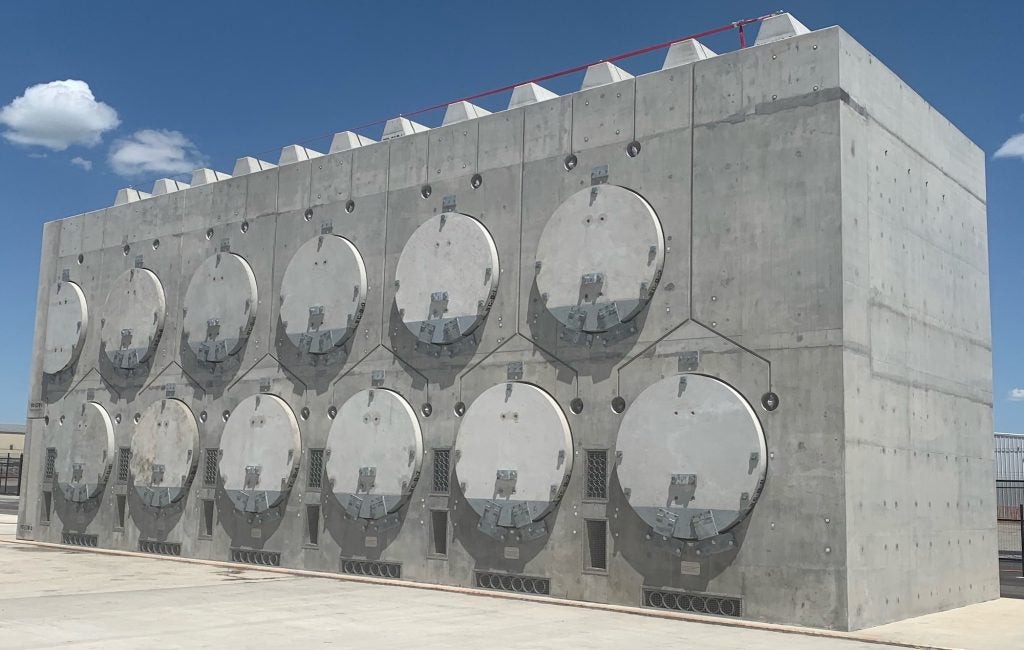
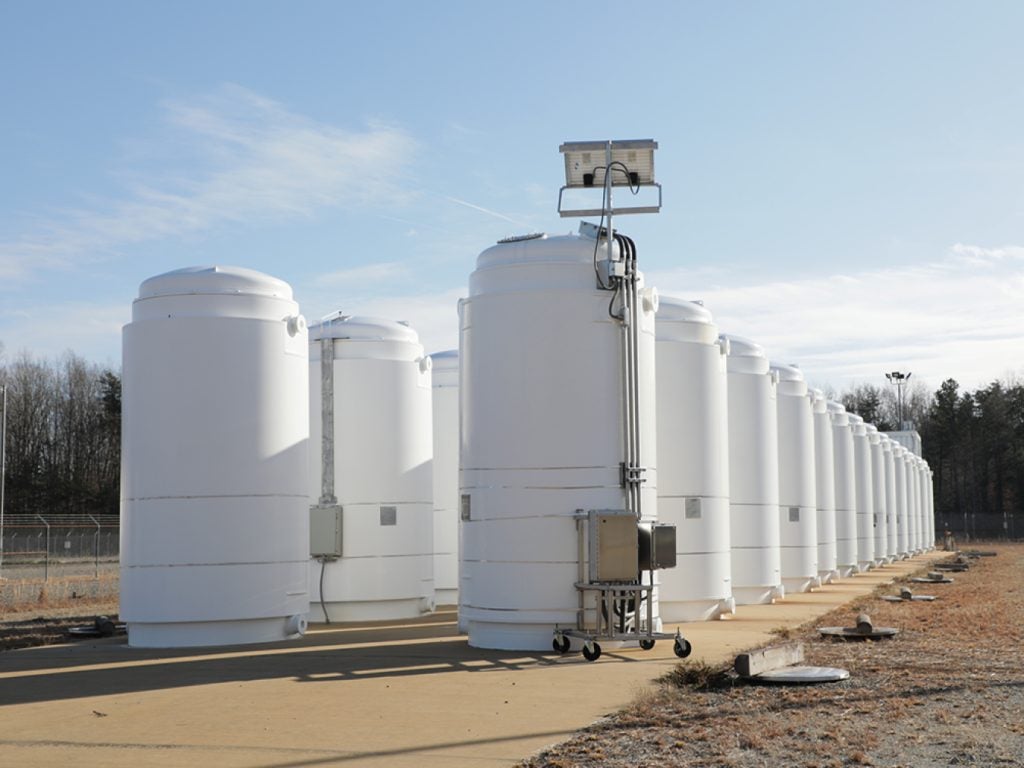
In a typical example of bolted cask ageing management at North Anna the Orano TN–32 dry storage casks were painted white to better facilitate visual inspections and to provide protection from general corrosion.
Extending store lifetimes
A number of dry stores systems have already reached their intended lifetime but a survey of the storage system condition has supported an extended licensed life.
AMPs in many countries provide this type of information, along with ageing management experience from nuclear power plants and the use of staff with power plant experience as storage facility operators. The IAEA report notes that during the period while it was being compiled, there was significant technological development in the field of inspections, evolving from lab scale to routine operation and they are now part of the renewal process for storage licences in the USA. One example is a monitoring method utilising temperature data from different locations of a canister. As the development of sensors gains momentum, they may offer completely new monitoring possibilities
The report concludes, “As the storage durations are continuing to be extended, AMPs will remain an important safety pillow for dry storage systems.”


