
As nuclear energy programmes continue to expand at universities and research institutions, simulation technology is playing an increasingly important role in both engineering education and operational research. High-fidelity reactor simulators provide students and researchers with the ability to explore plant operations, safety systems, and emergency response scenarios in a controlled and repeatable environment.
An example of this approach can be found at the Institute for Energy Technology (IFE) in Norway, where advanced simulation environments support internationally recognised research in human performance and control room design. IFE’s HAMMLAB laboratory is dedicated to studying how professional plant control room operators interact with complex industrial systems, particularly in the nuclear sector.
Integrating high-fidelity reactor simulation with full-scope control room interfaces, HAMMLAB is designed to create a realistic operational environment. Operator workstation displays provide monitoring and control of systems and components while large-screen overview displays provide overall situation awareness at-a-glance, during both normal and emergency operations. Utilities, regulators, and research organisations from more than twenty countries utilise the laboratory to study operator decision-making, evaluate control room technologies, and test advanced human-machine interface concepts. Because these simulations allow scenarios to be repeated under identical conditions – including abnormal events and system failures – researchers can analyse operator performance and system responses in ways that would be impractical or unsafe in operating plants.
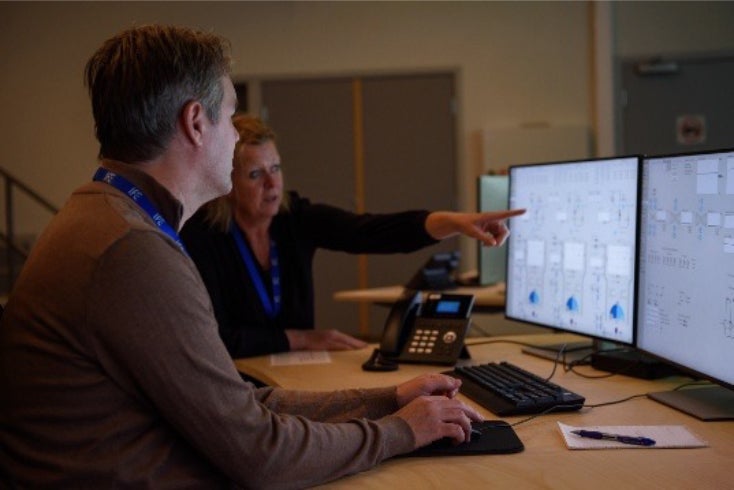
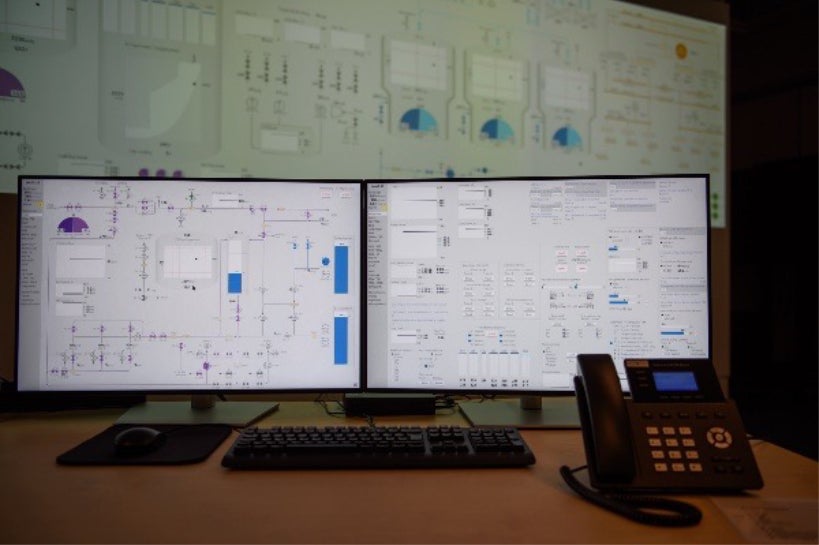
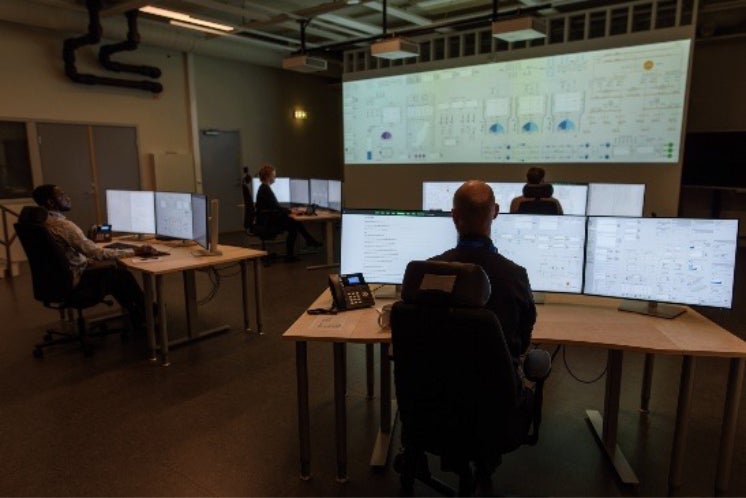
Integrating GSE’s high-fidelity reactor simulation and IFE’s control room HMIs, HAMMLAB is designed to create a realistic operational environment (Source: All images by Gyrd Skråning jr / IFE)
A key component supporting these studies is the use of GSE Solutions’ Generic Pressurized Water Reactor (GPWR) simulator. Developed as part of a broader portfolio of high-fidelity nuclear simulation technologies with decades of deployment across the global nuclear industry, the GPWR models the behaviour of a three-loop pressurised water reactor across its full operational range. By replicating the responses of a nuclear power plant, GPWR platforms provide a realistic environment for exploring reactor physics, control systems, and operational procedures, consistent with the types of tools used in both training and engineering analysis environments. In addition to supporting research, similar simulation environments are increasingly being incorporated into university nuclear engineering programmes. Many institutions are developing reactor simulation laboratories that include control room mock-ups and classroom workstations, allowing students to interact directly with simulated plant systems. This hands-on experience exposes students to operational decision-making and plant behaviour that can be difficult to convey through traditional classroom instruction alone.
Visualisation technologies further enhance the learning and research experience. A compact, state-of-the-art, desktop HMI, virtual control room panels and three-dimensional reactor models enable users to explore plant systems and relationships that are otherwise difficult to observe. These tools help students and researchers “visualise the invisible,” illustrating the interactions between reactor components, coolant systems, and control mechanisms. Such technologies are also frequently used during laboratory tours and public outreach activities to help visitors better understand nuclear plant operation and safety systems.
Universities such as North Carolina State University have incorporated reactor simulation into their nuclear engineering programmes to provide students with exposure to realistic plant operations. Faculty members use the simulation environment not only for instruction but also as a research platform to investigate plant performance, operational strategies, and emerging technologies.
Advances in first-principles modelling and real-time simulation over the past several decades –supported by extensive industry experience in nuclear simulator development – have made it possible to reproduce reactor behaviour with a high degree of fidelity. These developments are enabling new opportunities for collaboration among universities, research laboratories, utilities, and regulatory organisations working to improve nuclear safety and operational performance.
As nuclear technology continues to evolve, high-fidelity simulation environments are becoming an essential component of both engineering education and human factors research. By providing a dynamic and interactive platform for studying complex energy systems, reactor simulators help bridge the gap between theoretical knowledge and real-world operational understanding while supporting the development of the next generation of nuclear professionals.


