California-based energy technology company Deep Isolation has published a new customer case study jointly with Slovenia’s Agency for Radioactive Waste Management (ARAO Agencija za RadioAktivne Odpadke). The case study highlights Deep Isolation’s work supporting Slovenia’s long-term nuclear waste disposal planning and features customer insights into the potential economic and operational benefits of its deep borehole disposal technology.
The study describes Deep Isolation’s engagement with ARAO to evaluate disposal options for used nuclear fuel from Slovenia’s TRIGA II research reactor operated by the Jožef Stefan Institute in Ljubljana. It concludes that co-locating Slovenia’s TRIGA II used fuel within a planned deep borehole repository at the Krško NPP would increase total repository lifecycle costs by less than 0.5%. The study highlights a significant cost contrast between standalone and integrated disposal options.
Developing a separate, dedicated deep borehole facility just for the TRIGA II research reactor’s used fuel is estimated to cost €65.6m ($73.5m), excluding value-added tax and contingencies. Integrating the TRIGA II fuel into the larger repository planned for the Krško NPP would add only a marginal, minimal cost.
Establishing a deep borehole repository requires substantial upfront investments for geological assessments, site characterisation, directional drilling equipment, and baseline safety licensing.
Because the TRIGA II research reactor has a very small waste inventory, consisting of only 84 used fuel elements, all of its waste can fit into a single additional disposal canister. Absorbing one extra canister into the planned infrastructure for Krško’s larger inventory avoids duplicating multi-million euro fixed overhead costs without causing significant safety or scheduling impact.
Since 1966, the research reactor, supplied by US General Atomics, has provided training for operators at the Krsko NPP, supported cutting-edge research, and contributed to advances in medicine, environmental sciences, and some of the world’s largest international scientific projects. As one of the few remaining operational research reactors in Europe, it has become an important global hub. Researchers and students from some of the world’s most prestigious universities use the facility, with research visit slots being booked out months in advance.
“The nuclear waste disposal options study gave us a clear comparison of disposal pathways for TRIGA II spent nuclear fuel. It showed that integrating a small inventory into a repository for the Krško SNF can be done with minimal additional cost, without introducing significant safety or scheduling impacts,” said ARAO CEO Sandi Viršek.
Deep Isolation, established in 2026, is the first company to undertake development of technologies for nuclear waste disposal in deep boreholes. Its technology is designed to leverage proven drilling practices to allow safe isolation of waste deep underground in horizontal, vertical, or slanted borehole repositories. The Universal Canister System is engineered to support integrated management of used fuel and high-level radioactive waste from legacy and advanced reactors across storage, transportation, and eventual disposal.
In January, Deep Isolation launched a full-scale, at-depth deep borehole Commercialisation Pilot for its solution at Cameron, Texas, in collaboration with the Deep Borehole Demonstration Center, Halliburton, Amentum, NAC International, and Occlusion Nuclear Solutions.
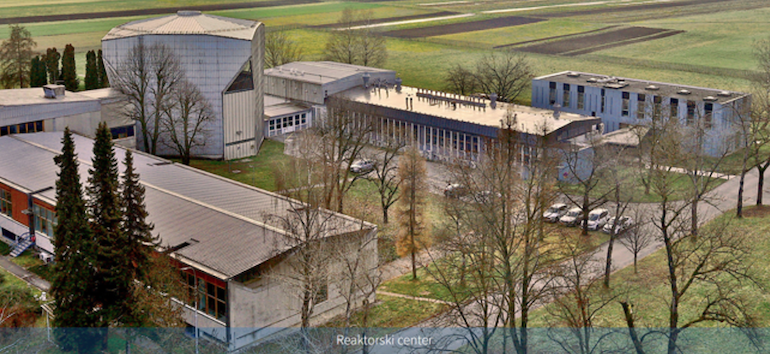
The current used fuel elements from the TRIGA II research reactor are stored on-site at the Jožef Stefan Institute’s Reactor Infrastructure Centre in Brinje. In 1999, Slovenia shipped its entire legacy inventory of 219 used fuel elements back to the US under a Department of Energy take-back programme.
The 84 elements currently at the facility constitute the reactor’s total remaining operational lifetime inventory. They will remain stored in the reactor pools in Brinje until the facility’s scheduled shutdown and decommissioning in 2043. They will be prepared for permanent disposal in the proposed integrated borehole repository.
The Krško NPP is co-owned 50:50 by Slovenia and Croatia and the management and disposal of its radioactive waste are divided between the two countries. Low and intermediate-level waste is currently housed in an interim on-site temporary storage facility within the plant’s perimeter with Slovenia and Croatia have agreed to physically split this waste and manage their 50% shares separately.
However, Slovenia’s ARAO is constructing a permanent near-surface disposal site at Vrbina, adjacent to the Krško plant while Croatia is establishing its own Radioactive Waste Management Centre at Čerkezovac (Trgovska Gora), a former military barracks near the border with Bosnia and Herzegovina.
Used fuel is currently moved from the plant’s indoor reactor pools into an on-site Spent Fuel Dry Storage (SFDS) facility, which became operational in 2021. Unlike the lower-level waste, both countries intend to co-fund a unified permanent Deep Geological Repository (DGR) to handle the used fuel. They have partnered with Deep Isolation to evaluate a deep borehole repository. This would involve drilling narrow, vertical shafts directly into the earth’s stable bedrock to isolate the fuel canisters thousands of feet below the surface.


