
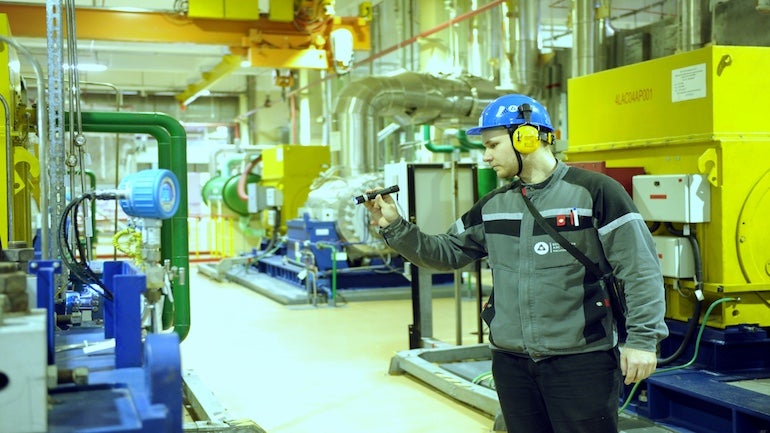
At three of Rusia’s 10 NPPs – Novovoronezh-II, Leningrad-II and Beloyarsk NPP pilot operation of a new domestic predictive analytics system has begun, making it possible to identify potential problems in equipment operation before they occur. The system is based on Russia’s Atommind digital platform, developed by Rosatom’s Fuel Division TVEL. It is designed to detect even the slightest changes in equipment operation as early as possible and predict their further development.
The All-Russian Research Institute for the Operation of Nuclear Power Plants (VNIIAES – Vserossiiskii Nauchno Issledovatelskii Institut po Expluatatsii Atomnikh Elektrostantsii), part of Rosatom’s Electric Power Division.), is the primary contractor behind the analytics platform.
It uses machine learning and neural networks to monitor equipment parameters in real time, identify anomalies in advance, and predict development trends. The system provides not only alarms but also explains the causes of parameter changes, predicts future developments, and provides recommendations on areas requiring attention, with final decisions made by plant specialists.
“An employee at a nuclear power plant receives not just a signal, but full information about which parameters have changed and why, how the situation may develop further, and what special attention is needed,” said Victor Tsaranu, head of the project office for the implementation of digital solutions in the operation of nuclear power plants at nuclear utility Rosenergoatom (part of Rosatom). “All this gives more time for analysis and allows you to plan the necessary actions more precisely.”
According to Artem Golovaty, Director of Information Technology at Rosenergoatom, today it is fundamentally important for a generating company to develop its own industry–specific digital solutions. “Predictive analytics is a good example of how modern technologies can bring very specific benefits to production. The system is able to analyse large amounts of data and identify changes that are difficult for a person to notice at an early stage. At the same time, the decision remains with the specialist, while digital tools provide him with additional information for a more accurate assessment of the situation.”
This is not the first attempt by Rosatom in this field. As early as 2020, Rosenergoatom launched a predictive analytics project and completed trial operation of a prototype system at Novovoronezh-II unit 1 in December 2022. The current pilot operation is an important step toward expanding the system’s application to more units and equipment types. If the pilot is successful, this technology is expected to help nuclear power plants shift from traditional “periodic maintenance” to “condition-based maintenance”, thereby reducing unplanned outages and extending equipment service life.
While pilot operations have been introduced at three stations, it will be extended to others as part of a structured phase-in plan. By the end of 2026, the advanced system is being fully integrated across Novovoronezh-II unit 2 (also known as Novovoronezh 7) as well as units 1&2 at Leningrad-II (also known as Leningrad 5&6).
The system specifically targets modern, high-capacity infrastructure, primarily focusing on Russia’s f VVER-1200 pressurized water reactors and advanced BN fast-neutron units (such as the BN-800 at Beloyarsk NPP).


