
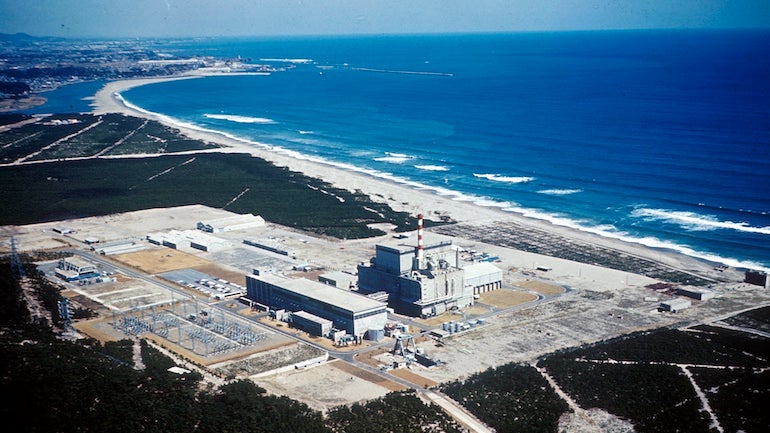
On 30 September 1999 at 10:35am, workers at the Japan Nuclear Fuel Conversion Company facility in Tokaimura were preparing fuel for the experimental Jōyō fast reactor. Six buckets of uranium solution had already been poured into a precipitation tank, a task done many times before. Then came the seventh. A blue flash briefly illuminated the room. There was no explosion, no towering plume, no dramatic images that would envelop the world. However, in that moment, enough uranium had entered the tank for a self-sustaining chain reaction to begin in a vessel that had never been designed to contain one—with more than seven times the allowed limit of uranium having been poured.
The tragedy was almost painfully ordinary. The approved procedure required uranium to be transferred through specially designed equipment, limiting the amount of fissile material that could accumulate in one place. Instead, the workers had gradually adopted a quicker method, pouring the solution directly from stainless-steel buckets. What had begun as an unofficial shortcut had, over time, simply become accepted practice. The consequences were, predictably, devastating. The three operators received estimated doses of approximately 17, 10 and 3 Gray, making the two closest workers among the most heavily irradiated people in history. To place that in perspective, a whole-body dose of 10 Gray is essentially universally fatal. Here, the challenge facing doctors was not simply trying to keep patients alive, but to understand whether modern medicine could repair damage at a cellular level that had rarely been encountered before.
For weeks, the world watched as Japanese clinicians attempted treatments that were as pioneering as they were heartbreaking, including stem-cell transplantation and intensive supportive care. Despite extraordinary efforts, two of the workers ultimately died from progressive multi-organ failure, after the ionising radiation had catastrophically damaged the cellular machinery through which their bodies maintained and repaired themselves. Unlike Chornobyl or Fukushima Daiichi, Tokaimura did not leave behind a contaminated landscape. The criticality was eventually halted after almost 20 hours by draining water from the cooling jacket surrounding the tank and adding boric acid. The surrounding community experienced precautionary evacuations, but long-term environmental consequences were very limited. Tokaimura was, therefore, not a disaster measured in square kilometres, but in human lives.
Yet its legacy reaches far beyond those three workers, their families and friends. In the years that followed, Japan overhauled its approach to nuclear regulation, operator training and criticality safety. Many of those reforms would themselves come under renewed scrutiny after the Fukushima Daiichi accident in 2011. The initiating events could scarcely have been more different—one triggered by a bucket, the other by an earthquake and tsunami. Yet both ultimately exposed the same uncomfortable truth: sophisticated technology is rarely defeated by physics alone. More often, it is defeated when organisations slowly come to believe that yesterday’s success guarantees tomorrow’s safety. The chain reaction at Tokaimura might have begun with that seventh bucket, but the conditions that allowed it had accumulated for years.


