The Nuclear Decommissioning Authority (NDA) estimates that the UK’s total radioactive waste inventory could fill a volume roughly the size of Wembley Stadium. Managing this quantity of waste safely and efficiently is one of the biggest challenges in nuclear decommissioning.
A critical part of that challenge is size reduction, whereby contaminated reactors, equipment, pipes, sections of buildings and beyond are cut down into smaller, manageable pieces. Effective size reduction makes waste easier to package into drums or other containers for transportation and storage. It also ensures valuable capacity within long-term radioactive waste facilities—and ultimately geological disposal such as the planned Geological Disposal Facility (GDF) in the UK—is used as efficiently as possible.
Breaking large components into smaller, manageable, sections can also facilitate more accurate characterisation, segregation and decontamination, enabling materials to be directed to appropriate reuse, recycling, treatment, storage or disposal routes. Clean materials can be separated from contaminated ones while radioactive waste can be classified according to its risk level, from low-level (LLW) to high-level waste (HLW), ensuring it is treated and stored appropriately. This reduces disposal costs and environmental impact, as well as helps protect workers and the public. As the world increasingly places nuclear power at the heart of industrial strategy, developing efficient approaches to size reduction will become even more important as future decommissioning volumes increase.
However, reducing the size of contaminated materials is far from straightforward. Today’s processes rely heavily on skilled operators working in hazardous environments often requiring heavy personal protective equipment (PPE) and even pressurised breathing air suits (PBAS) for extended periods whilst using handheld power tools. Even with extensive safety controls, workers face conventional and radiological risks, including the risk of contamination, manual handling injuries, vibration exposure, working at height and the potential for protective suit breaches.
Robotic size reduction solutions
Reliance on human operators—and the stringent health and safety procedures required for sending people into hazardous environments—means the work can be slow and labour intensive. Further complexity comes from waste products created during decommissioning processes such as radioactive dust, which must then be contained and collected for onward management.
These challenges make size reduction an ideal job for robotics, which could remove people from harm’s way and drive significant efficiency and time savings across nuclear decommissioning.
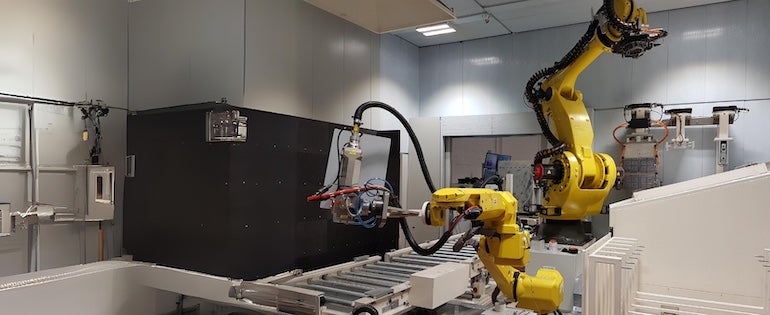
Robotic size reduction solutions are already deployed at Sellafield Ltd. For example, the Skip Size Reduction Facility (SSRF), developed in collaboration with AtkinsRéalis, uses Commercial-Off-The-Shelf (COTS) robotic arms to automatically size reduce and repackage legacy Magnox fuel skips, enabling two skips to be placed within a third. Using two Fanuc industrial robots for laser cutting and remote handling, the facility has successfully processed more than 50 skips to date. The system will prove the concept of size reduction and liquor removal of large contact handleable intermediate-level waste items.
Yet, developing effective robotic solutions is rarely straightforward, particularly if there are unique needs due to the situation or waste. Existing tools and technologies are rarely suitable ‘off the shelf’ meaning new or customised solutions must be developed for the nuclear decommissioning environment.
This is a major focus for the Robotics and AI Collaboration (RAICo)—a partnership between the UK Atomic Energy Authority, the NDA, Sellafield, the University of Manchester and AWE Nuclear Security Technologies—which is accelerating the development and deployment of robotics and AI to address complex challenges in nuclear decommissioning and fusion engineering.
Examples of the scale and complexity of size reduction challenges faced across the nuclear decommissioning sector include reducing the size of legacy gloveboxes, which must be cut up for packaging into 200-litre drums. This is a significant issue for nuclear decommissioning throughout the industry. For example, AWE Nuclear Security Technologies’ Aldermaston site alone has hundreds of gloveboxes in scope for decommissioning, with similar needs also present at Sellafield and other sites.
At AWE Nuclear Security Technologies, gloveboxes are currently decontaminated and size reduced manually inside a modular containment system (MCS) by human operators in PBAS with electrically powered hand tools. The process involves post-operation clean-out, repeated decontamination using peelable paint, dismantling of internals, size reduction of the primary structure and sanding of contaminated base plates. Decommissioning one glovebox is resource-intensive and slow, taking around six to nine months, with the risk to operators of working with power tools at height and the chance of contamination.
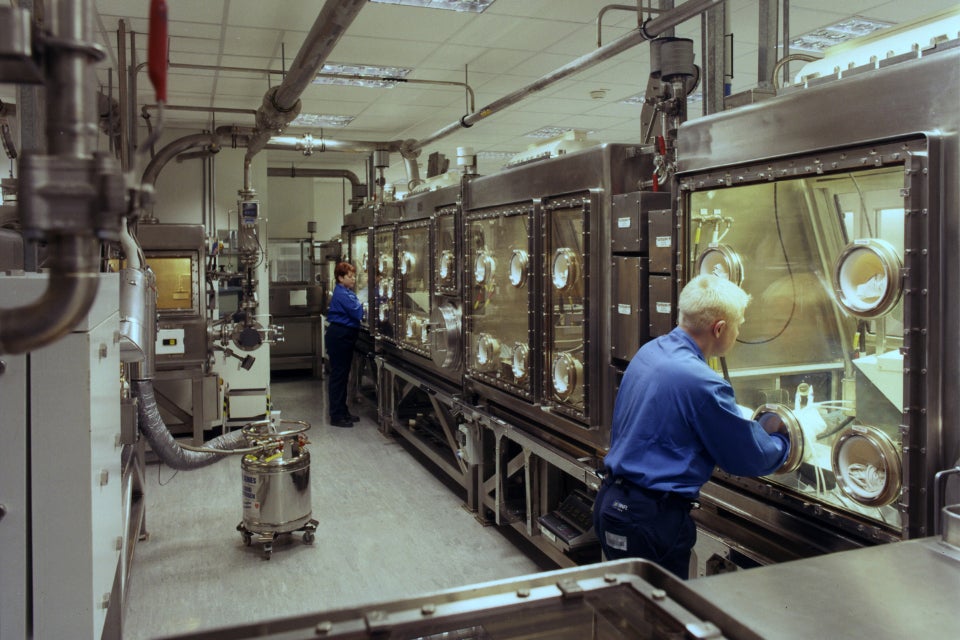
The proposed robotic glovebox decommissioning station would overcome many of these challenges by providing a mobile industrial robot platform able to carry out the cutting tasks currently done by humans through a commercial off-the-shelf automated tool change system. An opportunity has also been identified to incorporate decontamination technology into the station to further reduce the volume of intermediate-level waste (ILW). These technologies could include surface removal techniques such as sanding, media blasting, laser ablation, milling or focused size reduction to remove localised contamination.
The bespoke nature of glovebox decommissioning would require an operator in the loop to control the decommissioning station. The suggestion is that this could be enabled through teleoperation utilising a camera system, enhanced by digital simulation, offline programming and path planning technology to improve the efficiency of operating the robotic system remotely.
When developed, the benefits of the system could be significant, with estimates suggesting it could reduce PBAS-dependent activity by 50%, translating into an equivalent cost saving of £480,000 ($643,000) per glovebox for a six-month operation, while removing many of the risks to human operators. The robotic solution is also intended to expedite glovebox decommissioning by reducing dependency on constrained PBAS teams and allowing multiple operations to take place simultaneously.
Removing the surface of contaminated bricks
Size reduction can also involve shaving away material. Some bulky items—such as walls—are only contaminated at the internal surface layer. Shaving that layer off vastly reduces the amount of waste that needs disposing of. This is the case at the ageing plutonium processing plant at Sellafield, where only approximately 5mm of the internal wall surface needs to be managed as plutonium-contaminated material (PCM).
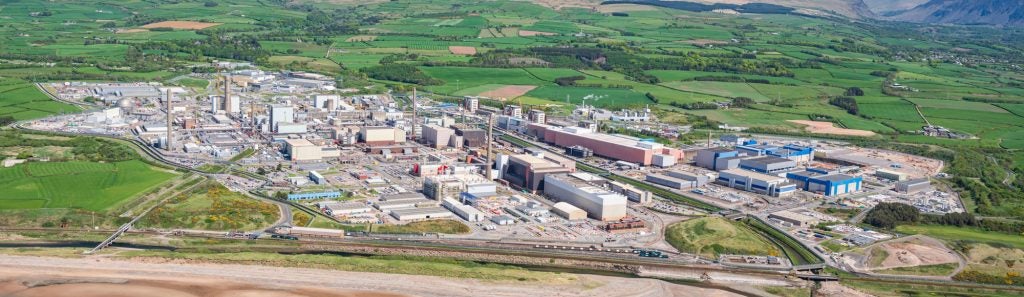
Removing and disposing of this top layer is key to avoid too much building material being classified and stored as PCM potentially creating a waste volume and storage problem and the need for additional waste infrastructure. Without segregation, the whole building would generate 3,000 to 4,000 PCM drums of brick waste, but if the contaminated bricks are decontaminated in situ by shaving approximately 5mm to 10mm from the surface, this drops to 90 to 120 drums.
While ‘shaving’ tools already exist for the concrete walls of spent fuel ponds such as scabbling, lasers and water jets, a customised solution is required for the processing plant’s brick construction, which is aged and with potential structural issues. Any removal process must apply the minimum force and vibration necessary to avoid structural damage so the contaminated surface layer can be captured and packaged as PCM, while leaving the remaining building fabric suitable for management as low active waste.
The proposed solution is to develop a robotic wall and floor scabbling system, remotely operated to avoid humans entering a contaminated area. This would operate alongside a high efficiency vacuum extraction system to capture dust and debris and prevent the spread of contamination.
This project demonstrates the breadth and complexity of the decommissioning challenge and the significance of every use case. Since many sites face similar challenges, a shared robotic solution also offers the opportunity to deliver benefits across the estate, reducing duplication of effort and accelerating deployment.
Graphite block size reduction
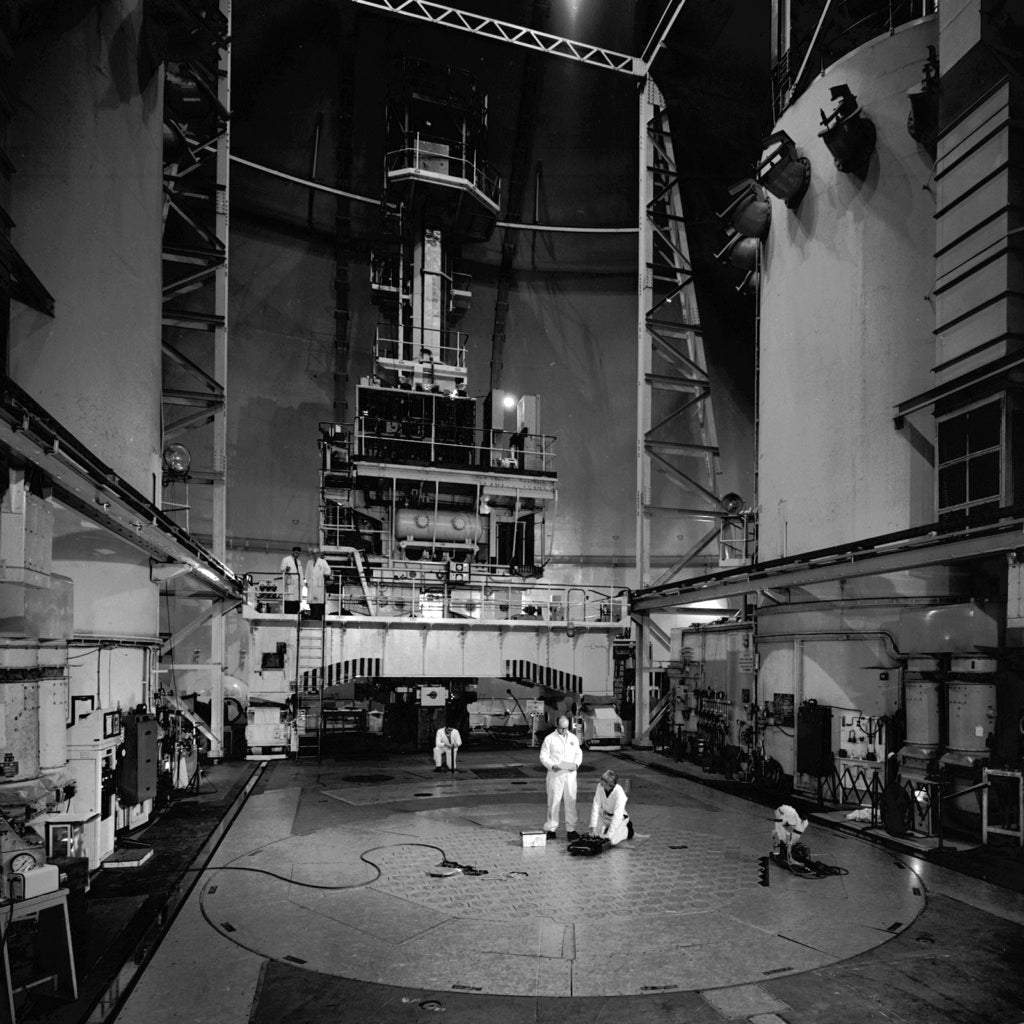
Size reduction of graphite blocks is another critical decommissioning requirement, which is present in graphite-moderated reactors such as the British Experimental Pile Operation (BEPO) reactor at Harwell, which alone contains an estimated 25,000 graphite blocks. Across the UK, total reactor graphite waste is estimated at 85,818t, with a packaged volume equivalent to around 44 Olympic-sized swimming pools.
Graphite blocks vary in size, so there is a need for them to be reduced to achieve an efficient packing density in the correct LLW and ILW waste containers. Safe decommissioning depends on having a practical way to cut and package graphite blocks while controlling dust and contamination. The size of the challenge and the risk involved means exploring robotic solutions that cut them precisely to fit neatly into containers, while minimising and collecting the radioactive dust generated and avoiding human involvement as much as possible.
RAICo’s concept is a remotely operated graphite size reduction and packing cell, combining cutting, dust capture, robotic handling and waste packaging, working through teleoperation and semi-automated control. The solution will ensure reliability, require minimum maintenance and direct operator interaction. It will also form the lowest physical footprint possible as the equipment itself is likely to become contaminated in the size reduction process and require decommissioning at end of life, potentially generating further radioactive waste. Various size reduction methods are under consideration, including band saw cutting, diamond wire cutting, three-point bending and shearing, which all come with pros and cons relating to cost, dust generation, maintenance requirements, efficiency and the risks involved.
While the project is in an early stage, the strategic driver is clear, with the potential to provide an important enabling solution for decommissioning at BEPO Harwell and other Magnox and AGR reactors across the UK.
Scaffold pipe size reduction
Contaminated scaffold pipes, typically three to four metres in length, have also posed a significant issue within nuclear plants, as they cannot be placed in disposal drums without first being reduced in size. As with many other size reduction challenges, nothing is available off-the-shelf to automate this work, with robotic systems struggling to cut harder, denser materials due to load capacity limitations. As a result, the activity is still currently carried out by human operators, exposing them to both radiological and conventional safety risks.
In response, a pioneering Scaffold Pipe Size Reduction Station prototype has been developed. Integrating state-of-the-art robotics with a COTS saw, it is specifically designed to work in tandem with the quadruped robot, Spot, which collects the pipes and loads them into the station. Once loaded, the system operates across two cutting stations: the first reduces full-length scaffold pipes into smaller sections, with the cut size adjustable to suit disposal requirements. Spot then transports the cut pipes to the second station, which cuts them lengthwise, enabling decontamination via potential surface-cleaning techniques such as laser ablation.
The new system enables Spot to transport materials to the static cutting stations, overcoming the load capacity constraints that have traditionally limited quadruped robots in some heavy cutting tasks. Potential uses of the technology extend beyond scaffold pipes, opening new possibilities for remote decommissioning across a range of materials including cables, ducting and I-beams.
Developing the size reduction tools of the future
The scale of the size reduction challenges across the nuclear decommissioning and waste management industry presents a compelling case for robotic solutions that can enhance safety, improve productivity and reduce the time and cost of delivery. Where size reduction tasks are simply too hazardous or impractical to be handled manually, developments in robotics could make tackling these materials achievable for the first time. Investing in solutions specifically designed for decommissioning challenges could also aid wider nuclear ambitions. In the UK, for example, the government plans to increase nuclear generating capacity through projects including Sizewell C; and build one of the world’s first prototype fusion power plants (Spherical Tokamak for Energy Production, STEP) by 2040. Robotic tools developed today in support of decommissioning nuclear legacy sites are likely to ease many of the size reduction challenges involved in decommissioning of the next generation of reactors.
Robotics will not eliminate the complexity of nuclear decommissioning and waste management, but it does have the potential to transform how some of its most challenging tasks are carried out. Size reduction is one of those tasks where huge gains can be made in safety, speed and cost through collaboration. In turn, this could reduce the burden on the taxpayer while, most importantly, protecting the people working on the front line.


