
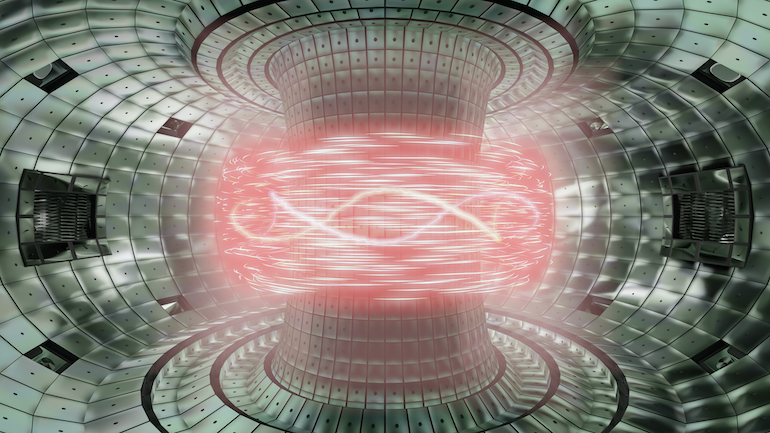
Annual funding for the fusion industry has seen a record funding year, with $4.48 bn raised in the 12 months July 2025 to July 2026, according to The Global Fusion Industry in 2026 Report from the Fusion Industry Association. The fusion sector has reported a total of $14.24 bn since the annual survey began in 2021 and employs over 16 000 people. Now in its sixth year, the report aims to provide a comprehensive view of fusion sector growth and progress towards commercial fusion. This year, the FIA surveyed 56 fusion companies – up from 23 in 2021 – with six new entrants since last year, while three companies withdrew.
This year’s figures include major funding rounds such as Commonwealth Fusion Systems, which raised an $863 m Series B2 round in August 2025; Inertia Enterprises, which raised a $450 m Series A in February 2026; Helion Energy, which raised $465m in June 2026; and Proxima Fusion, which raised $518 m in July 2026.
Also included this year, for the first time, was incoming investment from companies announcing plans to join the public markets. Two companies, TAE Technologies and General Fusion, are preparing to join the Nasdaq exchange in 2026 and both received hundreds of millions of dollars in new investment as part of the process of going public.
This influx is believed to demonstrate increasing confidence in commercial fusion, bringing new investment, along with a different type of scrutiny to the sector.
Market demand for fusion energy is growing, with this year’s report asking about siting and power purchase agreements (PPAs) for the first time. Six companies already have a siting agreement, with another four actively evaluating options. Five companies have a PPA, offtake agreement, or similar commercial commitment, with two more in discussions. These agreements are being accelerated by AI’s energy demands, led by Microsoft and Google offtake deals.
Diverse technology
Fusion companies continue to focus on diverse technological approaches, including magnetic confinement (48%), inertial confinement (21%), magneto-inertial (14%), and several others. The geographical diversity of private fusion is also growing. While American-based companies dominate (28), including all five that have raised over $1 billion, they are joined by companies from 12 other nations, including four each in the UK, Germany, and China, and three each in India, France, and Japan.
What hasn’t changed is the timeline, as the majority of fusion companies (71%) still expect the first fusion plant to deliver commercial electricity by the 2030s. And challenges remain. Despite the leap in annual investment, funding is still the biggest short-term challenge, named by two-thirds of respondents (67%) to FIA’s survey.


