
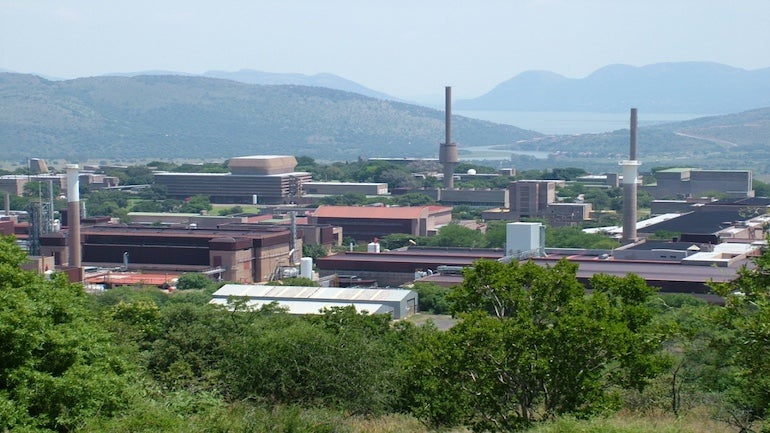
The South African Nuclear Energy Corporation Ltd (Necsa) has launched an Expression of Interest (EOI) process “inviting suitably qualified and experienced organisations, consortia, and technology providers to partner in the development, customisation, demonstration, and deployment of a small modular reactor (SMR) for multiple uses in South Africa in line with Decision 4 in the Integrated Resources Plan (IRP, 2025).”
This initiative aims to identify capable technology partners who can work with Necsa to advance a fit-for-purpose SMR technology for future deployment as envisaged in the IRP, 2025.
Group CEO of Necsa Loyiso Tyabashe said that, through the EOI process, Necsa seeks to gather detailed information on available SMR technologies, their maturity, licensing experience, and deployment readiness. “Our aim is to demonstrate an SMR technology that will produce power, process heat and isotopes,” he said.
“This gives Necsa an opportunity to assess existing capabilities and financing models to fulfil its strategic objectives of positioning South Africa at the forefront of advanced nuclear technologies,” he added. “We aim to participate in the global SMR supply chain and contribute meaningfully to the local nuclear industrialisation plan through building local capabilities for nuclear build programmes.”
Necsa Chairman David Nicholls said the EOI serves as the first stage of a structured selection process. “It prequalifies respondents based on alignment with South Africa’s nuclear policy and experience base, technology readiness for timely deployment, financial strength for long-term delivery, commitment to intellectual property transfer and localisation of skills and technology, and the diversity of applications to maximise socio-economic and industrial benefits.”
The next step will be issuing of a Request for Proposals (RFP), according to Tyabashe. “Future developments in this process will be subject to South Africa’s regulatory framework, including public participation processes, environmental impact assessments, and regulatory approvals,” he noted. Interested parties have until 29 May 2026 to submit their bids.
The SMR initiative is part of a broader ZAR80bn ($4.7bn) plan to rebuild South Africa’s nuclear capacity, which also includes a new 20-30 MW multi-purpose research reactor (MPR) targeted for operation by 2032/33. While the SMR is a pilot for future commercial power and heat, the MPR is the formal, high-flux successor to the ageing Safari-1 reactor at Pelindaba.
The MPR’s primary commercial role is to sustain South Africa’s position as a top global exporter of isotopes such as Molybdenum-99, used in millions of diagnostic tests for cancer and heart disease. The facility will include a Neutron Beam Line Centre (NBLC) to support advanced experiments in material science, biology, and forensics. It will provide services for the mining, agricultural, and industrial sectors, including neutron activation analysis and non-destructive material testing.
The project includes plans for a “cold neutron” source, which would be the first of its kind on the continent, enabling higher-precision research into low-energy molecular structures. A formal Request for Proposals (RFP) is expected to launch in the second quarter of 2026 (April to June). The project is estimated to create roughly 5,000 direct and 26,000 indirect jobs during the construction phase. Necsa prefers a turnkey or EPC (Engineer, Procure & Construct) contract to minimise financial and technical risks.
Safari-1 has been operational since 1965. While its licence was originally set to expire in 2030, Necsa is working with the National Nuclear Regulator (NNR) to extend its life by an additional 10-15 years. The goal is to operate Safari-1 in parallel with the new reactors (MPR and SMRs) once they come online. This prevents a gap in the supply of medical isotopes, ensuring South Africa retains its significant global market share.
Safari-1 currently produces roughly 20% of the world’s medical radioisotopes. The new MPR and SMR projects are designed to inherit and expand this specific commercial legacy. According to Necsa, the success of Safari-1 provides the technical “know-how” and safety record required to attract international partners for the new projects.
In February 2026, a team of experts from the International Atomic Energy Agency (IAEA) completed a five-day safety review of Safari-1. They found the reactor management had a strong commitment to safety but recommended more formalised programmes to address the ageing equipment of the 61-year-old facility.


