
Iodine-129 is a highly mobile and persistent radionuclide which is one of the highest-risk components from spent nuclear fuel (SNF). The isotope has a long half-life of around 16 million years and thus remains a radiological hazard for extended periods. It also accumulates in the human thyroid when ingested. The long-term management and disposal of SNF therefore remains a significant public concern.
A recent study, ‘The iodine-129 paradox in nuclear waste management strategies’ by Massachusetts Institute of Technology (MIT) Assistant Professor Haruko Wainwright, et al. and published in Nature Sustainability, investigates the interplay between waste management strategies and their environmental impacts with a particular focus on SNF disposal and iodine-129.
MIT researchers working with collaborators at US national laboratories studied the release of iodine-129 under three different common SNF disposal scenarios. The research aims to offer insights to optimise the management of SNF and other persistent contaminants.
In the US, for example, nuclear waste containing iodine-129 is scheduled to be disposed of in deep underground repositories, which scientists say will sufficiently isolate it. Meanwhile, across the globe, France recycles its spent nuclear fuel and, the researchers say, the reprocessing plant discharges about 153 kg of iodine-129 each year, which is under the French regulatory limit. France thus routinely releases low-level radioactive effluents containing iodine-129 and other radionuclides into the ocean. The research project aimed to determine the best way to handle spent nuclear fuel by comparing the US approach of disposing spent fuel directly in deep underground repositories, the French approach of dilution and release, and an approach that uses filters to capture iodine-129 and then dispose of them in shallow underground waste repositories.
Environmental exposures explored
For the study, the researchers calculated the release of iodine-129 by combining data from current and former reprocessing sites as well as repository assessment models and simulations. The authors defined the environmental impact as the release of iodine-129 into the biosphere that humans could be exposed to, as well as its concentrations in surface water. They measured this release per the total electrical energy generated by a 1 GW power plant over one year, denoted as kg/GWe.y.
Under the US approach of deep underground disposal with barrier systems, conservatively assuming the barrier canisters fail at 1000 years, the researchers found 2.14 x 10⁻⁸ kg/GWe.y of iodine-129 would be released between 1000 and 1 million years from now.
Conversely, the researchers estimate that 4.51 kg/GWe.y of iodine would be released into the biosphere in the scenario where fuel is reprocessed and the effluents are diluted and released. Under this scenario about 3.3% of the iodine-129 in SNF is captured by gas filters, which are then disposed of in shallow subsurface repositories as low-level radioactive waste. A further 5.2% remains in the waste stream of the reprocessing plant, which is then disposed of as high-level radioactive waste. The results show that the current practice of reprocessing SNF and using an isotropic dilution strategy as used in France releases more than 90% of the iodine-129 found in SNF into the present-day biosphere.
If the waste is recycled with gas filters to directly capture iodine-129, 0.05 kg/GWe.y is released, while 94% is disposed of in low-level disposal sites. For shallow disposal, some kind of human disruption and intrusion is assumed to occur after government or institutional control expires (typically 100-1000 years). That results in a potential release of the disposed amount to the environment after the control period.
The paper cioncludes that the current practice of recycling spent nuclear fuel releases the majority of the iodine into the environment. When the gas filters are used to capture the iodine, the majority of the iodine-129 goes to shallow underground repositories, which could be accidentally released through human intrusion down the line. The direct disposal of spent fuel releases around 1/100,000,000 the amount released through recycling over a million years.
Comparing waste strategies
The researchers also investigated the effect of environmental regulations and technologies related to iodine-129 management, to illuminate the trade-offs associated with different approaches. The US, for example, sets a strict limit on iodine-129 releases and how much can be in drinking water. This limit is currently 5.66 nanograms per litre, the lowest level of any radionuclides.
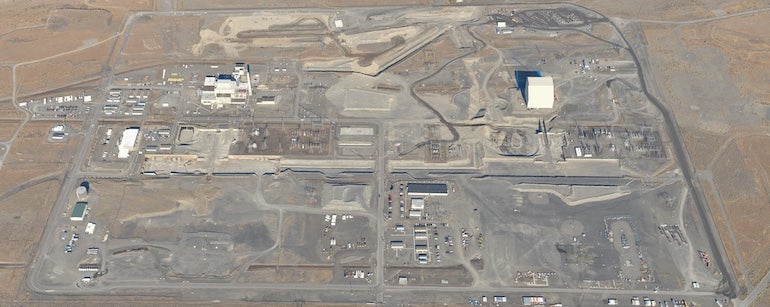
The researchers also quantified the concentration of iodine-129 in different surface waters near current and former fuel reprocessing facilities, including the English Channel and the North Sea near reprocessing plants in France and the UK. They also analysed the Columbia River downstream of a site in Washington state in the US where material for nuclear weapons was produced during the Cold War, and they studied a similar site in South Carolina. The researchers found far higher concentrations of iodine-129 within the South Carolina site, where the low-level radioactive effluents were released far from major rivers and hence resulted in less dilution in the environment.
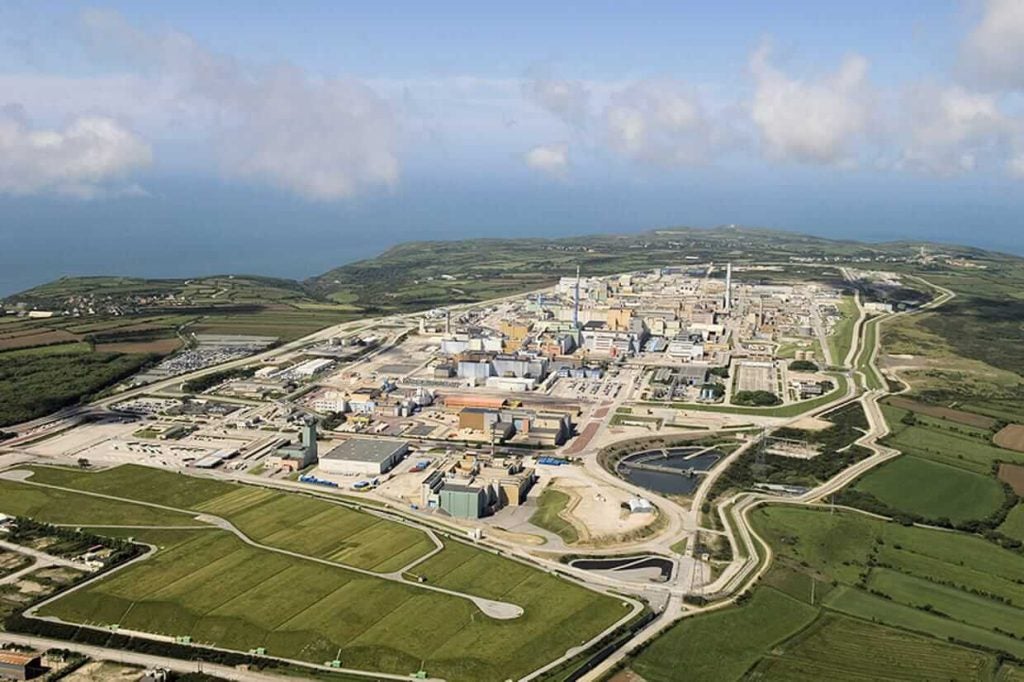
The researchers found low levels of iodine-129 in ocean water around France and the UK’s former reprocessing sites, although the low level of iodine-129 in the water in Europe is not considered to pose health risks.
The data synthesis of surface water concentrations near these four nuclear facilities shows that the release-dilution strategy results in lower concentrations than regulatory standards, while insufficient waste isolation in the past has resulted in locally high concentrations within one site. While the researchers found the US approach of deep underground disposal leads to far less iodine-129 being released, Wainwright notes that the study’s findings should not be used to dissuade countries from recycling nuclear fuel. She says: “We wanted to quantify the environmental factors and the impact of dilution, which in this case affected concentrations more than discharge amounts. Someone might take our results to say dilution still works: It’s reducing the contaminant concentration and spreading it over a large area. On the other hand, in the US, imperfect disposal has led to locally higher surface water concentrations. This provides a cautionary tale that disposal could concentrate contaminants and should be carefully designed to protect local communities.”
Furthermore, the authors note that countries like Japan plan to use increased filtration to capture iodine-129 when they reprocess spent fuel and these filters can be disposed of as low-level waste under existing US regulations. “Since iodine-129 is an internal carcinogen without strong penetrating radiation, shallow underground disposal would be appropriate in line with other hazardous waste,” Wainwright says.
“Putting these pieces together to provide a comprehensive view of Iodine-129 is important. There are scientists that spend their lives trying to clean up iodine-129 at contaminated sites. These scientists are sometimes shocked to learn some countries are releasing so much iodine-129. This work also provides a life-cycle perspective. We’re not just looking at final disposal and solid waste, but also when and where release is happening. It puts all the pieces together,” says Wainwright.
She adds: “The history of environmental protection since the 1960s is shifting from waste dumping and release to isolation. But there are still industries that release waste into the air and water”. Wainwright continues: “The nuclear community has been leading in waste isolation strategies and technologies since the 1950s. These efforts should be further enhanced and accelerated. But at the same time, if someone does not choose nuclear energy because of waste issues, it would encourage other industries with much lower environmental standards.”
In conclusion, the paper says comprehensive waste management strategies, considering not just volume but also mobility, isolation technologies and ultimate fates, are needed for persistent contaminants like iodine-129. Furthermore, the analysis suggests that it is essential to consider effluents more explicitly as a part of the waste stream. In addition, the paper observes that as society moves from dilution to isolation of waste, the potential risks of waste isolation to local regions should be carefully evaluated.


