
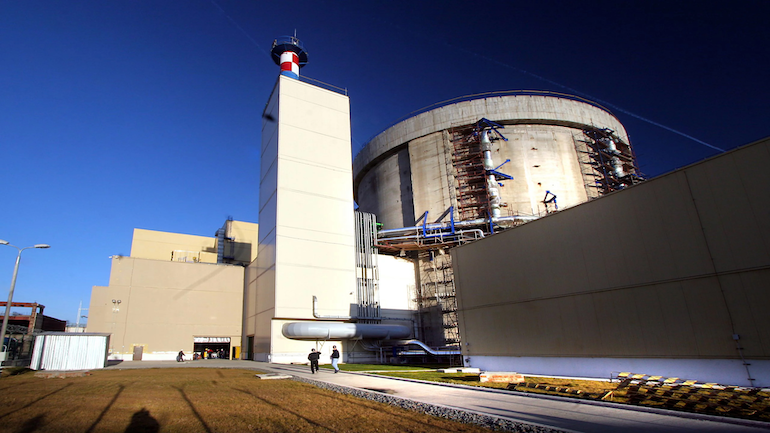
While much attention remains focused on the next generation of reactors and new build, the immediate challenge facing many countries is how to preserve the value of the nuclear assets they already possess. Long-term operation (LTO) is consequently emerging as one of the most effective ways of maintaining secure, low-carbon electricity supplies while avoiding the economic and environmental costs of replacing reliable generating capacity.
At the same time, refurbishment programmes represent an opportunity to preserve industrial capability, sustain highly skilled employment and provide a bridge between today’s operating fleet and tomorrow’s new-build ambitions. The refurbishment of unit 1 at Romania’s Cernavodă nuclear power plant is a prime example of this strategy.
According to operator SN Nuclearelectrica SA, the reactor has produced 149TWh between commissioning and December 2025, contributing roughly 9% of annual national consumption. Now the reactor has entered a new phase of its life cycle with the announcement of a comprehensive refurshment programme. The December 2024 signing of an EPC contract between Nuclearelectrica and an international consortium comprising Candu Energy / AtkinsRéalis, Ansaldo Nucleare, Canadian Commercial Corporation, and KHNP represents the continuation of a relationship that, for Ansaldo Nucleare, began in the late 1970s and before the construction of units 1 and 2 began in 1982 and 1983, respectively.
Ansaldo Nucleare supplied the balance-of-plant systems for the first two units of the five initially planned alongside Canadian reactor vendor Atomic Energy Canada Ltd (AECL), which was responsible for the nuclear island. Since then – and commissioning of unit 1 in 1996 and unit 2 in 2007 – Romania’s nuclear programme has continued to evolve. Construction of unit 3 began in 1984 and unit 4 in 1985. However, construction of these two units was suspended in the early 1990s. Nonetheless, the relationship between Ansaldo, the project partners and the Romanian nuclear sector has remained intact.
Ansaldo Nucleare CEO Daniela Gentile emphasises the significance of the Romanian project, which, she argues, extends well beyond the replacement of ageing equipment. “It is an interesting project for many reasons,” she tells NEi. “Not only for Ansaldo Nucleare, but really as an example of renewing a strategic nuclear power plant through an international consortium leveraging the expertise and long-standing partnership between Canadian, Korean and Italian companies.”
Indeed, rather than presenting the refurbishment of unit 1 as an isolated engineering programme, Gentile describes it as the latest chapter in an industrial relationship measured not in project schedules but in generations. Today, Ansaldo is simultaneously supporting the refurbishment of unit 1 and is also participating in the programme to complete units 3 and 4, creating what amounts to a continuous programme of nuclear development rather than a series of disconnected contracts.
She is equally keen to highlight another aspect of the Romanian programme that she believes often receives less attention than it deserves. While much discussion surrounding nuclear construction inevitably focuses on delays and cost escalation, Cernavodă unit 2 provides an alternative narrative. “It is remarkable that unit 2 was completed almost on time and on budget,” she says. “This is something that should be recognised.”
The station now supplies around one-fifth of Romania’s electricity while also supporting a complete domestic nuclear ecosystem encompassing engineering organisations, maintenance capability, universities and regulatory expertise.
In Gentile’s view, equally important for the longevity of Romania’s nuclear industry has been the operational performance delivered by plant operator Nuclearelectrica. She says: “If Candu and Ansaldo built the Ferrari, the Romanians have proved they know how to drive it.” That experience provides the foundation for the current refurbishment programme, which formally entered detailed engineering, procurement and manufacturing during 2024.
Although often described simply as a life-extension project, the scope is considerably broader than replacing ageing components. Years of assessment have already determined precisely which systems should be replaced, modernised or retained, allowing the engineering teams to move into detailed execution with a clearly defined scope of work. “The assessment has already been completed and approved by the Romanian nuclear regulator,” Gentile explains. “We know exactly what has to be replaced.”
More than replacement
For Ansaldo Nucleare, the balance-of-plant programme at Cernavodă unit 1 includes replacement of multiple systems, including emergency diesel generators, new water pumps, electrical switchgear and a wide range of associated mechanical and electrical equipment. In parallel, Candu Energy – created when SNC-Lavalin (now Atkins Realis) acquired AECL’s commercial reactor division – is leading the refurbishment of the nuclear island and KHNP is taking care of all the construction works. The programme will prepare unit 1 to operate for approximately another 30 years once it returns to service, currently estimated to take place in 2030.
Gentile highlights a careful distinction between the refurbishment project and simple replacement. Nuclear technology has evolved substantially since unit 1 first entered commercial service three decades ago, particularly in terms of digital systems and supporting plant equipment. Consequently, the objective of the refurbishment project at Cernavodă unit 1 is not merely to restore the station to its original condition but to integrate years of technological progress while maintaining the plant’s proven operating characteristics. “Technology has changed considerably since unit 1 entered service,” she says. “Instrumentation and control systems, electrical systems and many components will all benefit from modern technology.”
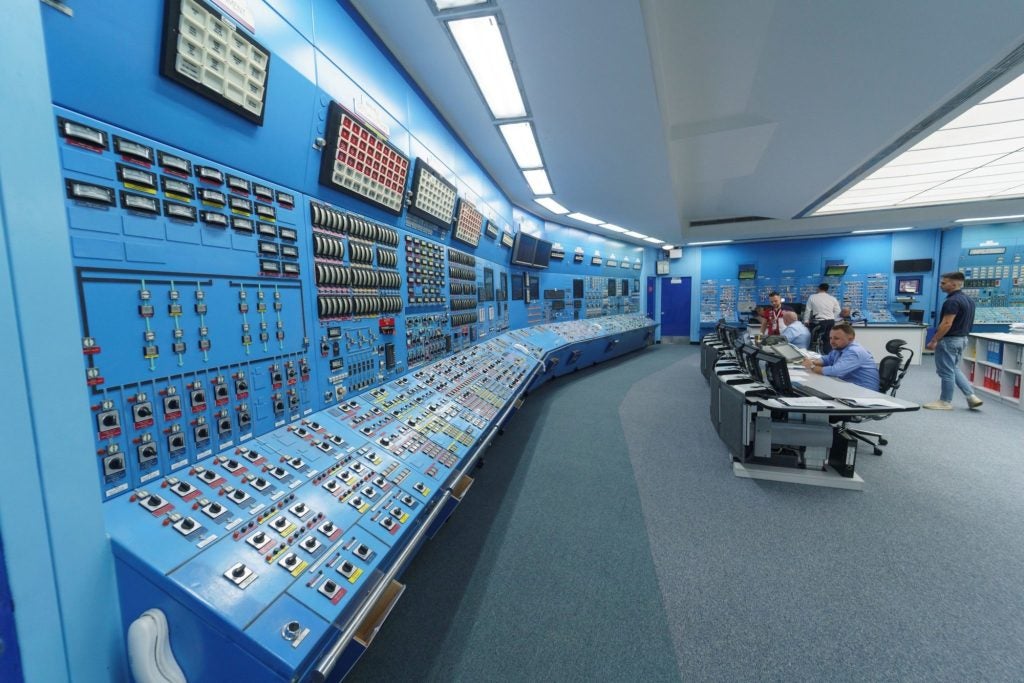
As she observes, the replacement equipment effectively embodies 60 years of technological development, allowing reliability, maintainability and long-term operability to improve without fundamentally altering the plant’s generating capacity. That philosophy reflects one of the defining characteristics of the CANDU reactor design itself, which were conceived with refurbishment as an integral stage of the plant life cycle. For Gentile, that phased approach demonstrates an important point. “Nuclear is a very long journey,” she adds. That long-term perspective also explains why Gentile sees Cernavodă as a blueprint extending far beyond Romania. Across Europe and beyond, many reactors are approaching the end of their initial design life. Average nuclear fleet ages in the US and Europe are already around 40 years, and many units are therefore at the point where governments and utilities must decide whether to retire them or invest in extending their operating lives. At the same time, ambitious new-build programmes are in play in many jurisdictions but remain constrained by lengthy development schedules.
It is against that backdrop that refurbishment projects offer an attractive route to capacity. As Gentile explains: “These projects are extremely important while we wait for new nuclear plants to come online. They allow countries to maintain low-carbon electricity generation instead of relying on fossil fuels.”
The benefits, however, are not limited to preserving electricity production. Every refurbishment programme also sustains engineering capability, supports specialist suppliers and maintains the workforce required for future nuclear construction. Extending the operating life of existing reactors therefore simultaneously extends the life of the entire industrial ecosystem that supports them.
Building nuclear continuity
Considering the challenges facing Europe’s prospective nuclear renaissance, the importance of an industry-wide perspective becomes even more apparent. Gentile does not identify technology as the principal constraint, instead focusing on people as the key issue for realising nuclear ambitions. “The challenge is manpower of every kind,” she explains. “Engineering, construction, welders, quality inspectors, technicians—nuclear requires skilled people throughout the entire supply chain.”
However, rather than waiting for the labour market to respond, Ansaldo has begun investing directly in building a pool for those necessary skills. For example, in 2025, the company launched a specialist nuclear master’s programme in partnership with Italian universities. Expecting to recruit around 20 graduates, the response was overwhelming given Italy is nominally a non-nuclear nation, having shut down its last two reactors in 1990 in the wake of the Chornobyl disaster. However, as Gentile observes: “Italy is the most nuclear of non-nuclear countries”. She notes: “Within one month, we received around 340 applications.”
Significantly, Ansaldo chose to employ 26 of the successful applicants before their training had even begun, demonstrating a willingness to invest in capability years before it becomes productive. “We hired them before starting the master’s course,” Gentile says. “That
is a sign of investment.”
She also emphasised that the industry’s future depends on much more than STEM students and graduate engineers. “The opportunities are not only for engineers. We also need welders, electricians, quality inspectors, technicians; even accountants and lawyers are also essential to successful nuclear programmes,” she says. As she notes, the nuclear industry requires a complete industrial ecosystem rather than isolated pockets of technical excellence.
Gentile believes the same philosophy also applies to the rest of the nuclear supply chain. While governments often announce ambitious nuclear programmes, she argues that suppliers will only invest in new facilities, certification and specialist capabilities if they can see sustained demand extending well beyond individual relatively short-term projects.
“The market requires a long-term vision,” she says, adding: “The need is to really improve the supply chain, to meet all the opportunities that we have abroad and eventually also in Italy, because Italy is facing a possible comeback to nuclear production. It’s something we really want to support.”
For Ansaldo, this is expressed through a pragmatic approach. Recognising that nuclear quality requirements inevitably create barriers to entry, and that certification, qualification and workforce development require years of preparation, Ansaldo is working directly with suppliers to help them understand certification requirements and evaluate the investment needed to enter the nuclear market.
This is where the significance of Cernavodă arguably extends well beyond Romania itself. Alongside unit 1 refurbishment, current plans include a programme to complete units 3 and 4, which is progressing through engineering, with construction currently expected to begin around 2028 following a final investment decision. When all four CANDU units are eventually operating, nuclear energy is expected to provide around 40% of Romania’s electricity. By combining refurbishment, completion of new units, workforce development and supplier investment, it becomes virtually a single long-term programme. As such, it provides a sustained market signal that industrial companies require before committing capital rather than creating peaks and troughs around a single project. “It becomes a continuous programme,” Gentile explains. “The operator will be able to plan refurbishment while new units are coming online.”
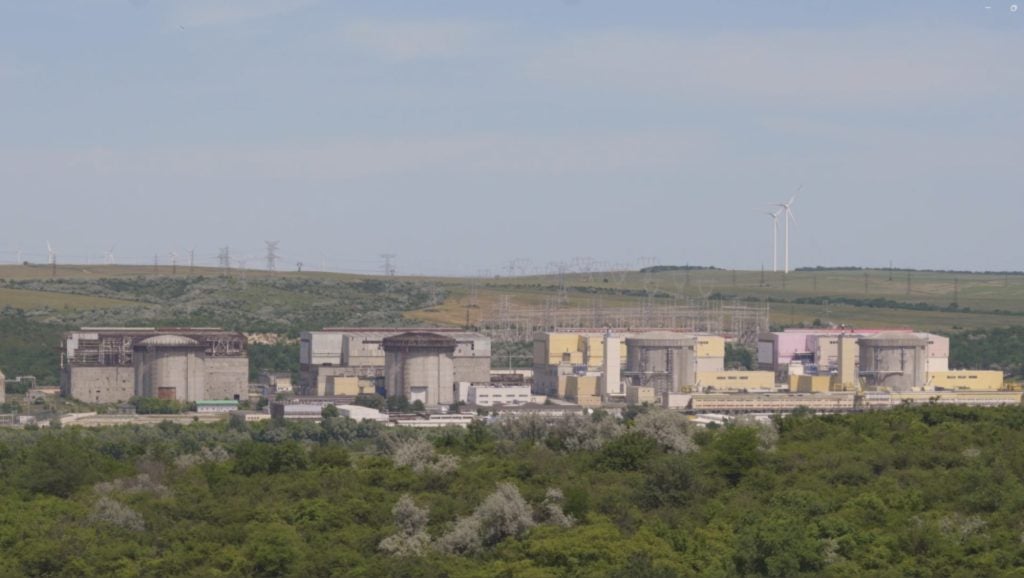
Looking beyond Romania, Ansaldo is already examining additional life-extension opportunities across the continent while maintaining involvement in decommissioning, fusion research, Generation IV reactors and small modular reactor partnerships. That breadth reflects a core strategy to preserve nuclear competencies even during decades when much of Europe reduced nuclear investment.
“It was a wise decision,” Gentile concludes, outlining it as a clear illustration of the industrial model many European governments now hope to recreate.
Now, as Europe enters what many describe as a new nuclear era, the refurbishment of Cernavodă unit 1 demonstrates that the industry will not be secured solely by building new reactors. Preserving knowledge, skills and the supply chain are key to sustaining the confidence needed to invest for the long-term rather than for individual localised projects. That may ultimately prove to be the most valuable contribution emerging from Romania, given that the true success of a refurbishment programme is not necessarily another 30 years of operating life. Perhaps, more importantly, the LTO programme provides the continuity needed to train another generation of engineers, further strengthen the supply chain and lay the foundations for the reactors that follow. For Gentile, that defines the industry itself, as she concludes: “Nuclear is a very long journey.” At Cernavodă, that journey has already lasted more than 50 years. The refurbishment of unit 1 suggests that its most important chapters may still lie ahead.


