
Constructing new nuclear power stations requires enormous investment and lengthy planning, licensing and construction programmes. Extending the operational life of existing facilities, by comparison, can deliver substantial additional generating capacity far more quickly. Many nuclear power plants around the world are already operating beyond their original design life thanks to comprehensive life extension programmes. As electricity demand accelerates, maximising the reliability and availability of these assets is becoming strategically important.
In this context, industrial polymeric repair composites and protective coatings have an increasingly important role to play, helping safeguard critical infrastructure, extend asset service life and support the long-term reliability of nuclear power stations. Ensuring that existing nuclear facilities continue operating safely and efficiently will therefore be just as important as developing the next generation of reactors.
Protecting against erosion and corrosion
Polymeric repair composites and protective coatings are engineered to perform in the demanding industrial environments found within nuclear power facilities operating Pressurised Water Reactors, Pressurised Heavy Water Reactors and Boiling Water Reactors. Applications are typically focused on auxiliary equipment, balance-of-plant infrastructure, civil structures, cooling systems, pipework and water treatment assets. As cold-applied materials, they eliminate the need for hot work permits, improving safety and simplifying maintenance. Their ability to be applied in situ helps minimise downtime and disruption, while their long-term resistance to corrosion, erosion and chemical degradation enables them to protect critical assets in aggressive operating conditions. By extending the service life of equipment and reducing the frequency of repairs, these systems also support more sustainable power plant maintenance strategies.
Case study: Pump repair and protection
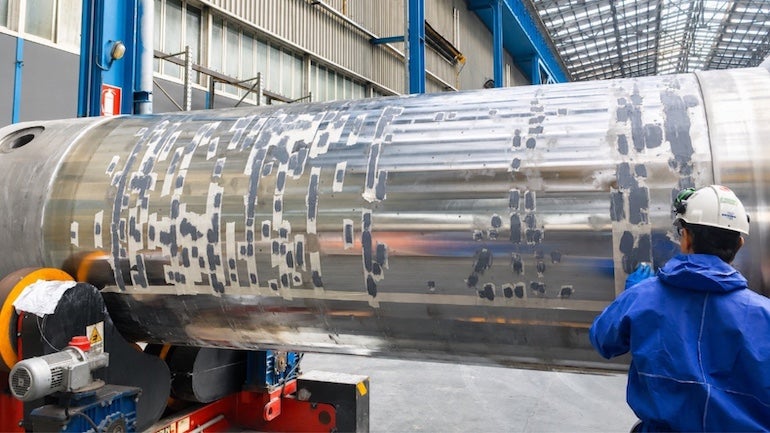
During a planned outage at a nuclear power plant (NPP) in Europe, engineers discovered severe cavitation damage on one of the plant’s main cooling water pump impellers. Replacing the impeller would have extended the outage considerably, while welding risked distorting the component’s hydrodynamic profile. Instead, following an inspection by authorised Belzona Distributor ISEA d.o.o., an alternative solution was found. Describing the repair process, Ivan Strelar, Distributor of ISEA d.o.o., said: “The damaged areas were rebuilt using the epoxy repair composite Belzona 1111 (Super Metal), before the entire impeller was coated with the epoxy coating Belzona 1341 (Supermetalglide) to improve hydraulic efficiency. Areas exposed to the greatest cavitation forces received additional protection using the polyurethane resin Belzona 2141 (ACR-Fluid Elastomer). This solution provided a durable repair and long-term protection against cavitation and erosion, while helping to restore the impeller’s hydraulic performance and extend its operational service life.”
Case study: Pipe leak sealed with composite
At an NPP in France, a cooling-water pipeline had suffered extensive external corrosion, resulting in a live leak at one of the welds. Because the pipeline could not be taken out of service, conventional repair methods such as grit blasting and welding were not practical. Instead, a combination of polymeric systems was chosen to repair and protect the damaged pipework. The specification and application were carried out by Belzona distributor Protecmo. Commenting on the application, Vincent Guerin, distributor at Protecmo, said: “The leak was first sealed using a surface-tolerant epoxy composite, while areas of corrosion damage were rebuilt with a Belzona material specifically designed for application on wet and oil-contaminated surfaces. The pipeline was then reinforced using the Belzona SuperWrap pipe wrapping composite repair system. The repair was completed while the pipeline remained fully operational, eliminating the need for plant downtime. It was also engineered in accordance with ISO 24817, providing a calculated design life of 20 years.”
Cold-applied systems prolonging plant life
Projects such as these illustrate how cold-applied polymeric repair technologies can help nuclear operators safely address corrosion and leaks on critical assets, extending service life while maintaining plant availability. As electricity demand continues to rise, solutions that minimise outages and preserve existing infrastructure are becoming increasingly valuable. Keeping these facilities operating safely, efficiently and reliably will require continued investment in practical engineering solutions that extend asset life, minimise downtime and preserve critical infrastructure.


