
Alphabet’s Google has committed to a €13bn ($15.1bn) investment in Finland – Google’s largest single capital deployment in Europe to date. Planned for execution across 2027 and 2028, this energy infrastructure package includes several core developments.
While Google is heavily expanding its existing data centre campus built inside a former paper mill in the southeastern coastal city of Hamina, the core of the new build-out focuses on three municipalities further north – Kajaani, Muhos and Vaala. Moving data infrastructure to northern Finland allows Google to leverage freezing Arctic temperatures (often dropping well below -10°C in winter) to naturally cool data-hungry AI servers, drastically cutting energy and water consumption.
Furthermore, building in the north uses existing, uncongested power grids near clean energy sources, lowering overall systemic costs. The expanded footprint will power compute-heavy services such as Google’s Gemini chatbot, Search, Maps, and YouTube.
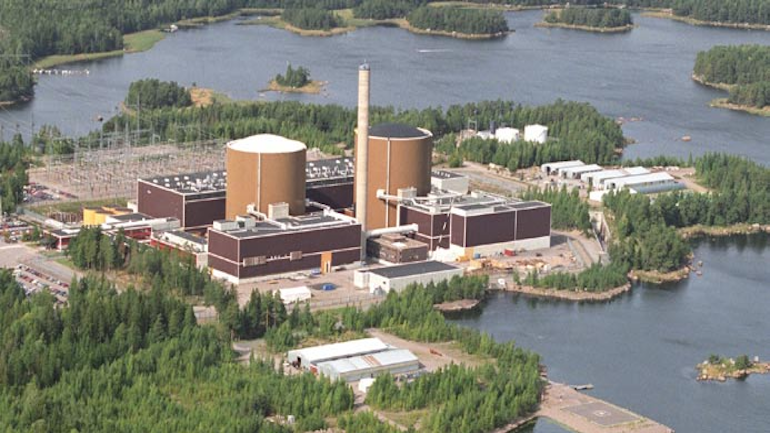
To secure the continuous baseline power required for AI training and inference, Google has signed a 22-year power purchase agreement (PPA) with Finnish state-owned energy utility Fortum. This marks Google’s first nuclear power contract outside the US. Google will buy up to 50% of the energy output from the Loviisa NPP between 2030 and 2049.
Google’s guaranteed revenue underwrites a €1bn maintenance and upgrade programme required to keep the ageing Loviisa reactors operating until 2050. The Loviisa plant comprises two Soviet-designed VVER-440 reactors that began commercial operation in 1977 and 1981. Fortum said keeping the plant online for decades to come will help stabilise electricity prices and support long-term resilience of Finland’s grid.
Without Google’s commitment, the plant, which provides. According to Fortum, to date, approximately 80% of the projects and €700m of the capital expenditure required to keep the power plant operational to 2050 are still pending investment decisions. “The PPA with Google will provide the revenue certainty to continue the investments associated with 100% of the lifetime extension of Loviisa. Furthermore, the agreement is expected to enable a new 10 MW power increase of the plant, in addition to the already planned 38 MW uprate which is expected to be live in 2028.”
Aris Karcanias, Director of Energy, EMEA at Google, said: “We are proud to have called Finland home for the past 15 years, and as we grow our footprint in the country, it’s critical that we work with local energy partners, such as Fortum, to understand what the grid needs and invest in energy solutions that deliver long-term resilience and affordability for all electricity customers.”
He added: “By supporting the lifetime extension of the Loviisa plant, which is located close to our data centre in Hamina where we first put down our roots in Finland, we’re doing our part to keep a critical energy source on the grid, mitigating system impacts from meaningful capacity going offline in the south of the country. As we work with Fortum and other partners to bring new renewable capacity and flexible solutions to the Finnish grid alongside our growth, we hope to develop a blueprint for responsible integration of AI into European energy systems.”
Because the AI infrastructure boom will trigger a significant surge in regional energy usage, Google is pairing the nuclear baseline contract with several localised grid flexibility solutions. Google has locked in contracts with energy providers Valorem and Suomen Hyötytuuli, adding 629 MW of new-to-grid onshore wind capacity. Google is also deploying a contracted 94 MW battery system near its new site in Kajaani, scheduled to go online in late 2027 to stabilise the local network.


