
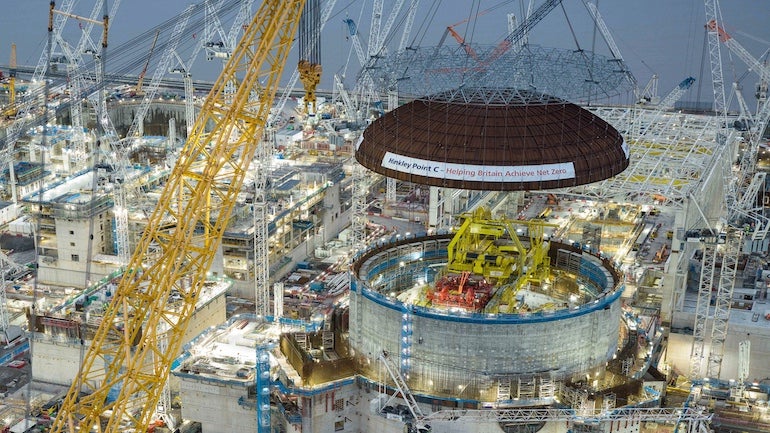
Significant overspend and delays appear to be the norm rather than the exception for nuclear construction projects, certainly in Europe. In France, for example, Flamanville-3 was expected to take five years but took 17, costing four times more than the first estimate. While this example may be an outlier it is not alone. It does seem that, in the western hemisphere at least, the industry struggles to get a grip of costs and schedules.
Addressing this is crucial, as construction costs impact the economic viability and environmental sustainability of nuclear energy. Conversely, the inability to control those costs harms the reputation of the industry. As author Dr. Tim Gregory points out in his book ‘Going Nuclear’: “Delays and price hikes like these make nuclear power look farcical. They shake the confidence of politicians, investors, and citizens, which may scupper our chances of ever reaching net zero.”
The impact of poor planning
Nuclear energy has significant potential to help meet emissions and net zero targets, but to generate the return on investment and a comfortable, comparable net decrease in emissions within a reactor’s 60-year lifetime, smooth project delivery will be critical. Poor planning contributes significantly to cost increases in the construction of nuclear energy plants. Examples include inaccurate budgeting and inadequate assessment of risks specific to nuclear projects.
Nuclear projects are unique for their complexity and the level of regulatory compliance needed. They invariably involve long build times, hundreds of site workers, large machinery, a constant flow of people, materials and equipment in and out of confined spaces, through narrow access points. Manoeuvres involving exceptional loads and radioactive materials require meticulous preparation. Significant documentation is required to ensure adherence to health and safety legislation on site and through the supply chain.
Increasingly, it is recognised that ‘4D’ planning, which integrates the static 3D model of the built asset with its construction schedule, is necessary for improving safety, cost-effectiveness and speed of progress in nuclear construction projects. The most obvious benefit of 4D planning is that, by adding a time dimension, project teams can better visualise how construction will be sequenced. However, the latest 4D tools, powered by artificial intelligence, offer several additional capabilities, beyond visualisation, that are proving fundamental to smooth project planning. Updateable in real-time, and providing transparency about status and costs, a 4D plan supports decision-making as well as being an effective communication tool.
These capabilities include:
- Validation of constructability – a mechanism for determining how to build without errors
- Virtual rehearsals of difficult, hazardous tasks
- Real-time status monitoring and proactively responding to changing circumstances
- Scenario simulation – exploring probable consequences of changes to the plan
- A communications tool for aligning workforces and building trust with external stakeholders
- A central source of truth, integrating further fields of information including cost data and compliance documentation
Validating constructability
A 4D planning tool allows stakeholders to explore how tasks interact in time and space, and thus identify ‘risks’ – clashes of people, materials and equipment – that are invisible in static models.
In a complex project, there are thousands of interface points that cannot be seen on a 3D model or the typical gantt chart. These may show that a wall is required, but not how to access the point of work with large equipment, deliver materials, or complete the task safely and at the appropriate point in the sequence. For example, consider how an import route, blocked by a beam, prevents vehicles or mechanical equipment from accessing a works location. Left undetected, fixing such a problem may require breaking down walls, rebuilding, reordering materials – which also incur administrative, transport and storage costs – and extra worker hours. During pre-construction, the 4D planner will run through the design to spot clashes, find a solution that is suitable for the installation teams, and convey desired changes to designers before work begins. For example, as part of a programme to build a waste retreatment facility at the UK’s Sellafield site, exceeding £1bn (US$XXbn) in value, integrated 4D workflows helped identify and remedy over 160 risks, avoiding 500 days of rework that could have cost £80m (US$XXm).
Virtual rehearsals for risky operations
A common cause of accidents is misunderstandings of risk assessments relating to hazardous activities such as major lifts, tunnel breakthroughs, or works adjacent to live assets. 4D planning tools that can integrate data with gaming software such as Unreal Engine, can enable virtual rehearsals of such hazardous operations. The tasks can be rehearsed in immersive, virtual reality (VR) environments that give site workers a view identical to what they would see when performing them in real life. For instance, a crane operator may learn how to avoid hazards such as losing line of sight of a heavy load – which can be as much as 5,000 tonnes nowadays – or twisting of taglines, to perform a lift safely. Such rehearsals build team confidence and support clear safety briefings.
Status monitoring and proactively responding
At any time in the construction phase, hundreds of tasks will be in progress simultaneously. If there is any delay in updating the model or it cannot adapt to changes in the schedule, the model would become redundant: stakeholders will neither use nor trust it, because it will not reflect reality.
However, its ability to work with multiple data sources means that a 4D plan can reflect the project’s actual status. Here, the 4D planners can play a key role in keeping the schedule up-to-date and reflecting reality on the ground. Data may be collected through laser scans or cameras fitted to safety helmets. Data or footage taken on a site tour can be uploaded and the model may be automatically updated. A frequently updated status in turn allows the development of simple-to-understand dashboard presentations, highlighting discrepancies between what is completed and what was planned at any point in the schedule.
A commonly held myth that drives resistance to change is that digital planning makes project managers ‘redundant’. In fact, with access to reliable, relevant, up-to-date status information, the project manager is in a position to offer a greater strategic value in their role, by spotting discrepancies as they emerge and proactively taking remedial action, rather than retrospectively trying to learn from past mistakes.
Scenario simulation
4D planning allows clients to simulate ‘what-if’ scenarios, to understand knock-on effects of changes or disruption to the plan and optimise emergency escape routes as the project progresses. Scenario simulation requires the power of artificial intelligence (AI) to analyse multiple data sources and, for some applications, the capabilities for creating immersive VR environments and communicating real-time project status also.
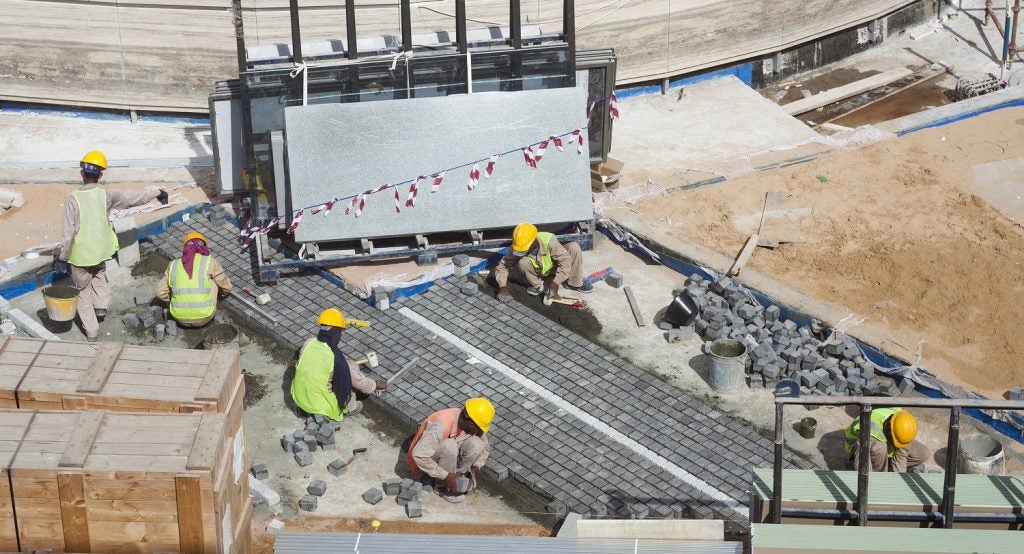
Scenarios may be created for delays, design changes, delivery issues, adverse weather, levels of daylight, to learn about the risks these bring, and what remedial action is needed to minimise them.
An example of the power of 4D planning tools in ‘what if’ scenario modelling may be derived from optimising an emergency escape route for temporary works. Dynamic, immersive AI-powered 4D planning tools are key to maintaining optimised emergency escape routes through the lifecycle of the project.
An updated 4D model tells users where the current point of work is located. In the model, the planner is able to place people at those work faces and trigger a scenario for them to escape to fire assembly points. AI will then predict the safest route from the available openings. That optimal path may then be extracted for use in design tools, and the planner can then think about reconfiguring the site to optimise safety. The planner may also tweak the simulation, by inserting obstacles such as barriers, for a more realistic assessment of the escape route.
Facilitating communication
A 4D plan is an effective communications tool for all stakeholders. Site workers can understand their responsibilities more easily and avoid misinterpretations or duplicated effort. With its ability to communicate various impacts, scopes and their status, 4D planning can be more effective at getting local communities, investors and regulatory bodies onside, which may speed up approvals or financing decisions.
A single repository for cost and compliance
When connected to the cost data, an updatable 4D model can also control budgets through the life of the project. Model changes or programme delays automatically update cost plans, highlight changes in resource profiles, and trigger procurement alerts. This allows commercial teams to see the impact of scope and sequence changes in real time.
4D planning, with integrated cost data, can therefore provide a living forecast of what has happened, what is likely to happen, and how much it will cost – increasing visibility, reducing surprises, and improving financial control.
Additionally, advanced 4D planning solutions can significantly ease compliance with changing regulations by enabling automated verification of digital models against regulatory requirements. This assists with faster, efficient and reliable compliance processes.
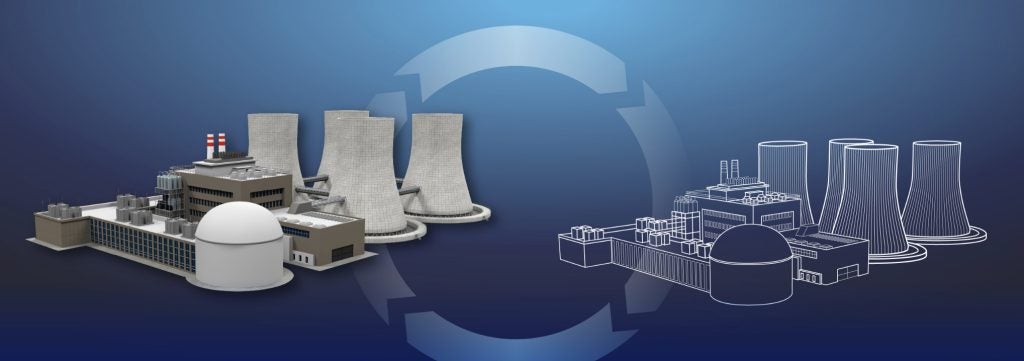
An advanced 4D plan, integrated with documentation and cost data, can also provide the basis for a digital twin. As the building’s ‘live brain’ for its operational life, the digital twin continuously processes information to optimise performance, reduce maintenance costs and emissions, and flag issues before they escalate.
The basis for safe, efficient construction
To deliver best value through the project lifetime, digital planning must be seen as a dynamic, interoperable tool that immediately reflects schedule changes in the visual simulation and that can be shared with multiple stakeholders.
Overall, 4D planning tools provide the basis for efficient, safe and smooth scheduling. They also empower teams and project managers with the foresight to avoid problems, and the ability to forecast schedules and timescales accurately. Transparency and efficiency will be crucial to win support of taxpayers, communities and investors as nuclear energy’s contribution to net zero and energy resilience is debated with intensity. Efficient, safe construction is key to winning that argument, and 4D planning is an important contribution to that aim.


