
US-based ConverDyn has retained an unnamed engineering firm to assess the feasibility of a potential new uranium conversion plant, which the company has tentatively described as Metropolis 2.0. ConverDyn’s Director of Marketing & Sales, Hyder Ramatala, confirmed that a “leading engineering firm” is currently performing this analysis, he declined to identify the specific identity of the engineering firm, which is evaluating the timeline, cost, and potential for modularity in a new conversion facility.
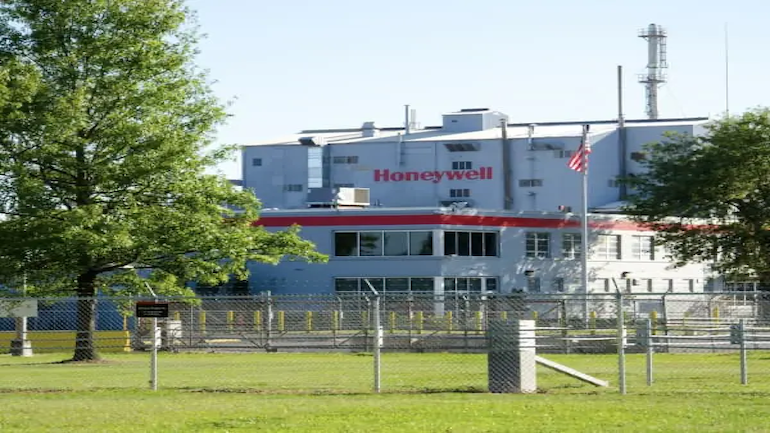
ConverDyn, a partnership between Solstice Advanced Materials and General Atomics, is the exclusive marketing agent for uranium hexafluoride (UF6) produced at the Metropolis Works plant in Illinois, the only domestic US uranium conversion facility. Against a backdrop of renewed global nuclear momentum, demand for uranium conversion services is intensifying.
This “sister plant” would be in addition to existing plans by Solstice Advanced Materials to expand the capacity of the current Metropolis Works. Solstice Advanced Materials has identified a short-term supply gap of about 3,000 tonnes of UF6 – the same volume as the planned expansion of the Metropolis plant. A potential second facility would depend on a “whole multitude of factors”, including demand, questions the engineering firm is expected to address.
Results from this analysis are expected to be shared by the end of 2026. “We’ve retained an engineering firm that will perform an analysis on how long it will take, how much it will cost, even something as simple as whether modularity is possible in the conversion space,” Ramatala said. Investment decisions will remain contingent on market conditions.
He noted that conversion capacity comes online in increments of thousands of tonnes, and investors are unwilling to generate idle capacity. The goal is to ensure new capacity is backed by supporting contracts from enrichers.
“You bring conversion on in thousands of tonnes at a time, but you don’t want to have idle capacity. You don’t want to bring on conversion that enrichers aren’t going to use. And so part of the analysis is just making sure that when we bring this capacity online, it is needed through supporting contracts from the industry.”
Solstice was spun off from General Atomics’ former joint venture partner Honeywell in October 2025, and Ramatala said Solstice’s “interest in growth” had marked a “sea change” for ConverDyn to be able to start evaluating these measures.
Metropolis Works is the only UF6 conversion facility in the United States. Metropolis was built in the 1950s to meet military conversion requirements and began providing UF6 for civilian use in the late 1960s. Original nameplate capacity was up to 15,000 tU per year, but this was reduced to 7000 tU per year in 2017 in light of global demand. Honeywell announced in November 2017 the temporary suspension of UF6 production at Metropolis pending an improvement in business conditions. The decision was a result of “significant challenges” faced by the nuclear industry at that time, including a worldwide oversupply of UF6. The plant was restarted in July 2023.
In February, Solstice Advanced Materials announced that its Metropolis Works is projected to produce over 10 kilotonnes (10 kt) of uranium hexafluoride (UF6) in 2026, which represents about a 20% increase from its planned output in 2024.The Metropolis Works holds a licence from the US Nuclear Regulatory Commission that is valid until 2060.


