
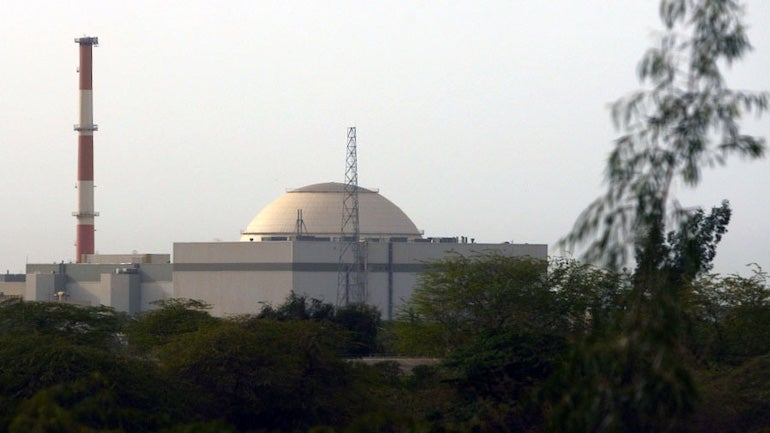
There is a threat to the Bushehr NPP in Iran, Russian Foreign Ministry spokeswoman Maria Zakharova said at a briefing. She said Russia is using various channels to urge Iran to maintain the safety of the nuclear facility, adding that the International Atomic Energy Agency (IAEA) should provide an unbiased assessment of the radiological risks in Iran in the context of the actions taken by the US and Israel. She stressed that it is unacceptable for international organisations to reduce or ignore this threat.
Earlier, Iran recorded explosions in several settlements, including the city of Bushehr. There were two missile strikes. There were also explosions in Qom and Urmia. The US and Israel launched military attacks on Iran on 28 February with the express aim of regime change, despite reportedly successful talks in Geneva mediated by Oman on Iran’s nuclear programme. During the talks, which were still underway at the time of the attack, Iran had agreed to stringent restrictions on its nuclear programme similar to those of the 2015 Joint Comprehensive Plan of Action (JCPOA), which expired in October 2025. Iran responded to the attacks with retaliatory action against Israel and US military bases in the region.
Rosatom Director General Alexey Likhachev, meanwhile, said that work on the construction of new units at the Bushehr NPP had been suspended. He added that 639 Russian employees were still at the site and a phased evacuation would begin soon. He said the company’s specialists have lost contact with the Iranian nuclear industry’s leadership, and it was unclear what was happening to Iran’s nuclear facilities. Likhachev added that, while there is currently no telephone or electronic communication with the Iran’s nuclear industry leaders, Rosatom remained in contact with the NPP’s management. “At the site [of the Bushehr NPP] our contact has remained, and we regularly check with our colleagues and with the leaders of the Iranian construction project,” he said.
Russia is assisting with the construction of units 2&3 at the Bushehr NPP, where the first unit with a 915 MWe VVER reactor has been in operation since 2011. Construction of the Bushehr NPP began in 1975 with a West German company but stopped in 1979 after the start of the Islamic revolution. In 1992, Russia and Iran signed an agreement to continue construction of the station using Russian VVER-1000 technology. Unit 1 was officially transferred to Iran in September 2013. First concrete for unit 2 was poured in 2019 and the core catcher was installed in 2024.
Likhachev added that the NPP is and will remain a priority for Rosatom, and some employees will remain there “in any case”. It is planned to evacuate 150-200 people. He noted that Rosatom is reporting on the situation at Bushehr to Russian President Vladimir Putin, as they will need political support for the possible evacuation of Russian personnel from the plant. Some Rosatom employees are in Tehran and are already leaving the country. “We will evacuate the Bushehr site in stages, as we stop and rest between strikes,” he explained.
On the first day of the Israeli-US military operation against Iran, Rosatom announced the evacuation of employees’ children and excess personnel. Likhachev specified that 94 people were taken out of Iran, the rest of the employees were at the Bushehr NPP site or in the settlement. “A small group of our employees working in Tehran is concentrated at the Russian Embassy. We constantly monitor the situation and assess the risks,” he said.
He told reporters: “Already just kilometres from the protection zone of the station, explosions sound. They are not directed at the station itself, they are directed at military facilities, obviously, which are located there. But the threat is obviously growing as the conflict escalates.”
He stressed that nuclear power facilities cannot be the targets of attacks by the armed forces “under any circumstances”. He noted that “it is important to understand that this is a nuclear facility, and any violation of the integrity of either the reactor or the fuel storage facilities could lead to the contamination of large areas. “The reactor is fully operational, using 72 tonnes of fuel and there is another 210 tonnes of used fuel. This is a huge mass of (…) materials.” Additionally, the unpredictable movement of charged particles combined with atmospheric phenomena poses a significant threat to the entire region. And, of course, all parties to the conflict should prioritise the safety of the nuclear facility, regardless of their political affiliations.”
Russian physicist Andrey Ozharovsky told AIF.Ru that the consequences of an external attack on the NPP could be extremely severe. “Of course, all NPPs are equipped with special protective shells, but they can only help in the event of a natural disaster, such as a hurricane or earthquake. However, they do not protect against projectiles larger than a 150 mm cruise missile, or special concrete-piercing shells. Meanwhile, the operating temperatures of nuclear power plants are around 300 degrees Celsius, while the ambient temperature around the Iranian plant is around 30 degrees Celsius. If the first circuit, the reactor vessel itself, or the pipeline is ruptured, approximately one-quarter of the total volume will be released into the environment. These are the real killers: radioactive iodine, caesium, strontium, and about a hundred other elements.”
He noted that the risk would be reduced it the plant were shut down. “When the plant is in cold shutdown mode, there are no conditions for such an ejection of dangerous radioactive substances into the environment,” he explained. “Of course, such a reactor should never be attacked, but the radius of impact is reduced to a few kilometres. However, an attack on the Bushehr NPP could result in a radioactive cloud covering not only Iran but also neighbouring countries such as Iraq, Saudi Arabia, the United Arab Emirates, and Oman.”
Meanwhile, Iran’s Permanent Representative to the IAEA, Reza Najafi, said that the US and Israel had already launched attacks on a nuclear facility in Natanz. “They have once again attacked Iran’s peaceful nuclear facilities. Their excuse that Iran wants to develop nuclear weapons is simply a big lie,” he said.
Iran’s nuclear chief Mohammad Eslami announced Monday that US and Israeli forces carried out two attacks on the Natanz nuclear facility. In a letter to Grossi, Eslami urged the agency to condemn the strikes and end its inaction regarding attacks on nuclear sites, according to Iran’s ISNA news agency. The complaint represents Iran’s formal diplomatic response to strikes on what it considers sovereign infrastructure protected under international norms.
The Natanz facility located approximately 250 kilometres south of Tehran, houses Iran’s main uranium enrichment capabilities and was one of the three nuclear sites attacked by the US and Israel in June 2025. It has also faced cyberattacks, including the Stuxnet worm widely attributed to US-Israeli operations. Officials said the latest strike damaged the entrance to the site in Isfahan province, but there were no signs of increased radiation.
Addressing a special session of the IAEA Board of Governors Director General Rafael Grossi expressed concern at the military attacks on Iran. He said the IAEA’s Incident and Emergency Centre (IEC) was collecting information and assessing the situation “while bearing in mind limitations in communications caused by the conflict”.
The regional safety monitoring network has been put on alert, he noted. “So far, no elevation of radiation levels above the usual background levels has been detected in countries bordering Iran. Regarding the status of the nuclear installations in Iran, up to now, we have no indication that any of the nuclear installations, including the Bushehr Nuclear Power Plant, the Tehran Research Reactor or other nuclear fuel cycle facilities have been damaged or hit.”
However, “efforts to contact the Iranian nuclear regulatory authorities through the IEC continue, with no response so far. We hope this indispensable channel of communication can be reestablished as soon as possible”.
He pointed out that Iran and many other countries in the region that have been subjected to military attacks have operational NPPs and nuclear research reactors, as well as fuel storage sites. The United Arab Emirates has four operating nuclear reactors; Jordan and Syria have nuclear research reactors. Bahrain, Iraq, Kuwait, Oman, Qatar and Saudi Arabia all use nuclear applications of some sort or the other. “We therefore urge utmost restraint in all military operations”.
“The Agency will continue to monitor the situation, leveraging its unique resources, deep expertise and wide international network. We will report on any radiological consequence of the current military activity.” Commenting on the recent Geneva talks, which he had attended, Grossi noted: “An understanding eluded the parties this time. I am sure we are, quite understandably, feeling a strong sense of frustration.”
He added: “The use of force has been present in international relations since times immemorial. This is a reality. But it is always the least preferred option. I remain convinced that the lasting solution to this long-existing discord lies on the diplomatic table.… Diplomacy is hard, but it is never impossible. Nuclear diplomacy is even harder, but it is never impossible.
While Iran has consistently denied developing nuclear weapons, citing a religious fatwa banning such work, Russian Foreign Minister Sergei Lavrov warned: “This war that is currently being waged against Iran could, first of all, stimulate a movement in favour of creating nuclear weapons, and not only in Iran. Such a movement would immediately emerge in the Arab countries that border Iran. Therefore, paradoxically, the noble goal of starting a war to prevent the proliferation of nuclear weapons could stimulate completely opposite trends,” he told a press conference.


