
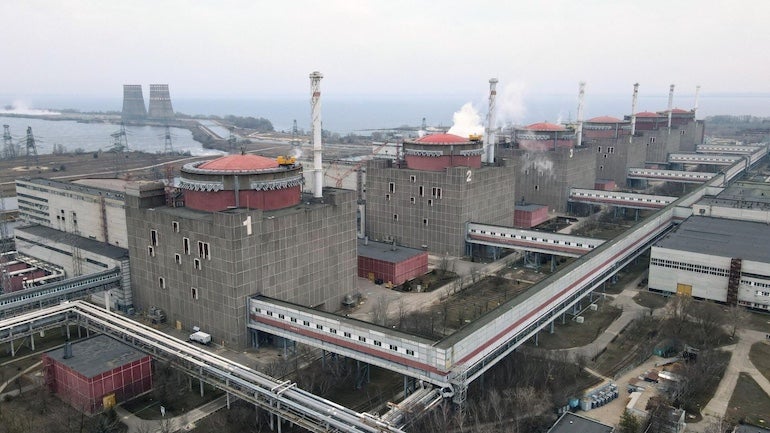
The Zaporizhia Nuclear Power Plant (ZNPP) has adjusted the operating strategy for its emergency diesel generators (EDGs) as diesel fuel supplies at the site continue to decline, according to International Atomic Energy Agency (IAEA) Director General Rafael Mariano Grossi.
Currently the plant is receiving off-site power through its sole remaining power line, the 330 kilovolt (kV) Ferosplavnaya-1 line. However, repeated losses of this connection in recent months have underlined the importance of the site’s EDGs. With diesel fuel reserves running low, the plant has taken steps to reduce fuel consumption in the event of another loss of external power.
“With measures being taken to conserve the remaining diesel fuel onsite and the ZNPP having only one remaining off-site power line, the situation remains highly fragile,” said Grossi. “The availability of diesel fuel remains essential for nuclear safety and security at the ZNPP, particularly as winter approaches. In this context, steps to reduce diesel consumption are necessary. However, the reduced availability of emergency power systems deviates from normal practice and reflects the continued challenges facing the plant.”
With the revised strategy, four EDGs would start automatically in the event of another loss of off-site power, while the remaining units would require manual connection by plant staff. Previously, all available EDGs would have started automatically under such conditions. The site has 20 EDGs, two of which are currently unavailable as a result of ongoing maintenance.
EDGs provide backup electricity needed to maintain the vital safety functions at the ZNPP when external power is unavailable. This includes the pumps that cool the reactors and spent fuel pools, systems that monitor and control plant equipment, equipment that monitors radiation levels, and heating and ventilation systems.
The ZNPP expects to use separate diesel-fired boilers for much of the heating at the plant over winter as well as diesel-fired steam generators for processing radioactive waste, making diesel fuel supply an even more pressing issue.
The IAEA team at the ZNPP reported hearing military activity every day over the past week, often close to the site.
ZNPP Communications Director Evgenia Yashina confirmed to Tass that the algorithm for starting emergency diesel generators had been changed. “The situation regarding the systematic replenishment of diesel fuel reserves has not fundamentally improved,” she said. “Delivering fuel to the plant is still significantly hampered due to … shelling of the access roads. That is why the plant is forced not only to maintain the necessary reserves but also to take additional technical measures to make the most efficient use of the available fuel.”


