
The restart of Holtec International’s Palisades NPP in Covert Township, Michigan, an 800 MWe single-unit pressurised water reactor, has been delayed indefinitely following a fuel-loading incident involving a partially used (radioactive) fuel assembly. The mishap occurred on 30 August as the plant entered Mode 6 to begin refuelling its reactor core. Plant operator Holtec acknowledged that the mechanical grapple had already disengaged when the previously used assembly shifted, leaving it stuck in a tilted position inside the reactor vessel.
Holtec said work continues “to return the plant to safe and reliable operation, including fuel-loading-related activities, plant testing and restoration, and preparations for the next stages of startup”. Plant personnel had responded promptly in accordance with established procedures, and the Nuclear Regulatory Commission (NRC) had been notified. Plant personnel evaluated the incident and determined that it did not trigger the safety reporting requirements under NRC regulations.
A root-cause evaluation has been initiated to determine the cause of the event and identify any resulting corrective actions. In parallel, Holtec’s corporate engineering division has devised and is developing equipment for the fuel retrieval and on-site storage equipment to return the fuel to the used fuel pool. Palisades is also preparing a Licence Amendment Request (LAR) for submission to NRC related to the proposed methodology to retrieve the assembly.
Meanwhile, other restart activities unrelated to the fuel-loading matter continue in parallel. “Progression to subsequent operating modes remains subject to satisfactory resolution of the affected fuel assembly, completion of required testing and modifications, and applicable NRC approvals,” Holtec said.
Following completion of fuel loading and reassembly of the reactor vessel, the plant will prepare to transition to Mode 5, or Cold Shutdown, with the reactor shut down and the reactor coolant system maintained at low temperature and pressure.
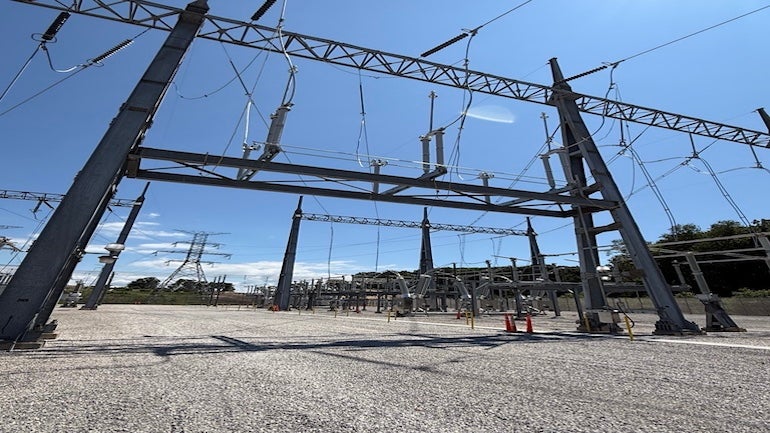
A significant milestone was reached earlier in September when Palisades reconnected to the 345-kV switchyard following extensive restoration work coordinated with ITC, which owns and operates the high-voltage transmission system serving Palisades. The switchyard will ultimately provide the path for electricity generated by Palisades to reach the transmission grid. Final commissioning and testing activities are continuing to return full switchyard functionality to service.
“We remain focused on returning Palisades to safe and reliable operation once all restart work is complete and all applicable federal requirements and industry standards are met,” Holtec stated.
The 50-year-old Palisades NPP is aiming to become the first decommissioned nuclear facility in US history to return to active commercial operation. The repowering effort has been heavily backed by the federal government and Michigan Governor Gretchen Whitmer to meet the rising electricity demands driven by AI-powered data centres.
Palisades ceased operations in May 2022 and was defueled the following month, despite being licensed to operate until March 2031. The unit’s licence was transferred from operator Entergy Nuclear Operations to Holtec Decommissioning International and Holtec Palisades for decommissioning. However, in late 2023, Holtec began the process of obtaining licensing approvals to return the plant to operational status for the remainder of its licensing term.
In September 2024, the Department of Energy (DOE) finalised a $1.52bn loan guarantee to financially anchor the restoration efforts. In August 2025 the Nuclear Regulatory Commission (NRC) reinstated the site’s status from “decommissioning” back to an “operational status” licence, legally allowing the plant to receive fuel. Fresh nuclear fuel assemblies were subsequently delivered to the site and prepared for core loading. Holtec notified NRC in 2024 that it intends to apply for a second, or subsequent, licence renewal for the plant. This would extend the plant’s operating period by a further 20 years, to 2051.
While Holtec has now admitted to the incident, critics have pointed out a lapse in transparency. Holtec did not publicly disclose the mishap or update its timeline until late September—weeks after the incident occurred and only after media inquiries began mounting.
The company maintains that it followed proper protocols by reporting the issue internally NRC at the time, noting that the event did not trigger emergency public reporting thresholds. NRC is continuing to monitor the situation. Spokeswoman Viktoria Mitlyng, told The National that there was “no radiological release” and that “no workers or the public have been affected”.
However, the refuelling issue is the latest in a series of equipment and safety challenges that have continuously pushed back the target timeline. The plant was supposed to be operational at the start of 2026, but safety and equipment issues have resulted in delays. Before the fuel assembly mishap, Holtec had to navigate several documented challenges that slowed progress:
An NRC inspection report released in August 2026 revealed two low-level violations occurring between December 2025 and March 2026. During reactor repairs, sensors detected elevated airborne radioactivity. The plant failed to properly implement radiation protection protocols, neglecting to evacuate or properly warn workers, and failed to accurately evaluate their internal exposure doses.
In October 2025, a serious safety breach occurred when a contractor fell directly into radioactive water inside the reactor cavity. Though the worker was decontaminated and hospitalised without long-term injury, the event triggered internal and regulatory pushback regarding site safety management.
Because the plant sat idle after its 2022 shutdown, getting it re-equipped has taken significantly longer than anticipated. Teams have had to meticulously inspect, overhaul, and repair massive components, such as the partially disassembled main steam turbine, alongside the plant’s electrical, cooling, and safety protection networks
Over the course of its final 15 years of operations, it was dogged by criticism related to safety. A 2012 NRC report warned about the work culture at Palisades, where safety concerns were often dismissed. In 2016, security workers at the reactor were placed on leave from the plant, then owned by Entergy, for failing to properly follow fire prevention protocols.


