
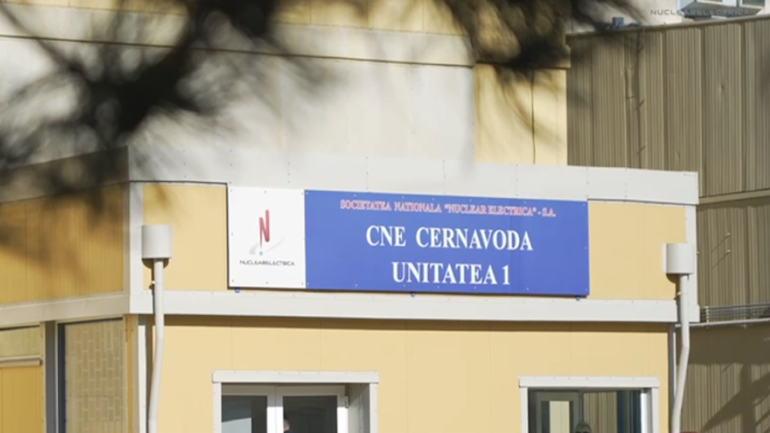
Romania’s SN Nuclearelectrica (SNN) and Nucleoelectrica Argentina Sociedad Anonima (NA-SA) have signed a non-binding memorandum of understanding (MOU) for cooperation in the operation and development of Candu 6 technology.
Romania and Argentina both operate Candu 6 pressurised heavy-water reactors – Romania at the Cernavodă NPP (units 1&2), and Argentina at its Embalse facility. The cooperation focuses on engineering, maintenance, nuclear safety analysis, and major project management.
The parties will explore opportunities in technical aspects relating to Candu 6 technology by drawing on the experience gained over time and their shared desire for development. This would include areas such as reactor life extension; refurbishment and modernisation processes; materials engineering; electrical, mechanical and civil engineering; control processes and instruments; nuclear safety analyses; fluid dynamics; reactor physics; support for the construction of new units; and commissioning experience.
The two companies will establish a Steering Committee responsible for advancing the workflow to support the exploration of opportunities and the further development of cooperation.
“Cooperation in key technical areas between two Candu nuclear operators represents an effective bilateral contribution dedicated to the continuous improvement and development of operations, based on best practices and lessons learnt, as well as modernisation processes, project implementation and the commissioning of new capacity – in effect, a peer review with concrete bilateral benefits in the medium and long term,” said Mihai Gioara, SNN Director of Development and Portfolio Management.
He added: “Both companies have extensive experience in operating Candu 6 technology and both are committed to strengthening the nuclear industry at local and global level, having made a significant contribution over the years. I value this partnership and am convinced that the technical teams of the two companies will achieve notable results.”
NA-SA has already completed refurbishment of the Embalse plant while SNN is currently in the second phase of the refurbishment of unit 1 at Cernavodă and in the second phase of implementing the expansion project for units 3&4. SNN said collaboration between the two companies and the exchange of expertise represent a tangible advantage in the implementation of the Cernavodă refurbishment. SNN intends to leverage NA-SA’s direct experience as it prepares for its own 30-year lifetime extension project for Cernavodă 1.
The refurbishment of unit 1 at Cernavodă is structured across a three-phase timeline. The project is designed to extend the 706 MWe reactor’s operational lifespan by an additional 30 years (until 2060). The structural timeline for the project spans from initial planning to expected grid reconnection.
Phase 1 from December 2017 to February 2022 has been completed. SNN identified the exact technical scope, completed necessary system analyses, and drafted the initial feasibility study. The final investment decision was officially approved by shareholders in February 2022.
Phase 2 (2022 to late 2027) is now underway. In December 2024, SNN signed a major €1.9bn ($2.2bn) Engineering, Procurement & Construction (EPC) contract with an international consortium consisting of Ansaldo Nucleare, Candu Energy (AtkinsRéalis), and KHNP. In September 2025, civil construction works began on site to build the supporting facility infrastructure required to manage the refurbishment. SNN is procuring long-lead reactor components and completing technical execution and regulatory documentation.
Phase 3, reactor shutdown & core refurbishment is scheduled for late 2027-2029. Unit 1 will be completely powered down to begin full-scale field execution. The core workload involves a comprehensive retubing of the reactor, which requires removing and replacing all fuel channels, calandria tubes, and feeder assemblies that reach their technical end-of-life in 2027. Following rigorous testing and recommissioning at the end of Phase 3, unit 1 is scheduled to return to full commercial operation in 2030, securing roughly 10% of Romania’s national electricity supply for another three decades.
The total cost for the refurbishment of Cernavodă 1 is estimated at approximately €1.9bn. To cover this expense, SNN uses a diversified funding approach combining its own corporate equity with international syndicated loans, multilateral funding, and state aid.
In September 2025, Nuclearelectrica secured a €540m financing contract to fund the infrastructure preparation and preliminary engineering works (Phase 2). This was arranged through a large banking syndicate led by JP Morgan SE and includes prominent regional and global institutions such as Banca Comercială Română, Banca Transilvania, BRD Groupe Société Générale, ING Bank, and UniCredit. In July, the European Investment Bank (EIB) approved a historic €800m for the project.
The Romanian government notified the European Commission (EC) of its intention to provide direct state financial support for the refurbishment. In April, the EC opened an in-depth investigation to ensure the proposed package complies with EU rules. The requested package comprises a €600m direct public grant; state-backed guarantees covering the international commercial loans; and a 30-year Contract for Difference mechanism to ensure a stable, predictable revenue stream for the plant’s generation once it returns to service.
Separately SNN also finalised an €80m facility with the same JP Morgan-led syndicate to fund the preliminary Limited Notice to Proceed phase for building Cernavodă 3&4. Additionally, Canada’s export credit agency has committed up to €1.8bn in export financing to support the eventual build-out of the two new reactors.


