
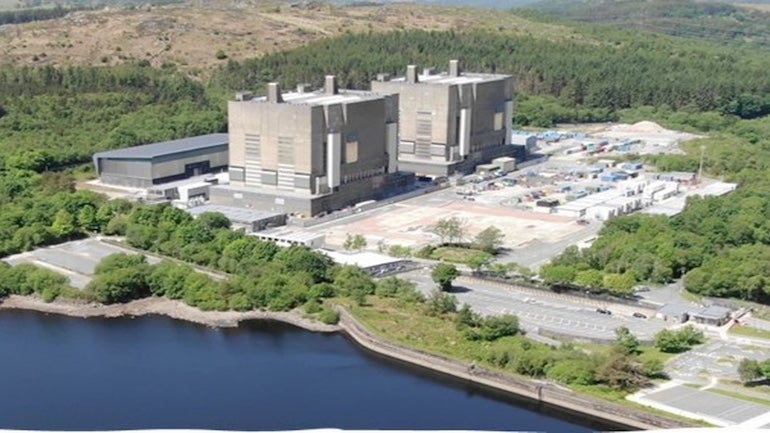
The Higher Activity Waste (HAW) programme at the Trawsfynydd Nuclear Power Station in Gwynedd, North Wales, has officially been completed, marking a turning point in its decommissioning history. Nuclear Restoration Services (NRS), a subsidiary of the UK Nuclear Decommissioning Authority (NDA), has successfully retired the site’s highest radiological risks and paved the way for physical structural dismantling.
The Higher Activity Waste (HAW) programme at Trawsfynydd power station has been successfully completed following two decades of innovation, teamwork, and commitment. Built in the early 1960s, Trawsfynydd produced electricity until 1991. The HAW programme specifically targeted intermediate-level waste, a mid-range category of radioactive waste that is more active than everyday low-level waste but less hazardous than high-level waste.
The project involved retrieving legacy material, processing it safely, and placing it into secure, long-term storage on site. Nearly 2,300 individual waste packages were completed in total, representing a major delivery milestone and the removal of the site’s primary hazards. The programme focused on intermediate-level waste, which was the highest waste that remained on site.
Rob Fletcher, CEO at Nuclear Restoration Services (NRS), said the completion of the programme marks a turning point for the site. “This is not just the end of a major programme, it is the end of an era. Completing this work safely and successfully has allowed Trawsfynydd to move into its next phase of delivery, reducing the height of the reactors by almost half. This will create the most noticeable change to the landscape in decades.”
Tom Williams, NRS Trawsfynydd Site Director said bringing the HAW programme to a close is a remarkable achievement for everyone at Trawsfynydd. “Its completion represents a key delivery milestone in our decommissioning mission; one we can look back on with pride whilst also looking forward with excitement to the start of our new major projects.”
The final waste package has now been transferred into storage, bringing the long‑running campaign to a close. During the campaign, teams developed practical and innovative ways of working to safely retrieve the waste. This included using a robotic arm to remove material from deep storage areas and specialist vacuum equipment to collect fine dust and small fragments. Learning from this work was shared with other sites across the country, helping to improve efficiency, reduce costs and support delivery across the wider decommissioning programme.
Clive Nixon, the NDA’s Chief Nuclear Strategy Officer, noted: “This milestone demonstrates the significant progress we are making in delivering on our mission, set on behalf of government, to safely, securely and cost effectively clean up the UK’s earliest nuclear sites, prioritising the reduction of the highest hazards and risks while protecting people, communities and the environment. We look forward to the next phase of work, which will see the height of the reactors reduced, taking a big step towards their dismantling, as we progressively deliver on our mission to decommission the site.”
It was announced in October 2025 that Costain had been appointed as principal contractor to reduce the height of the reactor buildings from around 54m to 29m. The £70m ($94m) project is expected to take up to four years. At its peak, Costain is expected to employ more than 100 people to deliver the programme.


