
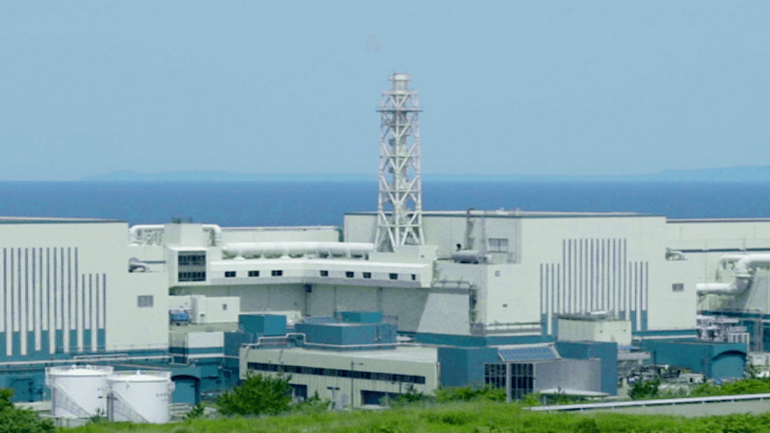
Tokyo Electric Power Company Holdings (Tepco) restarted unit 6 at the Kashiwazaki-Kariwa NPP in Niigata Prefecture despite local opposition after receiving approval from the Nuclear Regulation Authority (NRA). Despite a survey showing that residents were split over the resumption, Niigata Governor Hideyo Hanazumi in November 2025 approved restart of the plant and the prefectural assembly gave its approval in December.
Hanazumi had been asked by the central government to greenlight the resumption to ensure a stable electricity supply and to revamp Tepco’s businesses, which had been struggling since the 2011 earthquake and tsunami led to the melt down of three reactors at its Fukushima Daiichi NPP. The company, which faces huge compensation costs and other expenses related to the 2011 accident, believes that restarting the Kashiwazaki-Kariwa reactors will increase revenues, which can be used to compensate those affected by the Fukushima accident, while lowering utility costs. Many residents still cannot return home due to high radiation levels.
At the seven-unit Kashiwazaki-Kariwa complex, Tepco decided to prioritise restarting unit 6, while it is considering permanent closure of units 1&2. The restart of Kashiwazaki-Kariwa 6 was delayed by a day due to an alarm malfunction during a test operation. The alarm failed during the test removal of a control rod. The test involved extracting one of the 205 control rods in the reactor when it is not in operation. Taking out a second rod should have triggered an alarm, but failed to do so. Tepco said the withdrawal test was suspended, “and the withdrawn control rod was returned to its fully inserted position”.
Following an investigation, Tepco explained: “We discovered an error in the settings for the second control rod withdrawal prevention function. Therefore, we corrected the settings and confirmed that an alarm indicating the prevention function was working was sounded. Therefore, we determined that the reactor had recovered from the deviation from operational limits…. We are now able to check the operation of all control rods. Going forward, we will confirm that alarms are sounding properly for all control rods.”
Although Kashiwazaki-Kariwa, unlike Fukushima, was unaffected by the March 2011 earthquake and tsunami all seven of the plant’s reactors had already been offline for two to three years following the earlier 2007 Niigata-Chuetsu earthquake, which caused damage to the site. Work has since been carried out to improve the plant’s earthquake resistance. Tepco applied for NRA approval of its design and construction plan for Kashiwazaki-Kariwa units 6&7 (1356 MWe advanced boiling water reactors) in September 2013.
Tepco submitted information on safety upgrades across the site and at those units, which began commercial operation in 1996 and 1997 and were the first Japanese boiling water reactors to be considered for restart. NRA cleared safety screenings for the two units in 2017 but security breaches and delays in completing safety upgrades caused delays.
Fuel assemblies were loaded into unit 7 in April 2024 in preparation for its restart. However, as the unit cannot be restarted before completion of the antiterrorism facility, which is scheduled for August 2029, the fuel was removed in September. Tepco then prioritised restarting unit 6, where fuel loading was completed in June 2025. The company has until September 2029 to implement similar anti-terrorism safety measures at unit 6, but was authorised to operate until then, pending local approval.
The restart follows renewed safety concerns over NPP safety after Chubu Electric Power Company was found to have manipulated seismic ground-motion data when establishing earthquake-resistant standards for the Hamaoka plant in Shizuoka Prefecture causing NRA to cancel the screening process or restart.
The last time Tepco operated a nuclear plant was in March 2012 when Kashiwazaki-Kariwa 6 was taken offline for a periodic inspection but remained closed due to the need to meet the stricter post Fukushima safety regulations. Because of the 14-year hiatus, Tepco now lacks experienced personnel. The utility said about 60% of those scheduled to operate Kashiwazaki-Kariwa 6&7 have no experience. However, the workers have gone through simulation exercises at the Kashiwazaki-Kariwa site as well as training at other NPPs.
The resumption of Kashiwazaki-Kariwa 6 is the 15th restart since all 54 of Japan’s nuclear power reactors were closed in the wake of the Fukushima accident. Following the permanent closure of some units, Japan now has 33 operable reactors. Most of the restarted units are pressurised water reactors
(PWRs) as boiling water reactors (BWRs), like those at Fukushima require more complex upgrades to satisfy NRA requirements. The PWR units which have restarted operation include: Kansai Electric Power Co’s Takahama 1-4, Ohi 3&4 and Mihama 3; Kyushu Electric’s Sendai 1&2 and Genkai-3&4; and Shikoku Electric’s Ikata 3. Two BWRs restarted in 2024: Tohoku Electric’s Onagawa 2 and Chugoku Electric’s Shimane-2.
Before 2011, nuclear power accounted for nearly 30% of Japan’s electricity with plans to increase that to 50% by 2030. Its 2025 energy plan targets a 20% nuclear share by 2040. Despite its decreasing population, Japan predicts growing electricity demand from AI data centres.


