
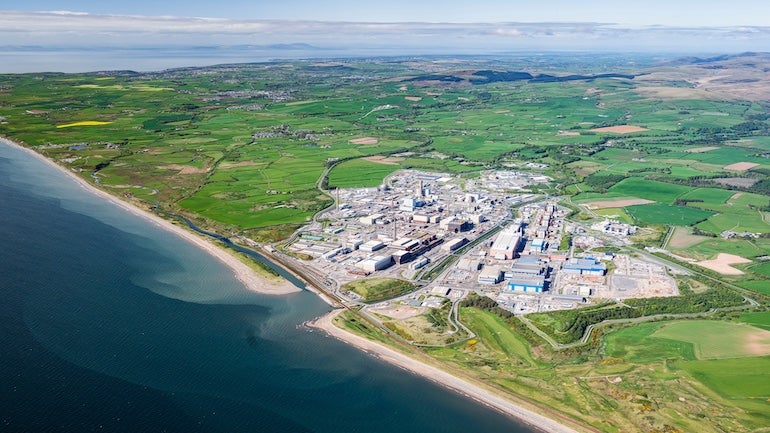
Decommissioning the UK’s earliest nuclear sites is one of the most complex environmental and engineering programmes in the world. It’s a mission measured not in years, but in generations – requiring technical excellence, disciplined decision-making, and long-term safe stewardship of assets and knowledge.
The Nuclear Decommissioning Authority (NDA) is the organisation trusted by the UK Government with cleaning up these legacy sites that were once at the heart of national defence and energy generation, remediating them for their next use, and delivering a safer future for generations to come. Both varied and challenging in scope, this work includes cleaning up decades-old facilities, transporting, treating and storing radioactive materials, decommissioning and dismantling hundreds of buildings, and delivering multiple major infrastructure projects. All while creating social and environmental benefits through jobs, knowledge, skills, technology and social investment.
Earlier in 2026 the NDA published a refreshed strategy, setting out how the mission will be delivered, with greater integration across the NDA group, utilising a proportionate approach to risk, sharper prioritisation, and a continued focus on hazard reduction imperatives. This strategy is not a reset, it’s a progression. It builds on the direction set in previous strategies while reflecting how the operating environment, delivery model and mission scope have evolved.
Since the last strategy was published in 2021, the NDA Group has completed major reprocessing operations, strengthened its integrated waste management approach, supported the development of updated national radioactive waste and plutonium disposition policies, and embedded the group operating model. The group comprises the NDA, Nuclear Restoration Services, Sellafield Ltd, Nuclear Waste Services and Nuclear Transport Solutions. The group structure – bringing together site restoration, waste services, transport and major programme delivery – is now enabling closer collaboration, shared capability, efficiencies, and more consistent approaches to common challenges.
In the near term, the NDA Group is set to expand as it takes on additional responsibilities on behalf of the UK Government, including managing nuclear liabilities on behalf of the Ministry of Defence, and decommissioning the Advanced Gas-cooled Reactor (AGR) reactor fleet with the first station transferring from EDF in April and the second to follow later this year.
It demonstrates that the NDA Group is trusted to do more, and for the first time the strategy has a chapter examining the NDA’s role in the UK nuclear enterprise across the civil and defence sector, and how it can leverage these unique capabilities and assets to enable broader policy objectives, while ensuring delivery of the core decommissioning mission is never compromised.
For example, the NDA Group is providing access to 400 tonnes of reprocessed uranium in the inventory so it can be used to develop cutting edge cancer therapies which could help save lives. It is also working with the Home Office to develop a safe waste route for gamma blood irradiators used by medical and research organisations, to reduce the risk of the radioactive materials falling into the hands of malicious actors. By leveraging the NDA Group capabilities and specialist experience, these collaborations are delivering greater value for the nation.
This refreshed strategy is shaped by several core drivers. The first is hazard reduction. Addressing the highest hazards – particularly legacy facilities at Sellafield – remains the overriding priority. This is where risk reduction activities deliver the greatest benefit to workers, the public and the environment, and where focused effort and resources make the most difference.
Managing legacy waste
Huge strides have been made in tackling these hazards since the inception of the NDA in 2005. Radioactive waste is now regularly being retrieved from all four of Sellafield’s oldest storage ponds and silos, which are the highest hazard facilities within the NDA estate, and the UK’s inventory of civil plutonium has been securely consolidated on the site.
These achievements were not straightforward. Early phases of the NDA Group mission were characterised by inherited facilities with limited waste inventory records, evolving regulatory expectations, and delivery models not designed for long-term clean-up. Over time, the NDA Group has strengthened its approach to risk-informed decision-making, system planning, and transparency – learning from what has worked, and what hasn’t. The strategy reflects this maturity: applying lessons from two decades of delivery to improve pace where it matters most, and future-proof the mission so choices now don’t increase the liability that needs to be managed in the future.
In terms of progress, the NDA Group has also defueled all 26 Magnox reactors, the UK’s first generation of nuclear reactors, removing 99% of the radioactive hazard on these sites. Around 68 tonnes of highly radioactive liquid metal coolant from the Fast Reactor on the Dounreay site has also been removed and safely destroyed.
But now the NDA Group needs to go further and faster, accelerating the pace of retrievals from Sellafield’s ponds and silos, establishing the plutonium immobilisation programme, and progressing the GDF programme in line with UK Government policy to ensure a final disposal solution is available for the most hazardous waste.
Developing an integrated approach
The second driver is integration. Decommissioning, waste management, spent fuels and nuclear materials cannot be managed in isolation. Decisions in one area affect outcomes in another. The strategy therefore strengthens system-level planning so that progress in one area does not create obstacles elsewhere.
In practice, this means planning decommissioning activity alongside waste treatment, storage and disposal capacity from the outset. For example, aligning retrieval schedules at Sellafield with the availability of modern storage facilities reduces the need for interim handling and rework.
Similarly, shared planning between Sellafield, Dounreay and former Magnox sites enables the NDA Group to replicate proven approaches for ponds, silos and reactor decommissioning, improving safety and productivity while avoiding costly bespoke solutions.
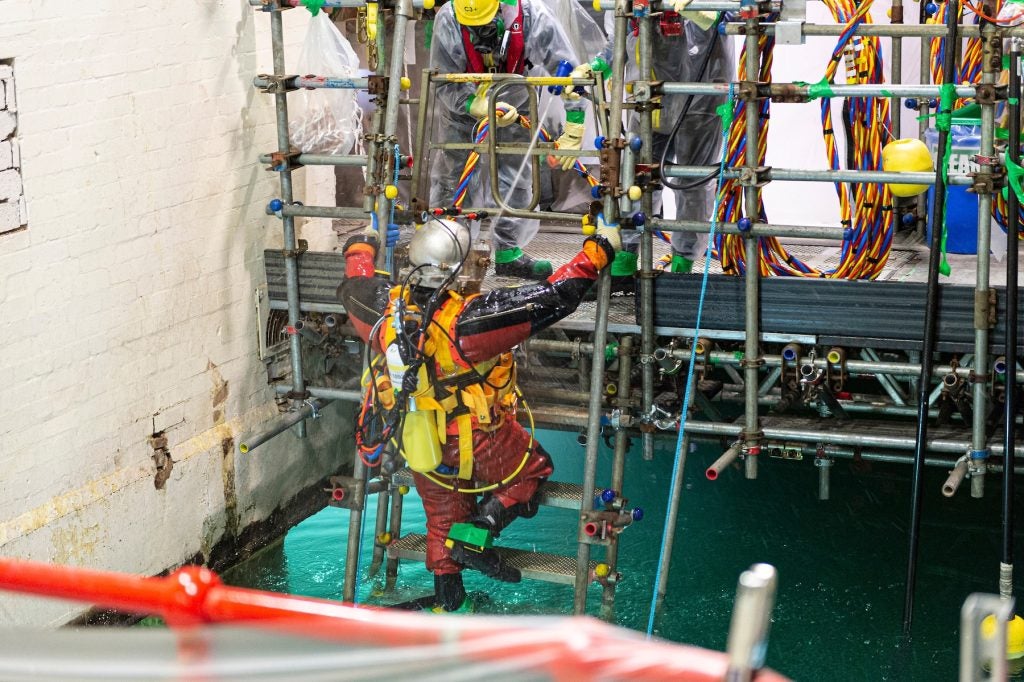
This is where embedding the group model really pays dividends. By working together more closely, organisations can share knowledge and transfer learning to enhance performance and delivery right across the estate. It is a strategy that embraces accelerated hazard reduction programmes, shared technical learning between sites, new waste treatment and storage approaches, and coordinated group planning that makes better use of existing assets before building new ones. These are not isolated successes – they are the building blocks of a more integrated delivery system.
One area where collaboration is truly transformative is research, development and innovation (RD&I). Through strategic investment, collaboration and sharing good practice, nationally and internationally, RD&I can improve safety, security and sustainability. Across the UK’s nuclear sites, the wider sector, and beyond, there are some common challenges to overcome where new technologies are a gamechanger in terms of reducing costs, timescales and environmental impact, while also moving people further away from harm. What’s really key is bringing together the knowledge and technical expertise from academia and industry with the operators on the frontline, to deliver solutions that work in a live environment and can be scaled up across multiple sites.
A realistic approach to the waste challenge
The third driver is delivery realism. Legacy facilities are very different to those being constructed today which are built with decommissioning in mind. Some sites date back to the 1940s and were engineered to deliver immediate operational needs around energy and defence, rather than with safe decommissioning at the forefront.
Cleaning up legacy facilities is capital-intensive, technically uncertain and highly regulated. The NDA is currently responsible for 17 sites, totalling around 950 hectares of designated land, and this is due to grow to 24 sites over the next decade. This means the reality is not everything can be done at once and the strategy makes this explicit. It reinforces prioritisation, sequencing and risk-informed decision-making, alongside proportionate approaches that match controls and methods to the hazards being managed. This is very much aligned with the Government response to the Nuclear Regulatory Taskforce review which signals a move towards smarter regulation: proportionate, focused on real risk, rooted in evidence, and designed to effectively protect nature and biodiversity.
The NDA Group’s focus is on whole-life value – reducing total mission cost and duration where possible – rather than short-term acceleration that creates downstream inefficiencies. Importantly, the strategy also strengthens the link between strategic direction and delivery execution. It sets the long-term direction; while business plans, mission progress reports and site programmes translate that strategy into near-term action and measurable milestones. This clear line of sight supports better decisions, greater transparency and more effective performance management across the group. This is really important when you’re dealing with the kind of timescales the NDA is facing.
So, what does success look like? Broadly speaking, over the next 25 years the NDA Group expects to have retrieved most of the radioactive waste from high-hazard facilities at the Sellafield site, repackaged a proportion of plutonium and begun to convert it into a disposable form, and delicensed most of the ex-Magnox reactor sites.
For a publicly funded decommissioning organisation, success is defined by measurable, cumulative progress that delivers outcomes. That is more high-hazard waste safely retrieved and conditioned, more redundant facilities decommissioned, more materials consolidated into safer forms, and more sites advanced toward their agreed end states. Success also means better and faster strategic decisions, stronger alignment across operating companies, and wider use of standardisation and replication to improve productivity, demonstrating value for money, and being transparent about trade-offs, risks and dependencies.
Success also depends on people and capability. Nuclear decommissioning is delivered by a highly skilled, multidisciplinary workforce – engineers, scientists, project managers, operators, safety specialists and many others. There is a strong emphasis on skills, knowledge management and leadership development, recognising that long-term mission delivery depends on sustaining capability and knowledge across generations.
It’s why ‘People’ is one of the strategy’s Critical Enablers, which are the conditions required in order to ensure the right operating environment, capabilities and resource are in place to successfully deliver the mission.
In total there are 14 enablers to the mission including security and resilience, socio-economics, transport and logistics, and international relations.
Much of the innovation delivered is developed and applied through international collaboration, working closely with international partners to share learning on legacy waste retrievals, remote operations, fuel and materials management, and decommissioning methodologies. These exchanges help accelerate learning, reduce effort duplication, and ensure the UK both benefits from, and contributes to, global best practice in nuclear clean-up.
Sustainability is no longer a critical enabler in this latest iteration of the strategy but instead is embedded throughout the strategy because it’s at the heart of everything the NDA does. It guides strategic decision making to deliver long term societal benefits while simultaneously enhancing mission performance. An example of sustainability in action came last year when more than 15,000 tonnes of crushed concrete from the demolition of the Turbine Hall at Sizewell A was made available to EDF for the construction of Sizewell C. This landmark collaboration prevented 28 tonnes of CO₂ emissions by diverting waste from landfill and significantly reduced shared costs.
The NDA also has a well-established socio-economics programme which supports the communities that host nuclear sites and invested £60m ($80m) in projects over the last five years. This investment has delivered permanent and sustainable change, attracting an additional £200m ($267m) in matched funding. These projects vary from enabling disadvantaged young people to engage with learning, skills development and delivering mental health interventions, to investing in programmes supporting regeneration, job creation and economic diversification.
The ultimate aim is to free up land for reuse for whatever is deemed most beneficial for the local community, environment and wider economy. Over the years the land at NDA sites has been released to support a variety of programmes, including developing a science and innovation campus at Harwell, a business park at Winfrith and to enable renewable energy projects at Dounreay.
The NDA is also exploring how its expertise, resources, and assets can be used to support the UK’s energy security ambitions and the drive for net zero, working closely with local partners to deliver the Chapelcross masterplan for a green energy hub, for example, and also investing to develop the masterplan for a clean energy development on land adjacent to Sellafield.
These developments will drive growth in the local economy, attracting high value jobs, skills and activities benefitting the communities for generations to come. At its core, the refreshed NDA strategy is about responsible stewardship. It recognises that the NDA’s role is to deal with the past safely and responsibly, while creating the conditions for future opportunity.
Decommissioning legacy nuclear sites will always be challenging. But with clear priorities, integrated planning and sustained capability, it is a challenge that can be met – steadily, transparently and with purpose.


