
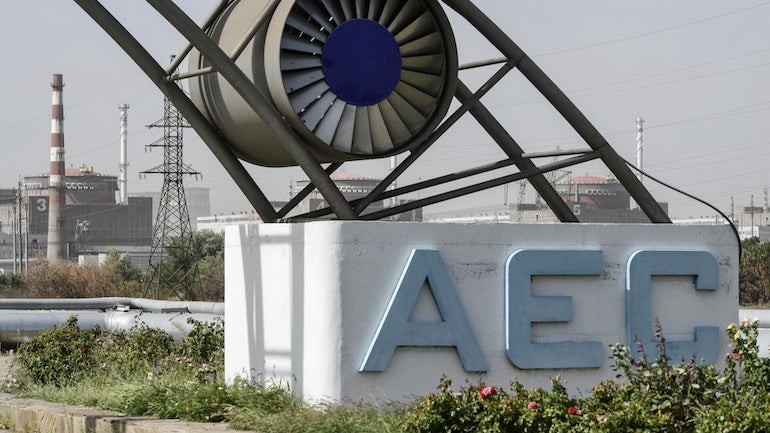
A targeted attack on a bus stop in Energodar, where employees of the Zaporizhia NPP (ZNPP) were waiting transport to take them to their work shift, killed one person and injured 17, ZNPP reported on its Telegram channel. “This is beyond the pale. The people who were targeted did not fight and did not participate in combat operations. They were on their way to work to fulfil their professional duty and ensure the safety of the nuclear power plant,” ZNPP said. “The safety of the plant, Energodar, and the vast territory around it depends on their work.… Nuclear scientists must not become targets. Under no circumstances.”
The International Atomic Energy Agency (IAEA) said in a post on X that it had been informed that a drone exploded at a bus stop used by staff travelling to ZNPP. “The ZNPP Director informed the IAEA team that the explosion caused 16 casualties among staff and subcontractors, including one death and three serious injuries, describing it as the worst event the plant has faced. The IAEA was further informed of attacks in the ZNPP industrial area. No nuclear safety or security damage was reported.”
IAEA Director General Rafael Grossi “solemnly calls on military commanders responsible for these actions as well as all others aiming on nuclear power plants and/or their staff to put an immediate stop to these unacceptable actions which… constitute great risks to nuclear safety and security during the conflict.”
Rosatom Director General Alexey Likhachev said the situation around ZNPP was rapidly deteriorating. “We are getting closer and closer to the point of no return, and all of Europe needs to step up its efforts now to de‑escalate the situation around the Zaporizhia Nuclear Power Plant. It is moving too quickly towards the point of no return,” he told reporters.
He noted that, while the Bushehr NPP in Iran has “hundreds of tonnes of nuclear fuel,” ZNPP has “thousands of tonnes of fresh and used fuel”. According to various estimates, about 2,600 tonnes are located on the plant’s premises. “And, of course, in the event of a targeted attack, especially on nuclear fuel storage facilities, risks of a regional scale arise,” Likhachev said. He added that an integral part of the station’s security system is its social infrastructure. “Attacks on social infrastructure, on residential neighbourhoods, on bus stops, on transport carrying food, on a kindergarten-this is just rocking the situation up to a catastrophic level.”
Meanwhile, Russia’s Foreign Ministry spokeswoman, Maria Zakharova, in a post on the Ministry website expressed grave concern regarding the aggressive actions and persistent provocations targeting ZNPP. “The plant and its personnel have been subjected to almost daily attacks, creating a real threat of causing a nuclear disaster in the centre of Europe,” she said.


