
With the final approval by Italy’s Senate Assembly of bill No 2001, Infrastructure, decommissioning and waste management company, Societa Gestione Impianti Nucleari (Sogin) assumes responsibility for the treatment, conditioning and final disposal of all radioactive waste originating from the military research sector.
Sogin is now officially responsible for managing both civilian and military nuclear decommissioning and radioactive waste in Italy. The passage of Bill No 2001 closed a historical gap by legally expanding Sogin’s role beyond commercial nuclear power plants to include legacy defence research facilities.
Sogin continues its primary mission of decommissioning Italy’s four legacy NPPs (Caorso, Garigliano, Latina, and Trino), alongside four fuel cycle research facilities (Fiascherino, Casaccia, Rotondella, and Saluggia), and the Ispra-1 reactor. It now also takes charge of treating, conditioning, and disposing of radioactive waste from defence sectors. This includes the Navy’s RTS-1 Galileo Galilei reactor at the Joint Centre of Studies for Military Application (CISAM – Centro Interforze Studi Applicazioni Militari) in Pisa and the Euracos (Enriched URAnium COnverter Source) subcritical converter at the University of Pavia.
The final approval of the measure therefore represents a significant demonstration of confidence, initially on the part of the Government and now also of Parliament, in Sogin’s ability to manage highly complex nuclear interventions, for the benefit of the country’s security and in compliance with Italy’s international commitments.
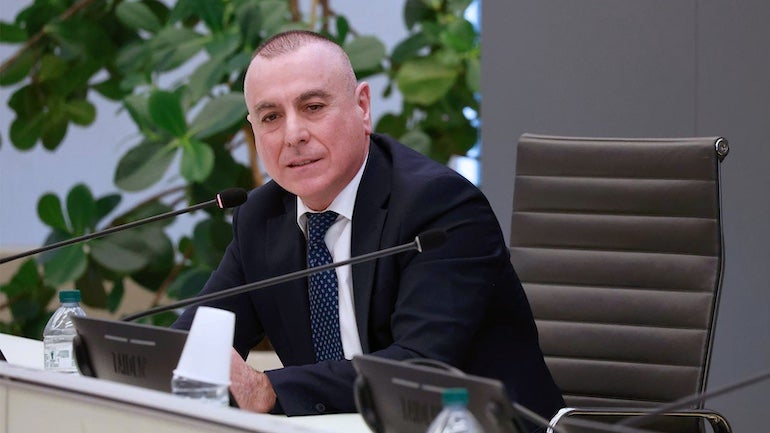
“We are particularly pleased with Parliament’s vote because it confirms the trust already expressed by the Government towards our Society and further strengthens it, further expanding the scope of the activities entrusted to us in the nuclear sector,” said Gian Luca Artizzu, CEO of Sogin. “The inclusion of the activities relating to the Euracos converter of the University of Pavia constitutes an important recognition of the skills developed by Sogin and allows for the resolution of an issue that, within the scope of the obligations arising from the Non-Proliferation Treaty signed by Italy, had been at a standstill since 2012.”
The Euracos converter contains special fissile nuclear materials (highly enriched uranium or plutonium). Under the Treaty on the Non-Proliferation of Nuclear Weapons (NPT), nations must strictly control or eliminate weapons-grade material to prevent nuclear proliferation. To meet these obligations, the fissile core must be repatriated (returned) to its country of origin—in this case, the United States. However, the legal and bureaucratic process to safely extract and return this specific material had been completely stalled for over a decade due to regulatory gaps.
Sogin had worked with the US Department of Energy (DOE) and Consolidated Nuclear Security (CNS) between 2017 and 2018 to analyse and classify the Euracos materials, but without the official legislative power granted by Bill No 2001, Sogin lacked the mandate to take physical custody and finalise the operation. It can now use its advanced technical solutions, developed in tandem with the US government, to safely extract, package, and repatriate the fissile material to the US, permanently clearing Italy of a lingering non-proliferation liability.
As a result of the new legislation, Italy has eliminated fragmented management by placing all high-consequence radioactive materials under one state-owned entity. Centralisation ensures that both civilian and military waste are packaged to identical technical standards. This streamlines their eventual transfer to Italy’s future unified National Repository.
According to the National Inspectorate for Nuclear Safety and Radiation Protection (ISIN – Ispettorato nazionale per la sicurezza nucleare e la radioprotezione), civilian Nuclear Waste comprises approximately 32,000 cubic metres. This includes legacy waste and structural decommissioning materials from Italy’s four shut-down NPP, medical facilities, and civilian research labs.
Military nuclear waste comprises approximately 894 cubic metres. This represents the total historical inventory currently stored at the CISAM military research centre, which includes very low, low, and medium-level activity. While military waste is tiny by volume, the structural core of the RTS-1 Galilei reactor holds higher concentration levels (medium-activity) compared to broad bulk demolition waste (very low-activity) generated at civilian sites. This is why Sogin’s specialised conditioning expertise was legally required to prepare these materials for safe storage.
The current official schedule for construction of Italy’s unified National Repository and Technology Park targets 2039 for the full operational launch. Sogin expects the final, single comprehensive decree approving both the chosen geographic site and the complete construction permit to be formally issued in 2029.
Once authorised, Sogin will begin building the surface repository, which consists of 90 reinforced concrete cells. The site will open for operations in 2039 to start receiving waste from around the country. The repository will intake the 98,000 cubic metres of legacy and future waste over four decades. By 2041, highly active residues resulting from Italian nuclear fuel previously sent abroad for reprocessing must be brought back and transferred into the facility’s temporary high-level storage complex. As the cells are filled, they will be covered by an artificial hill made of inert, waterproof layers. The site will enter a highly monitored, institutional post-closure control phase lasting 300 years.
In the meantime, Sogin is expanding local interim storage to secure waste at the source. For instance, Sogin completed major civil works on Storage Repository No 2 at the Enrico Fermi plant (Trino) in January. This newly modernised facility will hold ongoing decommissioning waste safely until it can be shipped out to the repository.


