
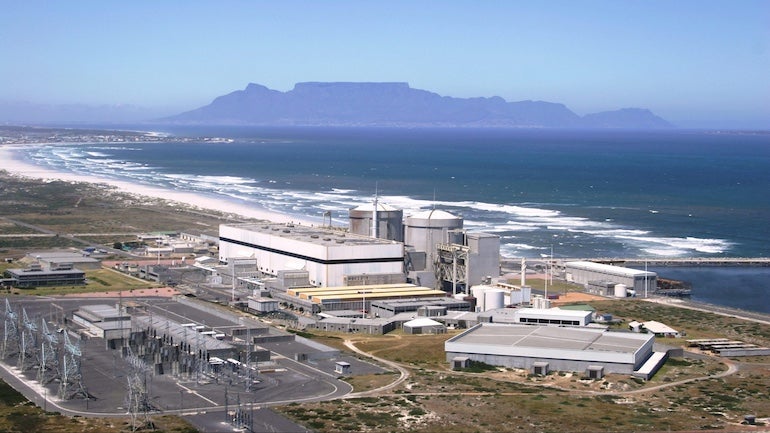
South African power utility Eskom has reduced power generation at unit 1 of the Koeberg NPP to 50% after a cooling pump switched off automatically due to a buildup of marine material at the seawater intake. This occurred as large numbers of sardines continue to wash up along the Western and Southwestern Cape coast. Eskom said the reduction was a controlled safety measure and that nuclear and operational safety at the power station was never at risk.
“Eskom has safely reduced the power generation at Koeberg unit 1 to 50% as a routine safety precaution. This controlled adjustment happened after a cooling pump automatically turned off due to the buildup of marine material in the seawater intake area. There is currently an increase in sardine mortality along the Southwestern and West Coast that is under inter-agency investigation.”
Eskom added that the seawater intake system is designed to respond automatically to such conditions, with the reduction in generation allowing the system to operate safely while the marine material is cleared. “Nuclear and operational safety at the station was never at risk. Emergency response teams were activated to clear the intake area, and operations on unit 1 will return to normal after the cooling water intake is fully restored. Due to the ongoing success of Eskom’s Generation Recovery Plan, there was no impact on electricity supply to South Africa. Unit 2 is currently offline and undergoing planned maintenance and is unaffected by this event.”
Earlier reports said that laboratory tests conducted by the South African Institute for Aquatic Biodiversity and Rhodes University had detected pilchard herpesvirus (PHV) in the sardines. The Department of Forestry, Fisheries & the Environment (DFFE) said: “PHV was detected in both dead sardines and, at lower levels, in some apparently healthy sardine collected from the west coast. This suggests that the presence of the virus alone may not be sufficient to cause mass mortality.”
DFFE added that the mass sardine mortality event, first reported in early August, was under a multi-agency investigation and that no new mass mortality incidents had been reported since 16 August indicating that the acute phase may have eased noting that environmental conditions cannot yet be excluded as contributing stressors.


