
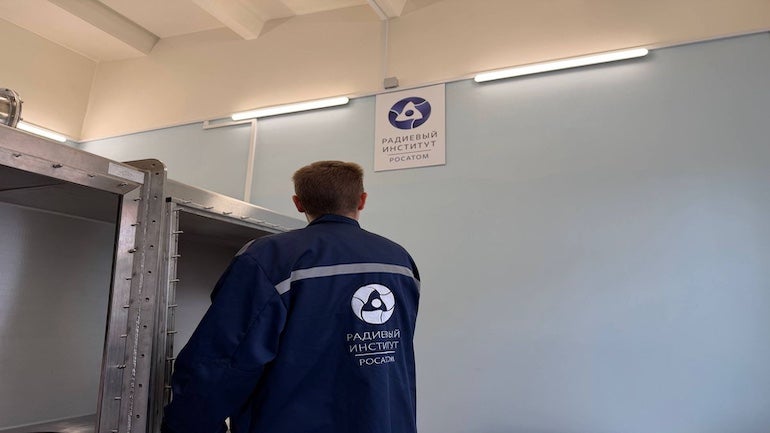
The new laboratory is being established at Site No 1 of the VG Khlopin Radium Institute (part of Rosatom’s Scientific Division). The primary goal of this unique equipment complex is to experimentally test the pyrochemical processing of used nuclear fuel from molten salt reactors (MSRs). This process focuses on the transmutation (burning) of minor actinides, particularly highly toxic elements such as curium, to safely close the nuclear fuel cycle.
The technique relies on continuous pyrometallurgical/liquid-metal reductive extraction. In active hydrodynamic conditions, molten fuel salt is mixed with liquid lithium-bismuth alloy (lithium bismuthide). Lithium transfers into the fuel salt, while fission products (neutron poisons) transfer into the bismuth stream to be extracted.
“The uniqueness of technology and the equipment consists of working with aggressive environments at high temperatures (about 700 degrees C), the transfer of melts between devices and the need to maintain an inert atmosphere (no more than 100 ppm of oxygen,” explained Ilya Skrigan, head of the laboratory of technology and curing processes at the Radium Institute.
The complex of machinery and inert boxes operates at temperatures of around 700 °C within a strictly controlled inert atmosphere to protect the materials and maintain safety. No direct analogues to this technical setup currently exist globally.
Scientists will first synthesise a model fuel composition using lithium and beryllium fluorides mixed with plutonium and fission product simulators to run the initial lab trials. Construction and commissioning are scheduled to be completed by the end of 2026, with the first experimental technology trials set for 2027.The final scale-up stage will involve deploying this module directly onto the Research Molten Salt Reactor (IZhSR – Issledovatelskovo Zhidko Solevovo Reaktora), planned for construction at the Mining and Chemical Combine ((GKhK – Gorno Khimiheskovo Kombinata) in Zheleznogorsk.
Rosatom has completed the first stage of design work for, which includes the development of materials for the main technological solutions for the relevant section of the design documentation. Since 2020, development of IZhSR has been underway at GKhK.
The development and construction timeline for IZhSR is planned around several key milestones targeted toward a launch in 2031 The initial research, material testing, and preliminary design phases are underway. By early 2024, Rosatom had completed the conceptual/preliminary design establishing the core technological solutions. Site preparation is continuing.
In December 2024, GKhK began decommissioning the historic underground ADE-2 reactor at Zheleznogorsk. This dismantling project requires removing over 900 tonnes of insulation and metal structures to clear out the underground space where the IZhSR will be housed. This site preparation will run until the end of the year. Rosatom completed the first stage of detailed technical documentation in July 2025. The overarching engineering design phase, alongside active R&D validation (such as 4,000-hour aggressive environment corrosion testing on selected steels), will continue until 2027.
Rosatom aims to complete all budget documentation and officially secure the formal construction licence by 2027. Physical construction of the small-scale reactor (designed for a thermal capacity of up to 10 MW) will take place inside the prepared underground complex. The IZhSR facility is targeted to officially start operations in 2031. It will act as the baseline reference facility to validate the burning of minor actinides and close the nuclear fuel cycle.


