
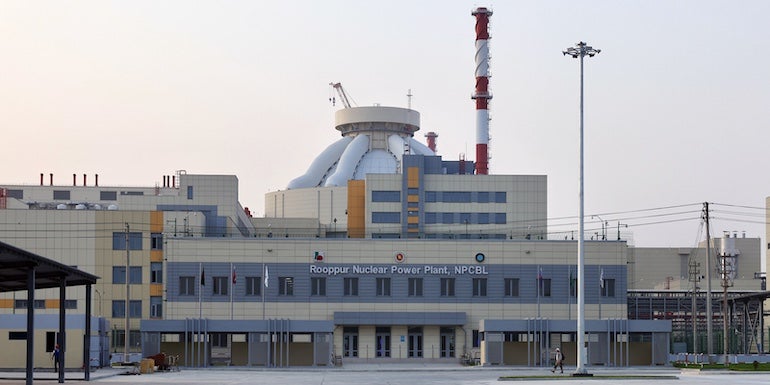
Rosatom Automated Control Systems (RASU – Rosatom Avtomatizirovannie Systemi Upravleniya) have integrated its Operator Information Support System (SIPO – Sistemu Informatsionnoi Podderzhki Operatora) into the automated process control system at unit 1 of the Rooppur NPP under construction in Bangladesh. This is the first implementation of SIPO at a foreign nuclear energy facility. The pilot site is the Novovoronezh NPP, and the system has already started operating at unit 1 of the Kursk-II NPP. The system will help the staff of the Rooppur plant monitor the operating parameters of the unit and increase the operating efficiency of the plant.
“SIPO helps staff monitor tens of thousands of power unit operating parameters, analyses the state of systems, optimises the presentation of information and supports the operator in making decisions,” said RASU Director General Andrey Butko. “This is not only an advanced solution from a technical point of view, but also a real assistant to the operational personnel of the first NPP in Bangladesh. It will contribute to effective and confident work at all stages of operation.”
Rooppur NPP Director Dr Muhammad Kabir Hossain said the NPP is a strategic project for Bangladesh energy. “It is important for us that the project involves not only modern reactor technology, but also advanced digital solutions that help improve operating culture and personnel efficiency. SIPO will become an additional support tool for operators of our country’s first nuclear power plant.”
The Rooppur plant is being built by Rosatom on the eastern bank of the Ganges River in the Pabna district of Bangladesh, about 160 km northwest of Dhaka. It will comprise two VVER-1200 reactors. In November 2011, Russia and Bangladesh signed an inter-governmental agreement on cooperation in the construction of the NPP, and in mid-December 2015 a general contract worth $12.65bn was signed. Construction of unit 1 began in November 2017 and unit 2 in July 2018. The plant’s design life is 60 years, with the possibility of extending its operating life for another 20 years. Fresh fuel for the units was delivered to the site in the latter part of 2023. An operating licence was issued by the Bangladesh Nuclear Regulatory Authority earlier in April.


