
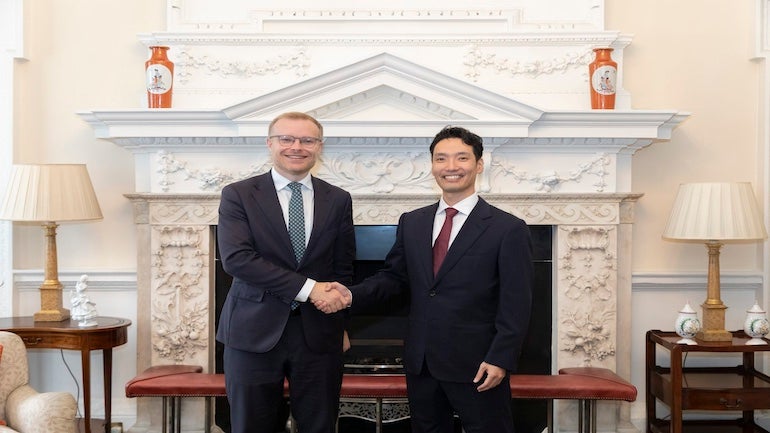
Japan’s Kyoto Fusioneering (KF) has committed a strategic investment of up to £3m ($4m) into the UK’s commercial fusion sector. This capital injection is channelled through Project ALBION. It aims to directly accelerate the engineering milestones of the UK’s premier fusion initiatives.
The investment will fund the development and testing of advanced materials and components for the Spherical Tokamak for Energy Production (STEP). This is the UK government-backed prototype fusion power plant planned for West Burton, Nottinghamshire.
A major portion of the funding will enable KF to design, manufacture, and test a lithium oxide solid breeder blanket experiment. This includes initiating irradiation testing with online tritium measurement capabilities – a critical element for sustaining the fuel cycle in commercial reactors. The experiment has been designed to deliver tangible progress for the STEP programme while further advancing the understanding of lithium ceramic breeder materials under irradiation, supporting both UK and international fusion projects.
The funds will be used to rapidly scale the company’s engineering team at its UK subsidiary located at the Culham Science Centre in Oxfordshire. The project builds on previous UK Industrial Fusion Solutions (UKIFS) manufacturing contracts, anchoring vital engineering infrastructure directly within British borders.
The announcement directly coincided with the publication of the UK Fusion Investment Prospectus, which outlines opportunities in a future global market estimated to be worth between £3,000bn and £12,000bn. It also arrived alongside a landmark bilateral agreement between the UK and US governments to align fusion regulatory frameworks and share AI supercomputing resources, cementing the UK’s position as a primary international hub for clean energy commercialisation.
Since its inception in 2019, KF has developed world-class expertise in the field of fusion energy providing technology and know-how through partnerships with government agencies, research institutions, and organisations around the world including the UK Atomic Energy Authority (UKAEA). KF has collaborated with UKAEA already in the fields of plasma heating systems, tritium capabilities, and fusion materials development, and foresees its investment as a pillar of Japan-UK collaboration under the auspices of the Japan-UK Memorandum of Cooperation on Fusion signed in June 2025.
“Our strategic investment represents a step change for Kyoto Fusioneering in the UK as it enables us to grow our team and its capabilities as well as put down a marker for further country expansion,” said Kiyoshi Seko, President and COO of Kyoto Fusioneering. “With the STEP project progressing and strong British Government backing for fusion, we are incredibly positive about the UK’s fusion market given its 40+ year track record of pushing scientific barriers. Kyoto Fusioneering aims to contribute to the success of UK fusion by strengthening its footprint here, and we are grateful to the UK Government for their consistent support of the sector.”
Professor Amy Gandy, Head of Materials Science and Engineering at UKAEA said the tritium breeder blanket is one of the most challenging components for future fusion power stations, with a range of concepts and technologies in development around the world. “KF’s investment provides an exciting and novel opportunity to test potential solid breeder concepts in fusion-relevant conditions. Tritium breeder blankets comprise many different materials, not just the fuel source. KF’s project aims to replicate and irradiate a complete breeder blanket module, providing invaluable information not only about tritium production but also how these very different materials will interact with, and affect, each other.”


