
The International Energy Agency’s (IEA’s) annual report on global electricity systems and markets, Electricity 2026, forecasts that the share of renewables and nuclear in global power mix will increase from 42% today to 50% by the end of this decade along with an increase in natural gas use.
The 225-page report provides in-depth analysis of recent trends and policy developments, and includes forecasts for electricity demand, supply and carbon dioxide (CO₂) emissions over the five-year period to 2030. Electricity demand is on course to grow at least 2.5 times as fast as overall energy demand to 2030. This is driven by rising industrial use of electricity, the continued uptake of electric vehicles, higher air conditioning use and the expansion of data centres and artificial intelligence (AI).
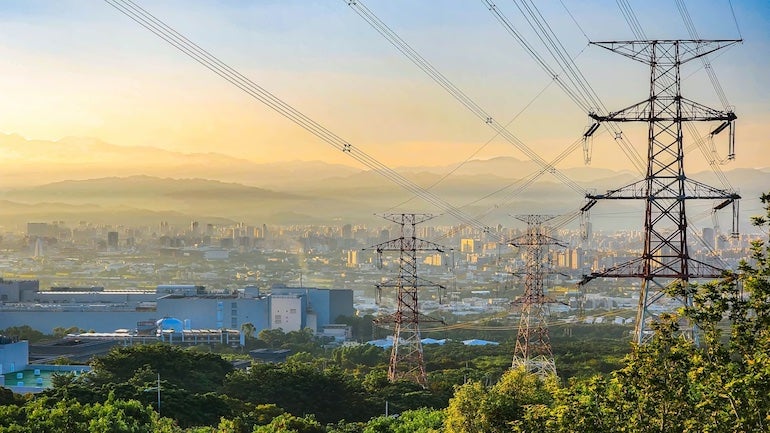
The report says this will require a rapid and efficient expansion of both electricity grids and system flexibility. “Today, more than 2 500 gigawatts worth of projects – encompassing renewables, storage, and projects with large loads, such as data centres – are currently stalled in connection queues worldwide.”
IEA Director of Energy Markets & Security Keisuke Sadamori noted: “In this Age of Electricity, the increase in global power consumption through 2030 is set to be equivalent to adding more than two European Unions,” said. “Meeting this demand will require annual investment in grids to rise by 50% by 2030. Expanding flexibility will also be crucial as power networks continue to evolve – so will a strong focus on security and resilience.”
According to the report: “Nuclear generation set a new record in 2025 and is set to continue rising steadily through 2030. Nuclear power output in 2025 was supported by reactor restarts in Japan, higher generation in France, and new capacity additions in China, India and other countries. While most of the growth in nuclear generation through 2030 is expected to occur in emerging economies, with China alone accounting for around 40% of the global increase, nuclear energy is also regaining strategic importance in many advanced economies, underpinned by supportive policy frameworks to extend the lifetime of reactors and add new capacity.”
It adds: “Nuclear generation is set to increase by an average of 2.8% over our forecast period, more than double the 1.3% growth rate in 2021‑2025. The gains are led by new reactors being commissioned in China, India, Korea and other countries, restarts in Japan, and robust output in France from the planned advancement of the maintenance works. Nuclear electricity output is expected to remain relatively stable in both the United States and the European Union over the forecast period, while it increases strongly in China, where almost 30 GW of new nuclear capacity is expected to come online over the five-year 2026-2030 outlook.”
It continues: “Nuclear generation in China is expected to increase by nearly 6% per year on average through 2030, while output in the United States and the European Union remains broadly stable. Consequently, China’s share of global nuclear generation is projected to rise from 17% in 2025 to 20% in 2030, whereas the United States’ share declines from 29% to 25% and the European Union’s share falls from 23% to 20%. Despite these falling shares, increasing nuclear generation is a major focus in the United States, with new small modular reactor (SMRs) capacity slated to come online just outside our 2026-2030 forecast period.”
There is also strong interest in many countries of the European Union, with policies in place for lifetime extensions and expansion of nuclear capacities. “Globally, SMRs are receiving particularly high levels of attention, both from the public sector and also from private industry, such as from large technology companies, as the modular designs and smaller scale of SMRs make them more attractive for financing and deployment by the private sector. Nevertheless… the success of the technology depends on a combination of government commitment and supportive policies, timely regulatory design reviews, continued innovation from technology developers, and financing from both public and private sectors.”


