International Atomic Energy Agency (IAEA) inspectors have returned to Iran some two months after Tehran ended cooperation with the IAEA. Iran suspended inspections in July, following the US and Israeli bombing of key nuclear facilities in June and banned inspectors from entering Iran. Iran cited the IAEA’s failure to condemn the Israeli and American strikes on its nuclear facilities as the reason for its decision, following the passing of new legislation by parliament.
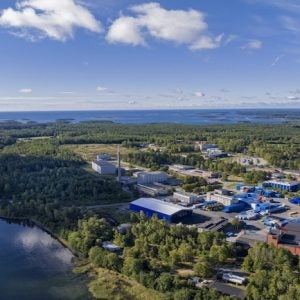
Following criticism in parliament, Iranian Foreign Minister Abbas Araqchi reassured the MPs that the return of IAEA inspectors to Iran is solely to oversee the scheduled refuelling of the Bushehr NPP, stressing that any cooperation with IAEA will fully comply with Iranian law.
In comments after a meeting with the members of the Iranian Parliament’s National Security and Foreign Policy Commission on, Araqchi explained that according to the law passed by the legislature, all requests for cooperation with the IAEA must first be submitted to the Supreme National Security Council for approval.
“Thus, in accordance with the law, all interactions with the agency are carried out within a framework that safeguards the interests of the Iranian nation,” he said. Regarding Bushehr, Araqchi confirmed that decisions have been made to allow the replacement of nuclear fuel under the supervision of the IAEA inspectors, stressing that any cooperation will strictly follow the legal framework set by the Parliament.
Reacting to comments by a lawmaker about the finalisation of a cooperation agreement with the IAEA Araqchi said, “No text has been formally approved yet. Some viewpoints have been exchanged between the two sides, and the IAEA has submitted its opinions in writing multiple times. It is natural in any negotiation that the parties exchange views until a final conclusion is reached.”
The IAEA’s deputy head, Massimo Aparo, visited Tehran on 11 August for the first time since co-operation was suspended to hold talks with authorities to reach a new agreement. Subsequent talks were then held in Vienna.
Further assurances to lawmakers were given by Parliament Speaker Mohammad Bagher Ghalibaf, responding to continued criticism.
“The law passed by parliament in this regard has been observed,” he said. Several lawmakers argued that the return of inspectors violated the law and lacked transparency. Lawmaker Mohammad Taghi Naghdali, questioned whether the safeguards for Iran’s sovereignty and scientists had been ensured. He recalled that parliament had approved a measure requiring all cooperation with IAEA to be suspended unless Iran’s territorial integrity, the safety of its nuclear scientists, and its inherent rights were fully guaranteed.
IAEA Director General Rafael Grossi continues to press for the permanent return of inspectors to Iran. “Now the first team of IAEA inspectors is back in Iran and we are about to restart,” he told Fox News. “When it comes to Iran, as you know, there are many facilities. Some were attacked, some were not. “So we are discussing what kind of … practical modalities can be implemented in order to facilitate the restart of our work there.”
Britain, France, and Germany (the E3) have linked Iran’s cooperation with the IAEA to their decision on whether to trigger the UN snapback sanctions mechanism. The US and E3 previously agreed to set the end of August as the deadline for concluding a nuclear deal with Iran. Otherwise, the E3 plans to launch the snapback mechanism, which will re-impose the UN Security Council sanctions against Tehran that had been lifted under the Joint Comprehensive Plan of Action (JCPOA). The agreement was finalised in Vienna in July 2015, between Iran and the P5+1 (the five permanent members of the United Nations Security Council – China, France, Russia, the UK and US plus Germany) together with the European Union.
Five rounds of nuclear talks between Iran and the US in 2025 yielded no results and were ended by Israel’s military operation against Iran and US airstrikes on Iranian nuclear sites. The E3 subsequently engaged in talks with Tehran but have so far failed to broker a new nuclear deal. The E3 have made clear that continued UN sanction relief hinges on three conditions: full resumption of IAEA inspections, transparent accounting of uranium stockpiles, and credible engagement in diplomacy with Washington. On the last point, Iran has refused direct talks with the US.
Behnam Taleblu, senior director of the Iran programme at the Washington-based Foundation for Defense of Democracies, told RFE/RL’s Radio Farda it was “highly unlikely” the Europeans would delay triggering snapback sanctions. “The only way that could happen,” he said, “is if inspectors can fully resume monitoring and if there’s real political will in Tehran for diplomacy. In that case, sanctions could be postponed for three to six months…. But I see that as highly unlikely.”
In face of the impasse, Russia is seeking to extend the validity of UN Security Council Resolution 2231, which supports the JCPOA, in hopes of fostering a diplomatic solution, Dmitry Polyansky, Russia’s First Deputy Permanent Representative to the UN, told reporters. “We would like to extend Resolution 2231. Russia and China, as responsible participants in the JCPOA, wish to provide some room for diplomacy and opportunities to seek a compromise to this issue.” he said. According to the document seen by TASS, the proposal would extend Resolution 2231 for six months, until 18 April 2026.
Iran, meanwhile, has warned the E3 against coordinating its position with the US and has threatened to withdraw from the Nuclear Non-Proliferation Treaty if UN sanctions are reinstated. The latest round of talks in Geneva between Iran and the E3 were inconclusive. “Both sides shared their views on resolution 2231. Iran stays committed to diplomacy and the search for a mutually beneficial solution. It’s time the UN Security Council and E3 make the right choice, giving time and room to diplomacy,” Iranian Deputy Foreign Minister Kazem Gharibabadi wrote on his X page.