
France’s Framatome has expanded its industrial footprint by inaugurating two new advanced manufacturing facilities in France – its Steam Generator Component Plant (Montbard) and the PROtect Accident Tolerant Fuel Pilot (Paimboeuf). Both projects represent major steps forward in securing the European nuclear supply chain and advancing the next generation of low-carbon energy technology.
The new sovereign manufacturing facility at the Montbard site in eastern France is dedicated entirely to the fabrication of anti-vibration bars, which are critical safety components that protect internal tubing and extend the operational life of nuclear steam generators.
More than €7m ($7.84m) was invested to construct nearly 5,000 square metres of high-technology industrial buildings equipped with precision machining, welding, and non-destructive testing capabilities. The aim is to meet the growing demands of the French EPR2 reactor programme and broader European low-carbon electricity capacities. Industrial qualifications are already underway, with full production slated for 2027.
“This illustrates our commitment to securing a sovereign nuclear supply chain, by developing the industrial capacities needed to meet our customers’ needs,” said Lionel Gaiffe, Senior Executive Vice President of Framatome’s Fuel Business Unit. “Thanks to the recognised expertise of our teams in Montbard, we are today strengthening a strategic link within the French and European nuclear supply chain.”
The cutting-edge chromium-coating industrial pilot facility at the manufacturing plant in Paimboeuf, western France will develop Framatome’s proprietary PROtect Enhanced Accident Tolerant Fuel (E-ATF) technology. The facility uses an advanced physical vapour deposition process to apply a protective chromium coating onto zirconium alloy cladding tubes. This highly durable coating significantly enhances nuclear reactor safety margins under extreme conditions.
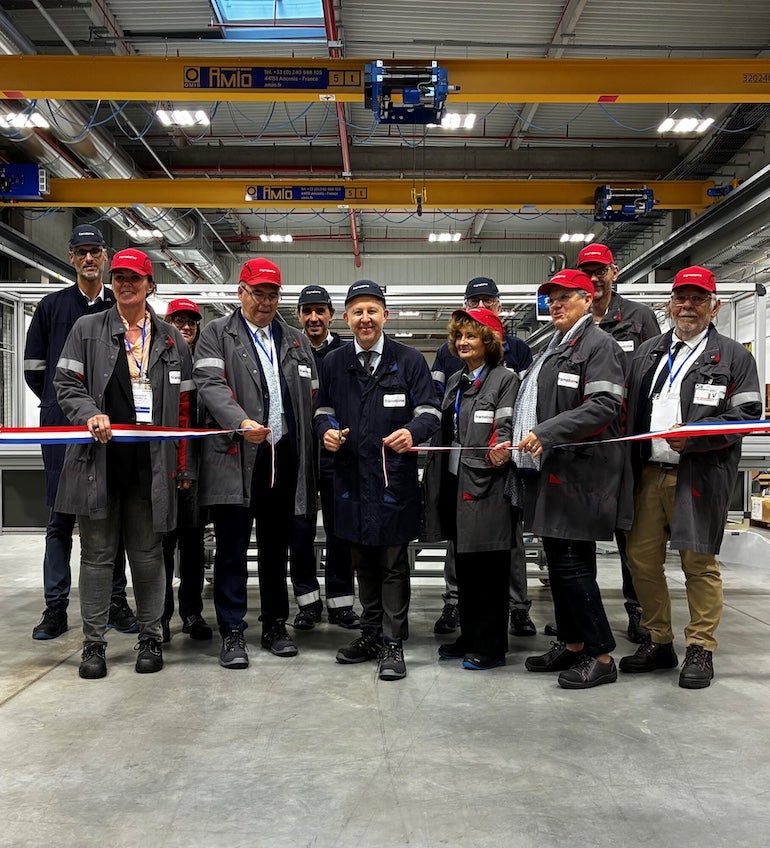
The major €30m project is designed to reach a production capacity of more than 100,000 chromium-coated tubes a year. The aim is to demonstrate the robustness of the process under large-scale manufacturing conditions before full commercial rollout. Process qualification will wrap up by the end of 2026, with production targeted to begin in early 2027.
“With the inauguration of this industrial pilot at Paimboeuf, Framatome takes a new step in the development of its PROtect E ATF technology,” said Lionel Gaiffe. “After more than 10 years of research and accumulated operational experience across six reactors globally, we are now getting ready for industrialisation.”
PROtect E ATF technology was developed by Framatome in collaboration with the French Alternative Energies and Atomic Energy Commission (CEA), the combines chromium-coated zirconium alloy claddings as well as, upon request by the operators, uranium pellets enhanced with chromium oxide. The technology, supported by the French Recovery Plan (France Relance) and the US Department of Energy (DOE), significantly enhances oxidation resistance, improves mechanical performance at high temperatures, and reduces hydrogen generation in the unlikely event of a loss of coolant accident.
The first fuel-rod irradiations in a reactor began in 2019 at the Gösgen plant in Switzerland and in the Vogtle plant in the US. In 2021, the first complete PROtect E ATF fuel assembly was loaded at the US Calvert Cliffs plant, and from 2023 as part of a joint programme with EDF, four Lead Fuel Assemblies were introduced into unit 3 of the Blayais NPP.
In 2024, the technology completed a third 18-month fuel cycle at the Vogtle plant, marking the first lifecycle of operation of the world’s first full-length PROtect E ATF fuel rods. The same year, it became the world’s first ATF technology to operate with full length fuel rods above 60 GWd/tU (gigawatt-days per metric tonne of uranium) at the Gösgen, demonstrating its readiness for commercial use.


