
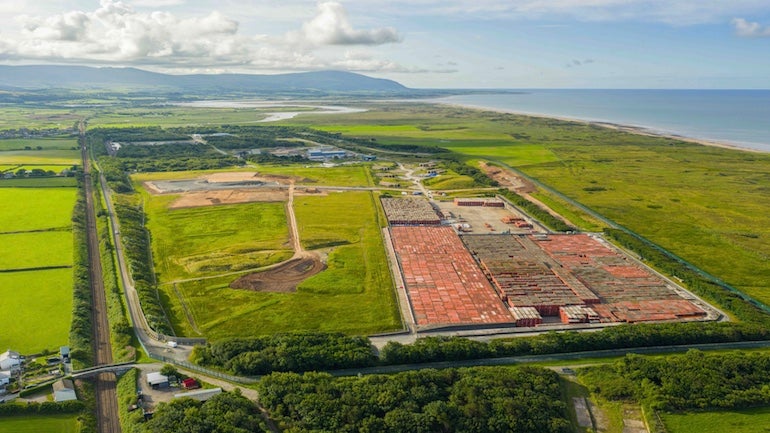
As work on one of the UK’s most significant environmental construction projects gets into full swing during the summer, the Low-Level Waste Repository (LLWR) near Drigg in Cumbria has long been a cornerstone of the nation’s radioactive waste management infrastructure. But today, the site is also entering a new phase.
While site operator Nuclear Waste Services (NWS) conducts major engineering works to cap historic disposal trenches and vaults, the company is also exploring new ways to reduce waste volumes, recover valuable disposal capacity and support wider decommissioning. The Repository has served as the UK’s principal disposal facility for low-level radioactive waste since the late 1950s but is now helping to reshape the UK’s waste management landscape.
Christine Bradley, NWS interim head of project delivery at the Repository site, tells NEi how engineering, logistics and waste innovation are combining to deliver both immediate and long-term benefits. However, she explains that one of the most challenging aspects of managing the repository dates back to its earliest operational phases: “We go back to the 1940s where it was a Royal Ordnance Factory during World War II and then we moved into tumble tipping the waste into the legacy trenches in 1959.”
Today, the focus is on securing those older disposal areas through a major engineered capping programme. The current project is the Southern Trench Interim Membrane, known as STIM. This is a large-scale civil engineering scheme designed to provide enhanced environmental protection over one of the site’s legacy disposal trenches, before constructing the final cap over the vaults and trenches.
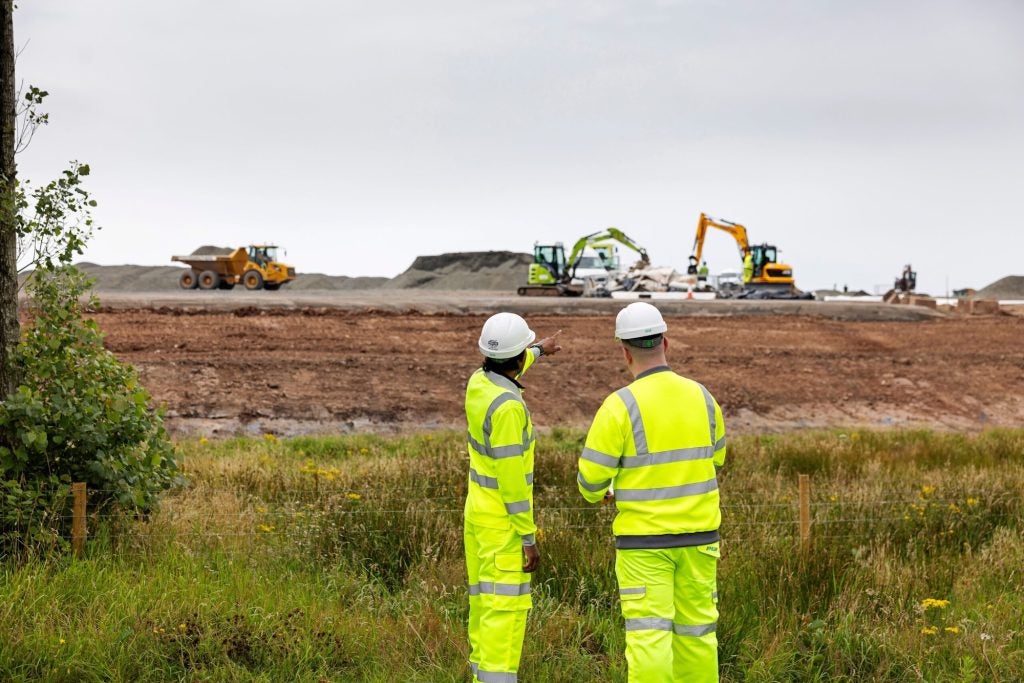
“What we have been delivering, and we have got Graham Construction contracted since 2024, is to have a cap over our southern trench,” says Bradley. This cap comprises multiple engineered layers, including aggregates, drainage systems and geosynthetic liners. The scale of the project is considerable, given that the total capped area covers approximately 125,000m². “We have covered just over 86,000m², which is the equivalent of 12 football pitches,” comments Bradley.
However, the project remains heavily dependent on weather conditions. Like many major earthworks projects, progress can be significantly affected by rain, frost and winter conditions. Cumbria’s notoriously intemperate climate presents additional challenges. Bradley adds: “We therefore work to weather windows from the back end of October through to March, although we had a really good dry couple of weeks at the beginning of last October, when we managed to make quite a lot of progress.”
Maintaining quality remains paramount. The repository works closely with the UK’s Environment Agency, which oversees the project, along with independent quality assurance specialists, to ensure the cap performs as intended over the long term. “We must make sure that we install the products to a high quality standard,” Bradley says.
Beyond the boundary
The engineering challenge extends far beyond the repository boundary. Completion of the STIM project will require approximately 300,000 tonnes of aggregate, most of which is being transported by rail to minimise environmental and community impacts. The aggregate is supplied via Breedon’s Shap Blue Quarry operation, fed by material from the Low Plains and Rowan Edge quarries before being transported south to the Repository. This logistics programme has become a major operation in its own right with approximately 370 trains coming in for the STIM project alone. The site currently receives two trains a day between Tuesday and Friday. The rail strategy is central to NWS’s environmental objectives.
“We’ve taken a lot of lorries off the road. We’re bringing in around 97% of the aggregates via rail rather than impacting on the local infrastructure,” Bradley explains. The approach has also helped support NWS’s relationship with local communities by minimising traffic movements through surrounding towns and villages.
Nonetheless, rail operations have not been without challenges. Bradley says “We have encountered a few point failures over the campaigns, including infrastructure issues near Sellafield, but the work that Network Rail and Nuclear Transport Solutions do for us is really good to try and get things back on track.” Careful scheduling and contingency planning also helped to limit the impact on the overall programme.
While significant progress has been made, the most demanding construction work still lies ahead. The first construction season in 2025 focused on establishing the cap and placing a portion of the required profile fill material. Only around 60% of the total profile fill has been installed so far. The remaining 40% will now be delivered and installed during subsequent phases. As a result, construction intensity will increase significantly. “We’ll have a lot more material being delivered onto the trench cap, a lot more vehicle movements going up there,” Bradley explains. Despite the challenges, she remains confident in the team’s capability, given the current forecast indicating completion in 2027. She says: “We’ve got the confidence we’ve got the skills and the manpower to do it. At the moment, we are ahead of schedule, mainly because of that good weather that we had at the back end of the last season.”
“We are committed to being a good neighbour and making a positive contribution to local communities,” says Bradley, highlighting initiatives such as the LLWR Socio-economic Fund and the Copeland Community Fund, which is used to help support projects that improve local services, facilities and opportunities for residents. As part of their community outreach activities NWS employees also give their time to volunteer with community groups, schools and local charities throughout the year.
“To keep people informed, we hold regular community drop-in events where residents can ask questions and hear updates about our work. We also work hard to minimise our impact on the local area by carefully managing issues such as noise, dust, environmental effects and visual impacts wherever possible,” adds Bradley.
From disposal crisis to international benchmark
While the engineering works attract significant attention, it forms just one part of the work at the Repository and beyond. Craig Ashton, who led Waste Services at NWS and is now a Strategic Advisor in Mission Interventions for the Nuclear Decommissioning Authority (NDA), argues that perhaps the most significant transformation has occurred in the UK’s overall approach to low-level waste management. Over the last 15 years, the UK’s strategy has shifted dramatically from disposal-focused operations towards waste minimisation, treatment and diversion. The results have attracted growing international interest.
“There’s a growing number of international government bodies coming over to the UK and treating us as international best practice for the management of low-level waste,” Ashton tells NEi. The origins of this transformation date back to 2008 when LLW Repository Ltd (which used to be part of Sellafield) became a standalone organisation under the Parent Body Organisation (PBO) model, marking a new phase for the site. “There was a cliff edge given to whoever would be the successful PBO,” Ashton notes, adding: “That cliff edge was, we had about a tennis court’s worth of low-level waste disposal capacity left.”
The response involved two parallel strategies. The first was accelerating the development of additional disposal capacity through the construction of Vault 9. The second proved even more significant through the implementation of the waste hierarchy across the UK’s low-level waste inventory. At the time, many doubted whether significant recycling or reuse of radioactive materials could be achieved.
Ashton says: “Everybody said it couldn’t be done. How can you possibly recycle radioactive metal, for example?” However, the results have exceeded expectations. “Where we’re at now is 98% of waste that used to be sent to the LLWR for disposal is now diverted away,” Ashton states. The operational impact has been dramatic. He adds: “The LLWR, in the last two years, has taken just over 20 containers through its gates. It used to take just 600-800 every year.”
There are significant economic benefits associated with the change. “This has saved over a billion pounds to the taxpayer since 2010,” Ashton comments. Perhaps most importantly, the programme has eliminated the need for a second national repository.
“If we’d have carried on, we’d have needed to have located a brand-new facility,” he adds, saying: “So it’s really important to protect future disposal capacity of the asset we have.”
Having successfully embedded waste diversion as a business-as-usual strategy, NWS is now also targeting another opportunity. The organisation has begun examining waste inventories that have remained in interim storage for decades to determine whether radioactive decay has altered their classification. Waste that may once have required higher-level management routes could potentially now qualify for low-level disposal.
“From 2018, we began to turn our attention to other opportunities to make the best use of the national asset,” Ashton explains. “We started looking at what waste has been sat in our interim stores for the last three decades and could it have decayed down to the point where it’s now actually low-level waste.”
Several projects have already demonstrated the potential. One notable example involved fuel element debris from Bradwell while another focused on the Treated Radwaste Store at Winfrith. In 2023, drums from the store were transported by rail to the repository and used to fill engineered voids around Vault 8 before final capping activities. Ashton comments: “We decided that the best thing to do with these drums was to use them to fill in those voids.”
New approaches to waste treatment
Alongside disposal optimisation, NWS is also exploring a range of technologies aimed at reducing the volume of higher-activity wastes. One promising area involves surface decontamination of intermediate-level waste (ILW) metals. Several specialist contractors are exploring methods that could allow contaminated metal components to be cleaned, released and recycled rather than consigned to future geological disposal.
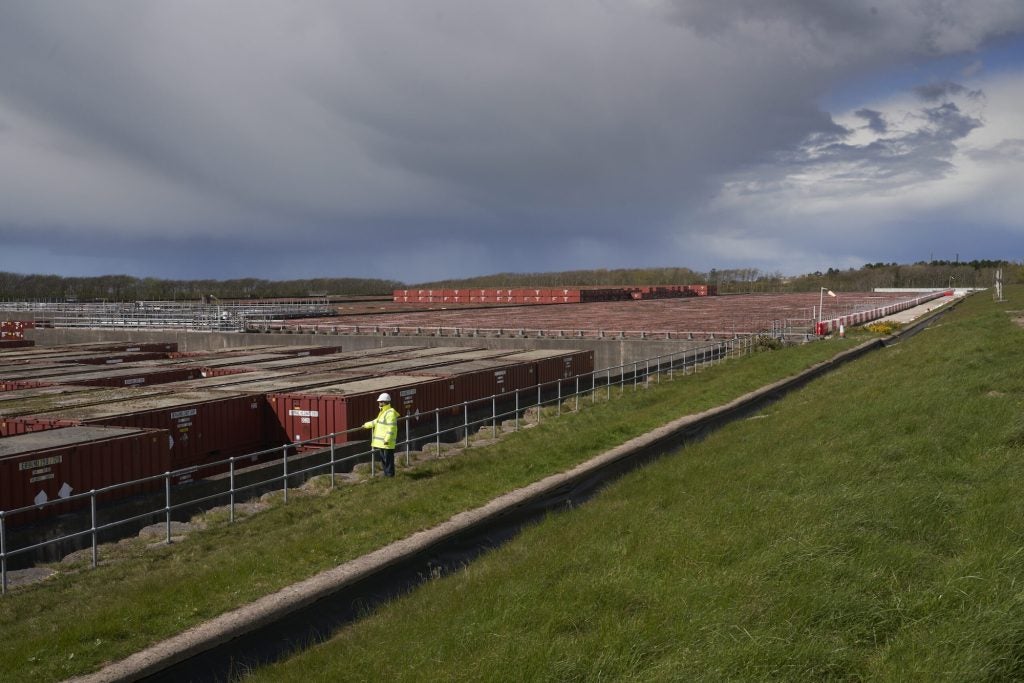
A recent project involves treatment of flasks recovered from fuel storage ponds. ”We applied multi-stage treatment involving chemical decontamination followed by smelting,” Ashton says. “This allowed us to treat an item which was previously considered too contaminated to treat and recycle.”
The treatment trial itself has yielded valuable lessons. Traditional decontamination methods often rely on abrasive techniques such as shot blasting. However, NWS has encouraged its supply chain to investigate alternative approaches.
The focus extends beyond the primary waste stream to include treatment residues and secondary wastes. “We’re also thinking about the backend and the secondary waste that gets generated,” he adds.
“If the cost of treatment is disproportionate, generates difficult to manage waste, or causes unnecessary radiological dose to workers then sometimes disposal is still the right approach,” says Ashton. As he explains: “We’re here to provide sustainable solutions.”
A long-term mission
Despite the success of waste diversion and treatment initiatives, both Ashton and Bradley emphasise that disposal infrastructure will remain essential, given spent fuel, high-level waste and many long-lived radioactive materials will continue to require geological disposal. “We will always need a GDF,” Ashton says.
Likewise, the repository itself remains a long-term national asset. Current planning assumptions indicate that operations could continue near Drigg well into the next century. “The current estimation is that the final closure of the site will be in 2135,” Bradley says.
Future development plans also include additional disposal vaults beyond those currently operating, even as existing disposal areas will continue to be progressively capped and closed. Nonetheless, as work progresses on the STIM project and the NDA continues to refine the UK’s waste management strategy, the repository at Drigg represents more than a disposal facility. It has become a test bed for new approaches to radioactive waste management by demonstrating how engineering, innovation and long-term stewardship can extend asset life, reduce costs and help address some of the nuclear sector’s most persistent challenges. Rather than serving simply as a disposal site, the LLWR has become a key component of a broader national strategy focused on waste reduction, resource optimisation and long-term environmental protection.
“We’ve done the low-level waste diversion. We’ve saved a lot of money. We’ve avoided the need for a second repository. Now, we’re looking at how we can empty stores, support decommissioning and continue reducing radioactive waste liabilities across the UK,” says Ashton, concluding: “Our job is the radioactive waste inventory. Our job is to put as big a dent in that as cheaply and quickly as possible.”


