An International Atomic Energy Agency (IAEA) Integrated Regulatory Review Service (IRRS) team of experts has completed a follow-up mission to assess Slovakia’s progress in implementing the recommendations and suggestions made during a review of its nuclear and radiation safety regulatory infrastructure in 2022.
The eight-day follow-up mission was conducted by five experts from Australia, Finland, Pakistan, Portugal and Romania and three staff members from the IAEA. The team found that Slovakia had invested considerable effort and made noteworthy progress in addressing the findings of the 2022 mission, demonstrating a clear commitment to safety. It had implemented 12 recommendations and eight suggestions of the 23 recommendations and 10 suggestions issued in 2022.
The IRRS follow-up review was carried out at the request of the Government and hosted by the Nuclear Regulatory Authority (UJD – Úrad jadrového dozoru).
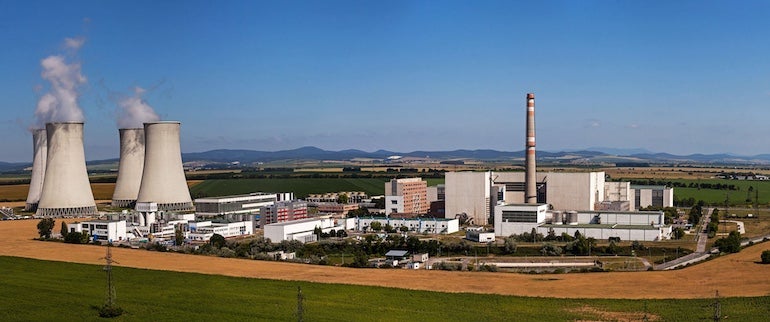
Since the 2022 IRRS mission, Slovakia has connected a fifth and sixth nuclear reactor to the grid. It now has in operation three units in Mochovce and two in Jaslovské Bohunice in western Slovakia. Together they generated 67.4% of the country’s electricity last year. Slovakia has also authorized the commissioning of Mochovce’s unit 4, which is expected to become fully operational in first quarter of 2027.
The mission team conducted meetings and interviews with representatives from the authorities responsible for nuclear, radiation and transport safety, which included the Nuclear Regulatory Authority, Public Health Authority, Ministry of Health, Ministry of Transport, National Labour Inspectorate, Ministry of Labour, Social Affairs and Family and the Ministry of Interior.
“The team greatly appreciated the open and constructive engagement of all our Slovak counterparts, and we recognised the substantial work undertaken to address the recommendations. The strong coordination and cooperation across the regulatory bodies have been central to this progress,” said Uma Ramasamy, IRRS Team Leader, working at Queensland Health, Australia.
The mission team highlighted the progress made by Slovakia in:
- The establishment of a committee to enhance coordination and cooperation among all regulatory bodies;
- The amendment of the Act on Radiation Protection to enhance regulatory oversight;
- The revision of the national policy document Policy, Principles and Strategy for the Safe Use of Nuclear Energy and Ionising Radiation in the Slovak Republic;
- The expression of its political commitment to implement the requirements of the supplementary Guidance on the Import and Export of Radioactive Sources and the Guidance on the Management of Disused Radioactive Sources.
The team also identified areas where further improvement is needed, including ensuring the effective independence of the Public Health Authority and respective Regional Public Health Authorities, as well as providing the necessary resources for the Public Health Authority, respective Regional Public Health Authorities and Ministry of Transport to fulfil their regulatory responsibilities.
“Hosting the IRRS follow-up mission is another example of Slovakia’s long term commitment and proactive approach to further improving of nuclear, radiation, radioactive waste and transport safety,” said ÚJD Chairwoman Marta Žiaková. “The opportunity to exchange views with colleagues and experts from other regulatory authorities is always highly valuable in helping us to continually strengthen the Slovak national framework for nuclear and radiation safety and protection.”
“The follow-up IRRS mission in Slovakia confirmed the country’s significant advances in strengthening nuclear and radiation safety,” said Kirsi Alm-Lytz, IAEA Acting Director of the Division of Nuclear Installation Safety. “Slovakia has now completed a second cycle of the IRRS process, which is commendable.” The final mission report will be provided to the Government of Slovakia in about three months.


