
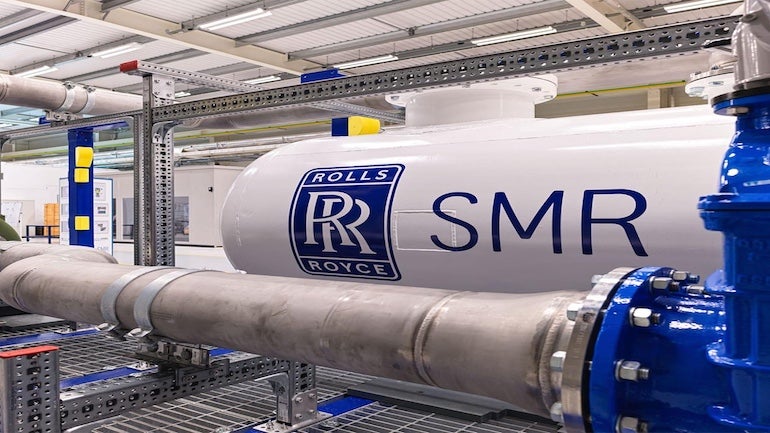
The pipeline of small and advanced reactors has grown quickly with more than 120 Small Modular Reactor (SMR) designs globally and at least seven designs already operating or under construction. Many of these units will not look like the plants that shaped today’s security rules. They will be smaller, built in modules over several years and sited next to factories, data centres or remote communities rather than on large dedicated estates. Many will rely on passive safety and run with a handful of staff on shift.
The security model that grew up around large light water reactors was not designed for any of this. Regulators have started to respond to this change and the direction is now clear; there will be less reliance on large onsite guard forces and prescriptive rules and more on engineering, early detection and careful planning. For developers and engineers, that is not a lighter burden. It is a different one that starts much earlier in a project.
A security model built for a different kind of plant
For decades the physical protection of a commercial reactor has followed a familiar pattern. An owner-controlled area surrounds a fenced and alarmed protected area, which in turn encloses vital areas holding the equipment needed to keep the core safe. Entry is tightly controlled at each boundary. Inside the protected area, a central alarm station watches sensors and cameras around the clock, backed by a secondary station that can take over if the first is lost.
At the heart of the US approach, for example, sits the onsite armed response force. Nuclear Regulatory Commission (NRC) regulations have required a minimum number of armed responders to be available at all times to interdict and neutralise an adversary defined by the design basis threat. The rules are detailed and prescriptive, they specify not only the outcome but much of the method.
That model made sense for gigawatt-scale plants with large source terms, active safety systems and large workforces already on site. Applied to a 50MWe SMR or a 5MWe microreactor, it creates problems. Security staffing can become one of the largest operating costs of a small plant, eroding the economic case that makes small reactors attractive in the first place. A fixed protected area sized for the first unit may not suit the fourth. And a design that relies on passive cooling and robust fuel may simply have fewer credible targets for sabotage than a conventional plant.
None of this means advanced reactors need less protection. It means the protection has to be matched to what is actually on the site and how the site will change.
What regulators now allow
Over the past two years the US NRC has moved on several fronts at once. In August 2024, the Nuclear Regulatory Commission (NRC) published a proposed rule on alternative physical security requirements for advanced reactors. It set out voluntary options for small modular and non-light water reactors licensed under Parts 50 and 52.
Under the rule, a licensee could field fewer than 10 onsite armed responders, or none at all, where the design supports it. They could rely on law enforcement or other offsite armed responders for interdiction, provided the site could still detect and assess a threat, deliver adequate delay and share information and training with those responders. The secondary alarm station could move off site, for example to a shared facility, and delay could come from engineered systems, distance, terrain or natural features rather than physical barriers alone.
Eligibility would be tied to consequences. To use any alternative, a licensee would have to show through technical analysis that the offsite radiological consequences of a security-initiated event stayed within the dose reference values already used in siting.
On 30 March 2026 the NRC published its final Part 53 rule, a risk-informed, technology-inclusive framework for licensing advanced reactors, which took effect on 29 April 2026. Alongside it came new sections of Part 73 covering physical protection against radiological sabotage (73.100), protection of digital computer and communication systems (73.110) and access authorisation (73.120). The NRC describes the result as a “consequence-based approach” across physical security, cyber security and access authorisation.
One line in the new rule matters most for designers. Section 53.440(f) requires that safety and security be considered together in the design process “such that, where possible, security issues are effectively resolved through design and engineered security features.”
In June 2026 the NRC went further with a proposed rule on modernising security requirements, which would shift physical security “from prescriptive rules to performance-based, risk-informed criteria”. Under the proposal, licensees could identify achievable target sets through site-specific analysis; combinations of equipment that an adversary with the capabilities of the design basis threat could realistically compromise. If no achievable target sets exist and no active measures are credited, much of the remaining prescriptive framework would no longer apply.
The NRC states that these alternatives “would most likely be available to non-light water reactor designs that incorporate security by design and engineered safety or security features.” Its draft regulatory analysis estimates net savings of $561m to $1.01bn over 30 years, depending on the discount rate.
This is still a proposal. The comment period closed in July 2026 and an NRC presentation from September 2026 gives January 2027 as the estimated date for the final rule. Not everyone is convinced by every element. In its comment letter, New York State objected to allowing licensees to “entirely rely on law enforcement or other offsite armed responders” and asked the NRC to require written agreements with willing and capable law enforcement agencies, submitted for approval.
Fewer guards means detection and delay do more of the work
The building blocks are familiar from other critical infrastructure, where physical security measures are usually grouped into four layers: deter, detect, delay and respond. What changes at an advanced reactor site is how much weight each layer has to carry when the response force is smaller or based off site.
The core logic of a physical protection system has always been a race against time. Protection succeeds if responders can interrupt an intruder before they’re able to complete their task.
That depends on the moment of first detection, how quickly an alarm is assessed and communicated, how long barriers and distance slow the attacker and how fast responders arrive. At a large plant with a substantial armed force on site, response time is short and the margins are comfortable. Move the responders 10 or 20 minutes away and the whole timeline has to stretch.
Three consequences follow:
- Faster, more reliable detection: If an intruder is detected only once they reach their target, there is no time left to respond from off site. Detection needs to start at the outer boundary and be layered, so a single failed sensor does not open a gap.
- Assessment becomes critical: An alarm that cannot be quickly confirmed as real or false wastes time, the most valuable resource on a lightly staffed site. An effective response depends on clear camera coverage of every alarm zone, good lighting and the efforts of experienced operators, not sensors alone.
- Delay has to be engineered in: Where barriers once only needed to hold an adversary until guards inside the fence arrived, they now need to buy enough time for an off site force. Building layout, embedded or below-grade equipment, robust doors and the distance between the perimeter and key targets all become security features.
Sandia National Laboratories’ recent work for the US Department of Energy shows how these ideas translate into numbers. In its September 2025 study of a modular SMR facility, the team designed the exterior perimeter with two redundant and diverse lines of detection, dual-stack bistatic microwave sensors and six-beam active infrared sensors.
Detection performance was set to the NRC draft guidance target of 90% probability of detection at 95% confidence. The team also allowed 30 seconds for response communication after an alarm was assessed. Accounting for assessment and communication reduced the adversary task time available to responders by 75 seconds for a sabotage scenario and by 105 seconds for theft of fresh fuel.
Those seconds are the point. Every part of the detection and assessment chain either adds to the time responders have or takes it away. When responders are further away, the designer has fewer seconds to give up.
The site that keeps growing
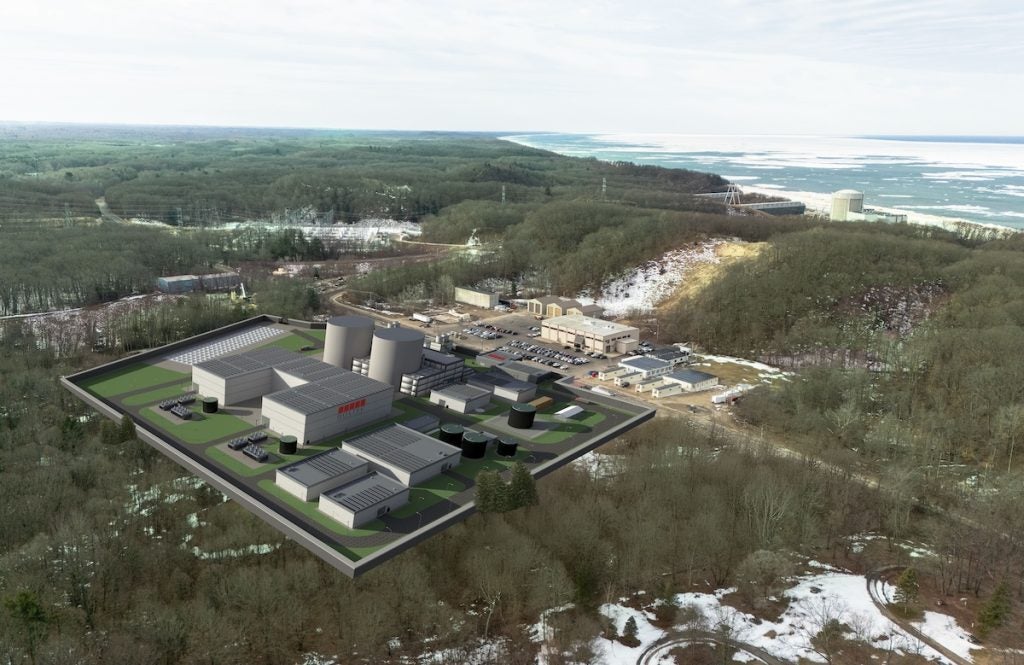
Large plants are usually secured once, before fuel arrives, but modular plants are different. Units may be added, adjusted and run in tandem with older models over many years, so the protected area, security systems and the response plan all have to adapt to a constantly evolving environment. This is a challenge that has little precedent in the existing fleet.
The Sandia study compared two options for a multi-unit SMR facility. In the first, a single large, protected area is built at the start and sized for the finished site. In the second, the protected area expands as each new unit comes online.
| Measure | Larger protected area built at the start | Protected area that expands per unit |
| Technology purchase cost | $15.56m | $15.30m |
| Security positions (24/7) | 13 | 14 |
| Full-time equivalent staff (12-hour shifts) | 52 | 56 |
| Armed security officers | 4 | 5 |
| Armed responders | 4 | 4 |
Figure 1: Security options for modular reactor sites. Source: Sandia National Laboratories, SAND2025-11085R
The upfront technology costs were close, with the larger area slightly more expensive. Yet the larger area needed one fewer armed security officer, which the report notes could offset the difference over the life of the plant.
The expanding option also brings repeated work; every expansion means reconfiguring intrusion detection, video and access control systems. Moving equipment such as microwave towers, according to the study, “can be expensive and lead to increased costs over time.”
On that basis the team recommended a single larger protected area for modular construction. Its wider lessons apply whichever route a developer takes:
- Fix the end-state layout and response configuration early, before the first unit is built.
- Plan a temporary secondary entrance for construction vehicles and workers, so building later units does not slow security operations for those already running.
- If the protected area will expand, trench power and communications in one campaign at the right time, since cables laid too early can be damaged by construction.
- Drop measures that add cost without improving effectiveness. The team removed ankle-breaker rocks from its design for exactly that reason.
The underlying message is that security for a modular plant has to be planned for the site’s whole construction programme, not just its first day of operation.
New locations, smaller teams
Many advanced reactors are being marketed for places that have never hosted a nuclear plant, such as industrial parks that want process heat, data centres that need steady power and remote communities or mines that currently burn diesel. These sites each have their own unique security needs, influenced by site boundaries, workforce size and local police response times.
If offsite responders are part of the plan, the relationship with them becomes a design element in its own right. The NRC’s 2024 proposal expected licensees relying on offsite response to share site information, offer periodic training and describe the offsite role in contingency plans.
New York’s comments on the 2026 proposal show that states and communities will look closely at how firm those arrangements are. In practice, developers should expect to agree written arrangements with law enforcement early, run joint exercises before fuel load and plan for what happens if that response is degraded.
Smaller teams also mean more of the security function runs through digital systems like remote alarm stations, networked sensors and the communications links between them. That raises the stakes for cyber protection, which is why the new technology-inclusive Part 73 sits alongside physical protection with its own section on digital computer and communication systems.
Outside the US, the same thinking is gaining ground. The International Atomic Energy Agency (IAEA) Nuclear Security Series No. 13 framework has long stated that site selection and design “should take physical protection into account as early as possible.” A December 2025 working paper from the Nuclear Security Working Group of the IAEA’s Nuclear Harmonization and Standardization Initiative (NHSI) goes further for SMRs. It maps the guidance in NSS 35-G to nine key security by design steps and draws a clear line between intrinsic security (considered during planning and design) and extrinsic security (added once the design is complete). The paper reflects the consensus of working group members rather than an official IAEA position. A fuller IAEA technical guide on the subject is in preparation.
The case for designing security has been made before, including in early work on security by design from the World Institute for Nuclear Security (WINS). What has changed since then is that the rules now reward it. Under Part 53 and the proposed modernisation rule, design features that remove achievable targets or lengthen adversary timelines can be credited directly. That makes early decisions worth recording. In practical terms, developers can:
- Bring security specialists into the concept design team, not just the operations team.
- Run vulnerability assessments alongside safety analysis, so the two inform each other.
- Document why each design choice reduces risk, in a form the regulator can review and credit.
- Treat the security plan for later construction phases as part of the original design, not a future project.
A different kind of protection
Security at advanced reactor sites is not lighter than at today’s plants, it’s simply different. The regulatory shift in the US, with Part 53 now in force and a performance-based modernisation rule expected in 2027, moves the weight of protection away from large onsite forces and towards engineering, early detection, reliable assessment and well-planned partnerships with offsite responders. International guidance points the same way.
For developers, the practical lesson is about timing. The decisions that matter most, from the shape of the protected area to the placement of vital equipment and the arrangements with local police, are made long before a plant is built. Projects that treat security as a design discipline from the first drawing are likely to license more smoothly, operate more economically and protect their sites better as they grow.


