
Seventy years after the UK opened the world’s first commercial nuclear power station, the country is once again contemplating a significant nuclear construction programme. As an important moment, it should also be an opportunity for reflection. Britain’s early nuclear programme was characterised by extraordinary ambition. It created new technologies, built a fleet of reactors, and established a depth of scientific, engineering and regulatory capabilities that continues to underpin the industry today.
The world in 2026 has, of course, changed; our climate has changed, and the risks facing our society are different. Alongside this, technology has advanced, and reactor designs are more sophisticated. Analytical methods are more powerful. Regulation is more mature. Understanding of risk, human performance, ageing, severe accidents, and environmental impacts has advanced considerably. All of that represents progress. However, several nuclear projects have also become slower, more complicated, and more expensive to deliver over the same period. Processes have accumulated, documentation has expanded, and the industry has often moved away from repeatable delivery towards increasingly bespoke solutions, in part to reduce risks and gain marginal safety benefits. As the UK and other nations begin the next chapter of nuclear deployment, the industry needs to confront a difficult but necessary question—how do we retain everything that makes nuclear safe while removing the complexity that does not add commensurate value? The answer is not deregulation nor is it any dilution of nuclear safety standards. It is a return to disciplined engineering judgement, supported by proportionate regulation, intelligent replication and stronger leadership across the nuclear system.
The role of replication
Nuclear is different from many other industries. The potential consequences of failure demand high levels of competence, quality, vigilance and assurance. However, this can sometimes develop into an “illusion of uniqueness”. This is the belief that nuclear is so exceptional that it can’t learn from other sectors, or that every project and every problem requires a unique solution. That mindset can create unnecessary complications. For example, there are important lessons to be drawn from aviation, chemicals, defence, digital engineering, manufacturing and other safety-critical sectors. Many have achieved better outcomes through standardisation, stable designs, repeatable processes, mature supply chains, and continuous improvement. Nuclear should not uncritically copy those sectors. But neither should it assume that the nuclear sector’s established ways of working are automatically the only, or best, ways of doing things.
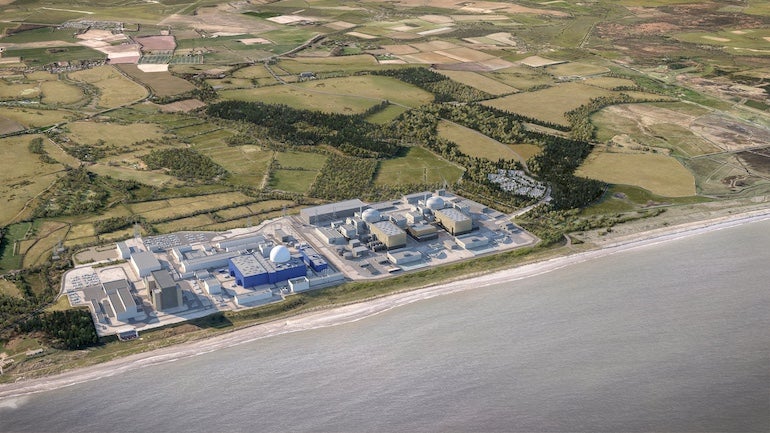
We should always be able to explain why a requirement exists, what risk it addresses and whether the solution is proportionate to the outcome being sought. That matters because complexity and change are not neutral. It can obscure what is significant to safety, stretch organisational capacity, introduce additional interfaces, and make it harder to operate a plant and for people to exercise professional judgement. In most cases, this means the marginal gain in safety is unlikely to outweigh the potential disbenefit and the uncertainty that comes with the change. More processes do not necessarily mean more safety, and in some circumstances, it can make the system less intelligible to the people expected to operate within it. This is one of the key reasons why replication is central to Sizewell C. The fundamental proposition is straightforward, and that’s to start with a mature design that has already been through the UK regulatory process, preserve it wherever possible, and use experience from the first project to improve the delivery of the second. Replication is presented as a primarily commercial strategy. It undoubtedly reduces commercial and delivery risk, supports productivity and gives greater confidence to investors and the supply chain. But it is also a safety strategy. A stable design allows the regulator, developer, operator, and entire supply chain to build a deeper understanding of the plant. It reduces the number of first-of-a-kind safety or operational issues. It enables construction and operating experience to be captured systematically and allows improvements to focus on execution and ultimately safe operation rather than repeated redesign. The history of large nuclear programmes demonstrates why this matters. Successive changes between ostensibly similar units can erode the benefits of fleet construction and operation. Each modification may appear reasonable in isolation, but collectively they can create configuration complexity, disrupt manufacturing, require additional substantiation, and weaken the learning that should transfer from one unit to the next.
The international EPR programme also illustrates the importance of sequence and learning. Projects originally expected to lead the deployment programme did not necessarily become the first to operate. Later units were able to benefit from the experience and difficulties encountered elsewhere. The lesson is not that replication means refusing to improve or innovate. It means being much clearer about where change should occur while being ready to maximise use of innovative techniques and technologies to improve safety, quality and productivity. At Sizewell C, the objective is to hold the “what” as stable as possible while improving the “how”. That includes greater modularisation, off-site manufacture, prefabrication, digital construction techniques, improved sequencing and better use of data. Innovation, in this context, is not an excuse to alter a proven nuclear design. It is a means of delivering that design more safely and predictably. All this needs leadership across the system.
Engineering judgement in a model-driven age
The industry also needs to reassert the role of engineering judgement. Modern engineering benefits from analytical capabilities that previous generations could scarcely have imagined. Advanced modelling, simulation, digital twins, AI, and large-scale data analysis can all improve our understanding of plant behaviour and project performance. We should use those tools. But they must remain tools—they should inform human judgement rather than displace it.
There is a danger in assuming that more detailed modelling automatically produces a better decision. A model can be a powerful aid but is only as useful as its assumptions, inputs, boundaries and interpretation. Engineers still need to understand the physical system, the purpose of the analysis and the context in which the output will be used. That is particularly important when requirements, standards or guidance change. The instinctive response can be to alter the engineering solution. Yet the first question should not be, “What must we change?” It should be: “Why is a change necessary in this specific context?”
A new standard may address a problem that has already been resolved through the existing design. A changed standard or requirement may address a genuine gap that does require action, but equally, it may not be materially relevant to the safety function under consideration. This is where sound engineering judgement becomes crucial. Only competent, questioning professionals can make those distinctions.
This is not a case for intuition over evidence. It is a case for integrating analysis, operating experience, design knowledge and professional judgement rather than allowing any one of them to dominate mechanically.
Hinkley Point C has rebuilt capability and generated experience across design, construction, manufacturing, regulation, and the supply chain. Sizewell C can take that learning, embed it, and demonstrate how a second project can be delivered more effectively. On that basis, Sizewell C truly is a lighthouse project for the next phase of British nuclear. Its value therefore extends beyond the electricity it will generate for generations. By demonstrating that replication truly works, that supply chains can industrialise around a stable design, that safety cases can be both rigorous and usable, and that regulation can remain robust while becoming more focused on outcomes, Sizewell C will create a stronger platform for the projects that follow.
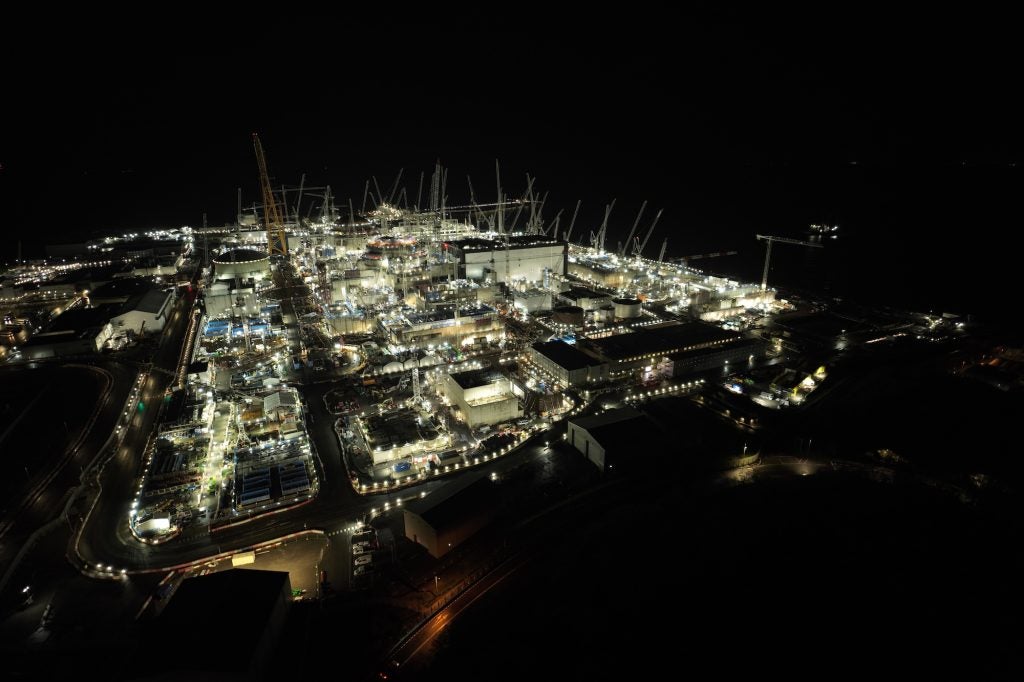
The success of a renewed nuclear programme will depend not simply on individual project decisions, but on whether Britain can create a repeatable system for delivering nuclear infrastructure. In fact, a systems approach is already taking shape. Earlier this year, Defra announced that the Environment Agency will act as Sizewell’s lead environmental regulator on a pilot basis, providing a single point of coordination across environmental regulators. It is a practical example of how regulation can become more joined-up without compromising standards. Industry has a responsibility to reform its own practices, improve productivity, invest in competence, and challenge unnecessary processes. Government also has a role. Planning, consenting and regulatory policy need to support replication rather than inadvertently force avoidable divergence. Where a project proposes a sensible change that improves value without weakening safety or environmental outcomes, the system must be capable of assessing it proportionately and in a reasonable timeframe.
After years of uncertainty, there is now clear national backing for nuclear power. The task is to turn that commitment into an enduring delivery model. The UK’s first nuclear era was built on scientific ambition and practical engineering. Its next stage should combine those same qualities with the accumulated experience of the past seven decades. Let’s respect the nature of nuclear without becoming imprisoned by the illusion of uniqueness and complexity. By combining an uncompromising safety culture with replication, simplicity, engineering judgement, and strategic leadership, the UK can once again become not merely a country that supports nuclear power, but one that knows how to deliver it.


