
The US Army has announced the conditional award of long-term leases to three companies to design, finance, build, and operate commercial power generation systems across six military installations. This initiative operates under the Army’s Enhanced Use Lease (EUL) authority. It leverages under-utilised land to bolster national defence and energy resilience, providing back-up power if the local grid goes down.
The three selected developers, their assigned military sites, and the anticipated energy technologies include:
- Ameresco – assigned the Aberdeen Proving Ground (APG -Maryland) and Picatinny Arsenal (New Jersey) for commercial-scale nuclear power generation, including advanced micro-reactors and next-generation small modular reactors. For example, the project at Aberdeen aims to use a 390 MWe reactor design proposed by Terrestrial Energy.
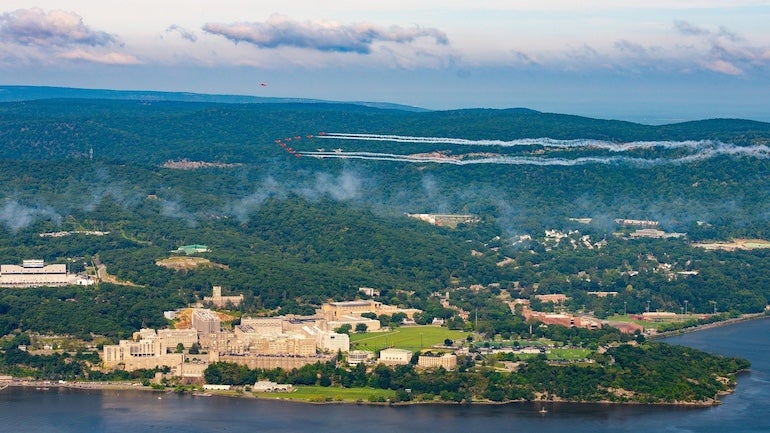
- Indelible-Bloom (Coalition) – assigned Fort Detrick (Maryland), Letterkenny Army Depot (Pennsylvania), and the US Military Academy at West Point (New York). A partnership combining management consulting firm Indelible with fuel cell manufacturer Bloom Energy is expected to deploy resilient fuel cell power generation alongside advanced gas technologies.
- Frontier Power USA – assigned Tobyhanna Army Depot (Pennsylvania)for long-duration energy storage mixed with clean power generation, matching American-made battery storage with US-compliant power solutions to maximise mission readiness.
The federal government retains ownership and title to the land at all times. The private developers bear 100% of the costs to design, build, operate, and eventually decommission the facilities. In return for the use of the land, the lessee pays rent at or above fair market value. The Army prefers to receive this rent as “in-kind” consideration. This means that instead of cash, the lessee directly funds and executes infrastructure improvements on the host installation. Finally, a mandatory decommissioning bond ensures that funds are secured well in advance to return the land to its original condition when the lease ends.
To prevent foreign influence, eligibility was restricted to firms organised under US law with majority domestic ownership. While the agreements are in their initial stages, developer-led on-site construction is slated to begin as early as 2027, with the target of achieving an Initial Operating Capability by or ahead of 2030.
“The ability to provide backup power to our installations is critical to ensuring mission success and resiliency for our installations,” said Dr Jeff Waksman, Principal Deputy Assistant Secretary of the Army for Installations, Energy & Environment. “These awards are translating national energy priorities into action – promoting American energy dominance.”
No construction will begin until rigorous environmental and regulatory reviews – including the National Environmental Policy Act (NEPA), Clean Air and Water Acts, and all required federal, state, and local permits – are fully complete. The selected parcels were specifically chosen to ensure compatibility with the ongoing missions of each host installation.
Ameresco’s said its APG power project is planned to provide commercial power generation capacity to the regional electricity market and enhance APG’s electric power resiliency. The project is a phased development of natural gas and advanced nuclear commercial power generation. Terrestrial Energy is supporting Ameresco as the supplier of advanced nuclear generation technology with its Integral Molten Salt Reactor (IMSR) Plant design.
“Terrestrial Energy is excited to be partnering with Ameresco to support the US Army’s Strategic Capital Initiatives to build advanced energy resilience at one of the country’s most critical research and testing installations,” said Simon Irish, CEO of Terrestrial Energy. “This project is expected to deliver resilient power supply and support the nation’s energy security policy objectives. Ameresco is at the forefront of mission-critical projects, and we are honoured to be partnering with them.”


