
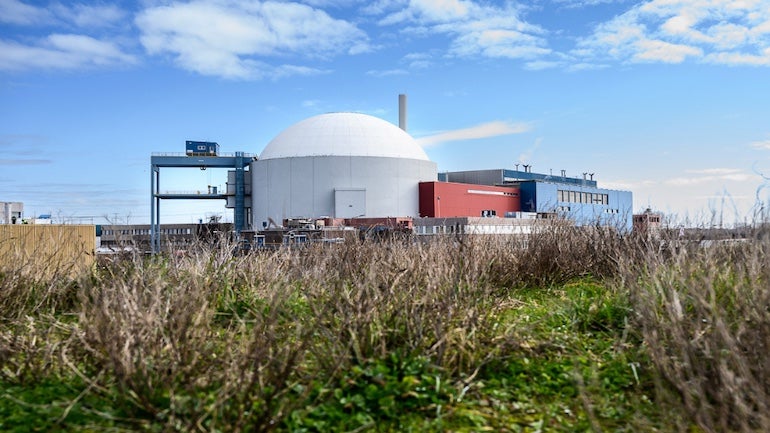
The Nuclear Energy Organisation Netherlands (NEO NL) has advanced its nuclear new-build strategy by signing contracts for Front-End Engineering Design (FEED) studies with France’s EDF and the US-based Westinghouse Electric Company. These design studies represent a regulatory and technical milestone to determine which supplier will ultimately construct two new generation III+ nuclear reactor units in the Netherlands.
The design study (FEED 1) will be carried out in two phases. The first phase is not dependent on the location of the nuclear power plants (FEED 1a). This allows preparations to continue while the Dutch government progresses the process of selecting a site. Once the Cabinet has taken a draft Preferred Site Decision, the second phase (FEED 1b) will begin. This focuses on site selection. By dividing the study in this way, all non-site-specific activities can continue according to schedule.
Both companies will begin the first phase of the studies after the summer. During the design studies, EDF and Westinghouse will assess how their reactor designs, based on proven Generation III+ reactor technology, can be aligned with Dutch legislation and regulatory requirements. This includes compliance with construction regulations, licensing requirements, technical standards and the overall project schedule. Potential risks and key areas requiring attention will also be identified at an early stage.
The outcomes of the studies will provide an important foundation for the further preparation of the nuclear power stations. They will also help clearly define which activities will fall under the responsibility of the future owner of the power stations and which responsibilities will remain with the technology supplier. The studies are expected to take between 12 and 18 months. Their exact duration will depend on when the Dutch government adopts a draft Preferred Site Decision. No decision will be made regarding a technology supplier until the official tendering procedure has been completed at a later stage.
Each unit will have a capacity between 1,000 MWe and 1,650 MWe using advanced Generation III+ reactor technology. The Dutch government expects the units to be online and deployed by 2035. While Borssele (the only operating power reactor in the Netherlands) remains the preferred site, no final decision has been made. Terneuzen in Zeeland and two locations at Eemshaven in Groningen remain under technical study. A preliminary location decision is scheduled for later in 2026.
NEO NL was established in February 2026 as a wholly state-owned entity acting as the sole future owner and operator to ensure strict public control over technology selection, safety, and risk management. A consortium led by the US engineering company Amentum is providing overarching technical solutions and management support to NEO NL throughout the development cycle.
The design contracts narrow the technology pool down to two main contenders after South Korea’s KHNP previously withdrew from the process. EDF (submitting their EPR design, which the Dutch Authority for Nuclear Safety and Radiation Protection (ANVS) has noted is robust but complex for local permitting. Westinghouse Submitted their AP1000 reactor design, which has been evaluated for compliance with Dutch laws and local grid synchronisation. The FEED studies build upon earlier technical feasibility assessments from 2024 to create a legally binding, safety-compliant baseline before the final construction tendering phase begins.
The Dutch government is using a state-backed model similar to the Czech Republic’s public-support framework for its Dukovany project. After determining that private investors were unwilling to absorb high construction risks, the state took full leadership through NEO NL. The Dutch government is financing 100% of the initial preparation and early construction phases out from its budget.
Once the plants are fully operational, the long-term interest rate on state financing will be structured around the yield of Dutch government bonds plus an additional 1 percentage point. In late 2025 and early 2026, the European Commission approved a €172-222m ($200-258m) state aid measure. This specifically underwrites the early-stage preparatory work, legal fees, and FEED contracts without distorting the EU internal electricity market. The newly formed ruling coalition has earmarked €13.5bn from the national Climate Fund to support the broader goal of building at least four new nuclear plants.
Recognising that large-scale plants take a decade or more to build, the Netherlands has launched a parallel small modular reactor (SMR) acceleration agenda to counter grid congestion and provide a stable, carbon-free alternative to fossil-fuel plants The Coalition Agreement explicitly states that the country’s expanded goal of four new nuclear power stations can be met by a mix of conventional large units or SMRs, collaborating directly with industrial clusters and regional authorities.
The Ministry of Climate Policy and Green Growth has allocated a dedicated €20 million to stimulate domestic SMR market initiatives and technical preparation. The government is on track to finish its pilot identification phase, selecting the primary SMR technologies and commercial frameworks best suited for Dutch regulations by the end of 2026. Local provinces are investigating potential sites. For instance, the province of Gelderland expects to officially designate two specific local sites for SMR deployment by 2027.
Private entities are moving quickly alongside government policy. The Dutch nuclear developer ULC-Energy has signed a major cooperation agreement with heavy-lifting specialist Mammoet to streamline the supply chain and logistics for multiple future SMR rollouts across the Netherlands and Belgium. ULC-Energy is also collaborating with Rolls-Royce SMR for prospective technology deployment.


