
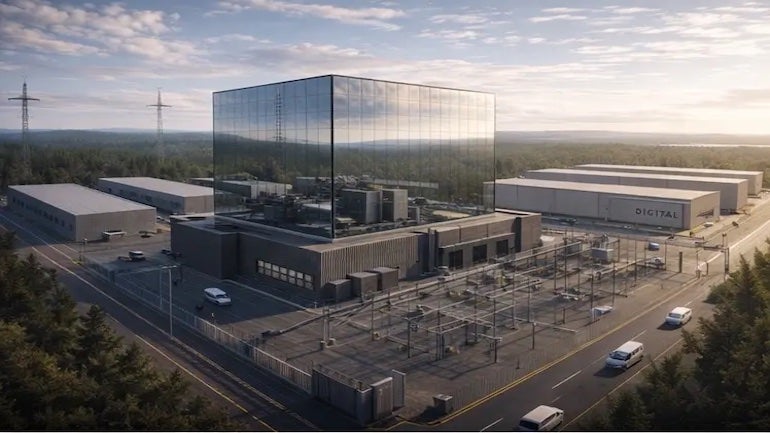
Toronto-based Thorium Atomics has advanced its US licensing pathway by initiating pre-application regulatory engagement with the Nuclear Regulatory Commission (NRC) for its Tesseract TGR advanced reactor. NRC is reviewing the project under 10 CFR Part 53, released in March, which modernises commercial nuclear rules to safely accommodate advanced nuclear reactors and small modular designs without relying on legacy light-water reactor assumptions. The company is preparing a Regulatory Engagement Plan describing the Tesseract technology, its proposed licensing strategy and the sequence of planned pre-application submissions.
“A project number and an assigned project manager give us a defined NRC point of contact and a trackable reference for our future pre-application work,” said Dr Jack Vecchiarelli, Thorium Atomics Chief Scientific and Regulatory Officer. “Part 53 is risk-informed and technology-inclusive, making it well suited to a high-temperature gas-cooled reactor. Commencing that engagement while the design is still being developed serves to ensure that regulatory expectations are clearly understood and addressed, thereby informing the design development process and helping to de-risk the future licensing pathway.”
The Tesseract TGR (thermal gas-cooled reactor) is explicitly designed to supply 750°C high-temperature industrial process heat alongside 100 MWe of firm, dispatchable electricity. Because it operates at much higher temperatures than conventional water-cooled reactors, it is optimised to decarbonise energy-intensive heavy industries like chemical manufacturing, hydrogen production, and district heating.
The 250 MWt/100MWe pebble-bed reactor balances is helium-cooled. It uses TRi-structural ISOtropic (TRISO)particle fuel enriched to under 10% U-235. This avoids the infrastructure hurdles facing reactor designs that rely on high-assay low-enriched uranium (HALEU), which requires up to 19.75% enrichment and suffers from limited global supply chains.
A structural blanket composed of thorium-232 surrounds the central core. During operation, surplus neutrons escaping the core strike the thorium, converting (or breeding) it into fissile uranium-233. According to Thorium Atomics, this active breeding cycle reduces the reactor’s lifetime mined-uranium requirements by roughly 50% compared with traditional Generation II light-water reactors.
The company has also applied to the Idaho National Laboratory’s (INL’s) Nuclear Energy Launch Pad programme, which will enable it to cooperate with federal research infrastructure. The Launch Pad provides private developers with direct access to a 2,000-acre dedicated testing area situated within INL’s 890-square-mile desert federal site. This is where developers can physically site, construct, and run experimental or demonstration reactors.
For Thorium Atomics specifically, the primary objective of this application is data and physics validation. Because the Tesseract TGR design relies on a unique thorium-232 breeding blanket, the company needs to prove its mathematics to the nuclear industry and regulators. The Launch Pad grants them a pathway for independent, qualified-code reactor-physics verification. This means INL’s supercomputers and nuclear physicists will run independent simulations on the Tesseract’s core to mathematically verify its safety, heat generation, and uranium-breeding claims.
Thorium Atomics has offices in Toronto, Ontario, and Knoxville, Tennessee. As well as conducting pre-application activities with the NRC, the company is and maintaining a parallel regulatory pathway with the Canadian Nuclear Safety Commission.


