
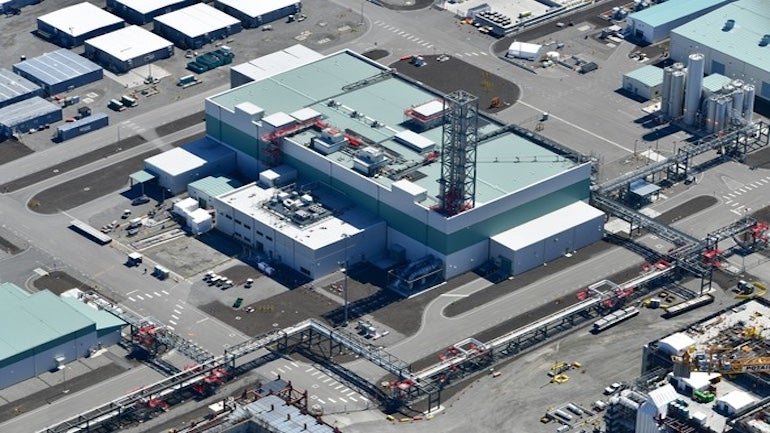
The Waste Treatment Plant (WTP) at the US Hanford site in Washington state has reached a major commissioning milestone, solidifying more than 100,000 gallons of Hanford tank waste into glass.
The Hanford site was used to produce plutonium over a 40-year period during WWII and the Cold War resulting in 56m gallons of radioactive and chemical wastes, which are now stored in 158 underground tanks. DOE contracted Bechtel National to design and build the Waste Treatment & Immobilisation Plant (WTP), the world’s largest radioactive-waste treatment plant, which was commissioned in December 2025.
The plant uses vitrification technology, which involves mixing the waste with glass-forming materials and heating it to 2,100 degrees Fahrenheit inside large melters. This mixture is poured into stainless steel canisters to cool and solidify into a glass form that will be stable and impervious to the environment while its radioactivity dissipates over hundreds to thousands of years. Each container holds 6.6 tonnes of waste. The Integrated Disposal Facility (IDF) received the first 25 containers in autumn 2025, staging them on a nearby concrete pad to prepare them for disposal.
“Treating 100,000 gallons is more than just a number; it represents our commitment to protecting the Columbia River and Tri-Cities community for future generations,” noted Mat Irwin, Hanford Field Office Assistant Manager for Tank Waste Operations.
The Bechtel-led team has operated the plant in extended hot commissioning since October 2025. The hot commissioning process will continue over the next year, during which the team will build production consistency and establish a steady rhythm for safe and sustained operations.
“This achievement is a testament to the dedication and expertise of our team. Each gallon of immobilised waste brings us closer to a cleaner, safer environment and revitalised community,” said Brian Hartman, WTP project director and Senior Vice President with Bechtel National.


