
US-based start-up Zap Energy has announced its evolution from a fusion-only startup to an integrated nuclear energy platform. While continuing its work on Sheared-Flow Stabilised Z-pinch fusion, the company is now developing a 10 MWe sodium-cooled advanced fission reactor. This strategic shift aims to address the soaring electricity demand from AI data centres and industrial applications that cannot wait for the longer development timelines of commercial fusion.
Zap Energy, based in Everett, Washington, was founded in 2017 as a spin-out from the University of Washington. Unlike traditional fusion technology that use massive magnets or lasers, Zap Energy utilises a compact, cost-effective approach known as Sheared-Flow Stabilized (SFS) Z-pinch. This electromagnetic phenomenon uses a powerful electric current to generate its own magnetic field, which compresses and heats plasma to fusion-grade temperatures.
By eliminating massive superconducting magnets and cooling systems, Zap aims for a “garage-sized” reactor that is simpler, smaller, and significantly cheaper than mainstream designs like tokamaks. The technology evolved through decades of research at the University of Washington, moving through experimental machines including ZaP, ZaP-HD, and FuZE. The company has raised over $330m to date including a $130m Series D round in 2024 led by Soros Fund Management.
In 2024, Zap’s Century platform began testing power plant technologies such as liquid metal walls and repetitive pulsed power, recently achieving record plasma pressures of 1.6 gigapascals.
As part of its new strategy, Zap is now branding itself as an “integrated nuclear energy platform”. This involves the development of small-scale fission reactors alongside their fusion prototypes to provide reliable carbon-free power on a shorter timeline, leveraging technical similarities like liquid metal cooling.
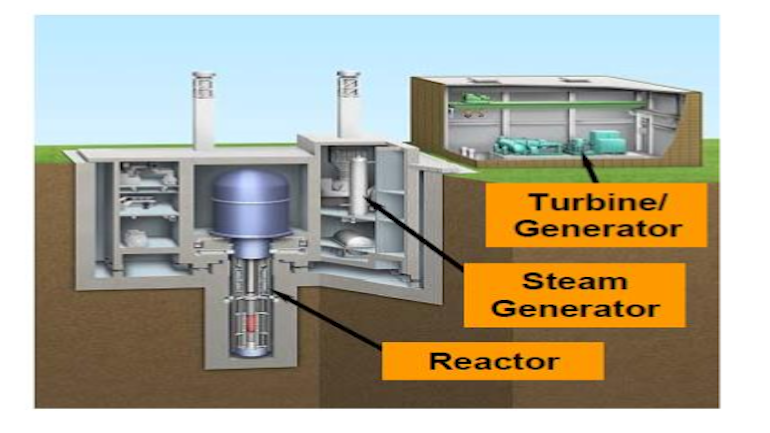
Zap is revitalising a design originally known as the 4S (Super-Safe, Small and Simple) reactor, which was jointly developed by Toshiba and Japan’s Central Research Institute of Electric Power Industry. The design is a fast neutron microreactor cooled by liquid sodium that can potentially operate for decades without refuelling.
The company argues that fusion and fission share significant technical foundations. Zap’s fusion device already uses liquid bismuth (as a surrogate for lead-lithium), which behaves similarly to the liquid sodium used in the new fission design. Both systems also face similar challenges in neutron environments and high-power-density engineering.
To spearhead this transition, Zap appointed Zabrina Johal as its new CEO. Johal, a former US Navy nuclear propulsion officer with extensive experience at General Atomics and AtkinsRéalis, is tasked with shifting the company from research-driven R&D to large-scale project delivery.
Zap expects to begin generating revenue from the fission business within a year through federal programs and milestone-based payments from high-demand customers. The company aims to have a commercial fission product ready for deployment by the early 2030s.
By pursuing fission alongside fusion, Zap aims to build the regulatory experience, supply chains, and industrial base required for nuclear energy much faster than fusion could alone. The company envisions its future nuclear assets as upgradeable, potentially evolving from fission to fusion systems over their multi-decade lifetimes.
The 4S is branded as a nuclear battery designed for extreme reliability and minimal human intervention, making it ideal for remote locations or high-uptime environments. The 10 MW variant is engineered for a 30-year operational life without needing to be refuelled. The reactor is a slender cylinder designed to be installed in a sealed vault 30 metres underground to protect against external impacts like aircraft or missiles.
The 4S design has a rocky regulatory history. Toshiba spent years in “pre-application” talks with the US Nuclear Regulatory Commission (NRC) from 2007 to 2011 for a project in Galena, Alaska, but eventually abandoned it. One of NRC’s original concerns was the ARGO code, the software Toshiba used to simulate safety. Zap must now update and re-validate these decades-old Japanese simulation codes to modern US standards. Zap claims it can proceed without being bound by old “complex rights” but will still need access to the original testing data for the 4S components to avoid expensive new physical tests.
“Fission and fusion are two sides of the same coin,” Zabrina Johal, told TechCrunch. “They have so many challenges that are congruent with each other…. There is not enough power and energy in the world to build all the data centres that are needed. It just meant we need to pull this in faster; we need to get something that’s relevant to the grid today.”
Johal said that Zap expects to start generating revenue from the new fission business within a year. “Our business model is not dependent upon generating electrons,” she said. Revenue could come from federal programs from the Department of Defense and the Department of Energy, but it could also include “milestone payments” and reserved production capacity from companies that need massive amounts of electricity.


