
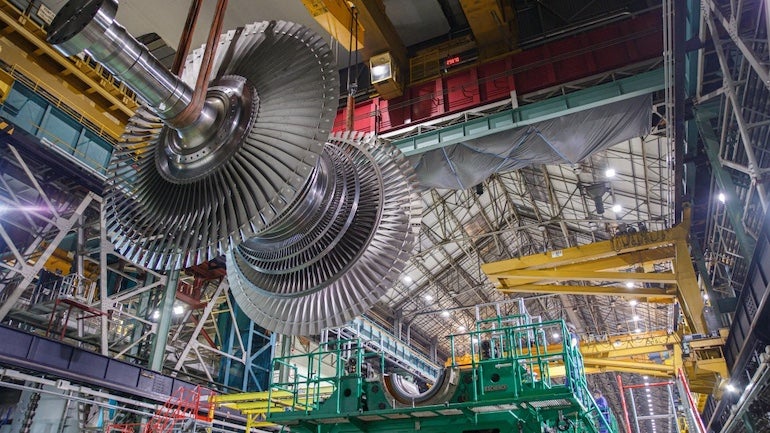
The EDF Group has announced a nearly €100m ($117m) investment for a new factory in Chalon-sur-Saône, France, operated by its subsidiary Arabelle Solutions. The facility is a key part of France’s nuclear renaissance strategy, aimed at strengthening the domestic supply chain for future reactor projects. The plant will be dedicated to the production of heat exchangers for the future construction programme of six EPR2 reactors and eight additional potential EPR2 reactors in France and new construction programmes internationally.
Construction of the factory is expected to begin in 2027, with the first equipment manufacturing scheduled to start by 2030. The project is projected to create approximately 160 local jobs in the Saône-et-Loire region by 2030.
This investment follows EDF’s 2024 acquisition of GE Steam Power’s nuclear activities and supplements earlier 2026 investments made at the Arabelle Solutions site in Belfort. “This investment marks an important step for the EDF group and for the revival of nuclear power,” said EDF Chairman and CEO Bernard Fontana. “It strengthens the Group’s industrial capacities for the deployment of six additional potential EPR2 reactors and eight EPR2 reactors in France, and new reactors internationally.”
He added: “In Chalon-sur-Saône, Arabelle Solutions develops key skills and production resources on essential engine room equipment. This new factory will help structure an integrated sector, serving competitive, sovereign and low-carbon electricity, essential to the energy security of France and Europe.”
EDF plans to build six new EPR2 reactors over the coming decades, with the first expected to enter service around 2038 with an option for eight additional reactors to replace France’s ageing nuclear fleet. The Délégation Interministérielle au Nouveau Nucléaire (DINN), the central body responsible for coordinating France’s nuclear expansion, in March 2026 approved a total programme cost estimated at €72.8bn or the EPR2 project. It establishes the official budget for the first six reactors covering the entire scope from engineering and construction to the initial commissioning of the units.
By committing to this programme, EDF signalled a shift toward more disciplined industrial management following the lessons learned from earlier projects such as Flamanville 3. The budget is allocated for the construction of three pairs of EPR2 reactors at the Penly, Gravelines, and Bugey NPPs. The DINN-validated figure includes built-in risk provisions to account for potential technical challenges or inflation over the next decade.
A critical component of this validation was the agreement on remuneration mechanisms to ensure the project remains bankable for EDF and affordable for French consumers. DINN is pushing for “series effect” savings, where building identical reactors in pairs significantly reduces the cost of the second and third sites.
Since this financial validation, DINN and the French government have focused on finalising the public inquiry processes and securing the necessary environmental permits for the primary site at Penly. This budget also helps unlock the long-term contracts needed for the supply chain, such as the Arabelle Solutions investment. The European Commission opened an in-depth investigation in April into French state aid for the six new reactors, including subsidised loans, contracts for difference, and risk-sharing mechanisms.
EDF’s recent projects have faced significant delays and cost overruns. To address these risks on the EPR2 programme, EDF is pursuing a serial manufacturing logic and developing a pan-European supply chain, leveraging experience from each project to accelerate subsequent ones. The Chalon-sur-Saône plant is central to this vertical integration strategy.
Arabelle Solutions was formed in late 2025 following EDF’s acquisition of GE Steam Power’s nuclear activities, completed in mid-2024. The Chalon-sur-Saône factory is the first major greenfield project for the subsidiary. It complements a €350m expansion of the Belfort site, which aims to double the production capacity of Arabelle turbines.
This 20,000 m² factory will be the fourth from Arabelle Solutions in France and the sixth worldwide. It will be built on the Nordéon site, a former industrial wasteland retained within the framework from the “Turnkey Sites France 2030” project, which was recently strengthened in order to “accelerate major industrial projects”. This guarantees the acquiring company to be able to set up very quickly, without additional authorisation procedure.


