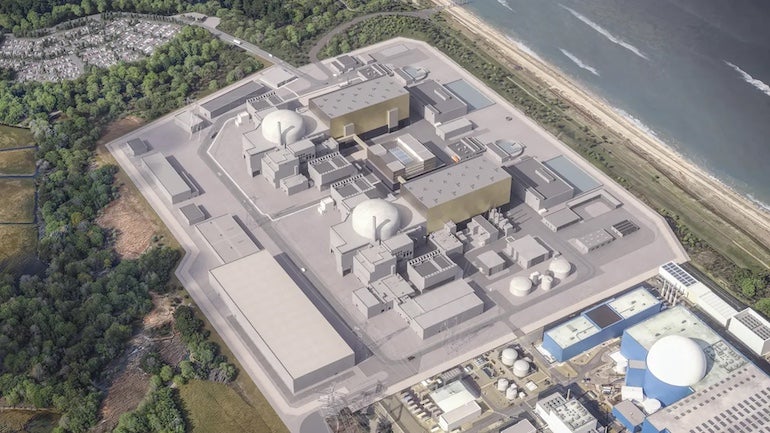
The UK’s Nuclear Liabilities Fund Ltd announced plans in June last year to invest £400m (US$543m) in financing the construction, development and 60-year operation of a new nuclear power station at Sizewell C on the Suffolk coast. The organisation is working with Amber Infrastructure Group, and it is investing alongside the UK government, EDF, Centrica, La Caisse and International Public Partnerships Limited. For the fund, investing in new-build will become a revenue stream that will underwrite its clean-up activities.
The National Liabilities Fund (NLF) was established in 1996, when the country’s nuclear generating company, British Energy was privatised and arrangements had to be made to fund decommissioning liabilities that would satisfy potential investors. British Energy was responsible for the costs of removing and storing spent fuel.
It also set aside and ring-fenced funds to decommission eight nuclear power stations (those currently operated by EDF Energy). Previously, the nationalised Central Electricity Generating Board (CEGB) owned all the country’s nuclear stations and their liabilities sat with the government. When British Energy was restructured in 2005, the government assumed responsibility for its nuclear liabilities, including any shortfall in the NLF. Further cash injections have been provided by the UK government to ensure the sufficiency of the fund.
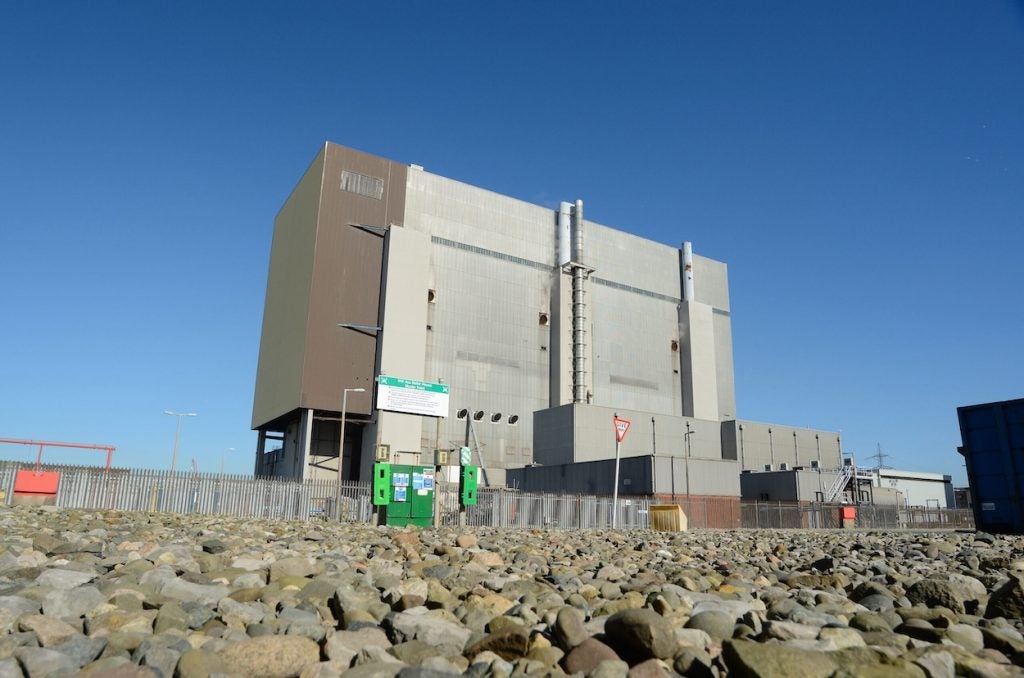
The fund was set up with an initial endowment of £260m ($353m) from government and a plan for regular payments into it by British Energy, to be invested for growth to meet future costs. Now it is the owner of the UK’s Advanced Gas-cooled Reactor (AGR) fleet and Sizewell B, EDF Energy is required to make ongoing contributions on an annual and quarterly basis and when fuel is loaded at Sizewell B.
The assets of the Nuclear Liabilities Fund are split into two parts. The majority of the fund’s assets used to meet current and near-term liabilities are held in the government’s central National Loans Fund (NatLF), where cash can be accessed at short notice and its security is backed by the government.
This allows the Trustees greater freedom in investing the balance of the fund in the Mixed Assets Portfolio (MAP), which aims at long-term growth. It is expected that by the early 2050s the National Loans Fund will be fully utilised and the MAP will meet the remaining liabilities.
The NatLF investment is the larger of the assets at present, but NLF says as the near-term liability payments are made and the MAP grows “this dynamic will become more balanced”. The costs of decommissioning are likely to change in the long term as the costs of labour, materials and evolving technology change. The NLF Trustees estimate how much return will be needed to meet the liabilities and design an investment strategy which targets this rate of return. The investment manager will diversify investments across different types of asset, which are expected to react differently across the range of long-term economic scenarios.
The current forecast is for the MAP to be valued at over £30bn ($41bn) in today’s money when the fund’s holding in the NatLF is exhausted in around 30 years’ time. The MAP will continue to grow whilst being used to meet decommissioning costs, in anticipation of the increased rate of expenditure on decommissioning at the start of the next century
Importantly, the ability to use NatLF to meet near-term costs means that the MAP can have what it describes as a ‘high appetite for illiquidity’. The ‘illiquidity premium’ in capital markets means that there is a higher rate of return on assets like property where investors cannot sell assets at short notice. The MAP also has ‘medium appetite’ to focus investments in the UK and support the government.
Growing the Fund
According to NLF’s annual report for FY2024/5, published in November 2025, overall to date the fund has paid out £2.4bn (US$3.3bn)to discharge decommissioning liabilities. At the end of the financial year, in March 2025, the NLF was valued at approximately £20.7bn (US$28bn), of which the NatLF account held £16.6bn (US$22.5bn). During the year £0.6bn (US$0.8bn) was paid out to EDF to cover costs relating to defueling and decommissioning preparation work and defueling at Hunterston B, Hinkley Point B and Dungeness B.
It said the Total Portfolio Return exceeded its target for the first time, despite a dip in the performance of the MAP, because there was a higher interest rate from the National Loans Fund. The illiquid portfolio, which accounts for three quarters of the MAP, “has shown impressive growth historically. However, private market headwinds have contributed to a slowdown in returns over the past three years. This further underscores the importance of maintaining a long term view to navigate short-term pressures and position the fund for future growth”.
The annual report also highlighted some key developments since 2020. Three stations have ceased generation and have entered the decommissioning phase, while planning for decommissioning is under way for the other AGRs. In 2021, the government exercised its option to transfer EDF Energy’s AGR stations to the Nuclear Decommissioning Authority after EDF Energy completes defueling (see article). The long-term decommissioning programme will be managed by NDA subsidiary Nuclear Restoration Services Limited (NRS) Hunterston B is expected to transfer to the NDA in 2026.
Over the last 10 years the MAP has grown by an average of 6.9% annually and in March it was valued at £4.1bn (US$5.6bn). The annual report notes that in recent years the MAP has underperformed, but says the fund’s investment strategy is designed to ensure long-term asset growth. It warns, “investment markets are volatile and therefore it should not be expected that the fund will deliver the required return year after year”. The investment adviser assumes that over the short to medium term, “there is a c60-70% chance of meeting the required MAP Return” but as the time period grows, the probability of meeting the target increases. Both those investment principles – an illiquidity premium and appetite for government projects – support the NLF’s investment in Sizewell C.
Announcing the investment, NLF highlighted Sizewell C’s ‘regulated asset base’ financing model, which provides early returns to investors ahead of startup, and visibility of future returns. NLF also flagged the ‘mature and proven approaches’ to design, construction, operations and financing, including:
- Investment alongside financial investors with ‘strong alignment of interests and relevant experience in the sector’
- A standardised design with 80% of the above ground design replicated from Hinkley Point C
- Regulatory and government support mechanisms provide protections for investors in the event of severe cost overruns and delays to construction in extreme downside scenarios
- There is an established and qualified supply chain replicating designs and borrowing lessons learned from Hinkley Point C
Commenting on the decision to invest in the new build nuclear project, Melissa Hope, Chief Executive of the NLF, said in a statement: “This investment aligns with our strategic objectives seeking long-term investment returns to fund the decommissioning liabilities of eight existing nuclear power stations, while also supporting low-carbon energy generation, boosting energy security, jobs, and economic growth in the UK.” Does this signal the emergence a virtuous nuclear circle? NLF believes so.