

The Nordic nuclear industry is entering a period of structural transformation. What has long been a stable, operations-focused sector is now evolving into a growth-oriented, policy-enabled, and innovation-driven market. We asked Harri Varjonen, Executive Director of the FinNuclear Association, how these winds of change are reflected in the Nordic nuclear industry.
Structural drivers behind the Nordic nuclear revival
Across the Nordic region, nuclear energy is being redefined as a central component of future energy systems. The renewed interest in nuclear energy in the Nordic region is not a short-term policy fluctuation but a response to structural system-level changes. Three structural forces are behind the renewed interest in nuclear:
- Electrification: Growing demand from heavy industry, hydrogen production, and data centers requires stable, large-scale electricity supply.
- Energy security: Geopolitical uncertainty is pushing countries to prioritize reliable, domestic energy sources.
- Climate goals: Ambitious decarbonization targets require low-carbon, dependable energy, making nuclear a key complement to renewables.
Together, these drivers are reshaping nuclear energy from a marginal or controversial option into a strategic infrastructure component in the Nordic energy transition.
Sweden, Finland, and Norway: Different Roles, Shared Direction
As stated above, nuclear energy is increasingly seen as a core part of the Nordic region’s future energy mix as a response to structural system-level changes:
Sweden has undergone the most dramatic shift. The government has removed previous restrictions on nuclear development, introduced financial frameworks to support investment, and laid out a long-term vision where nuclear plays a central role in future electricity supply. This marks a clear transition from phase-out policies to active expansion. The market is already responding, with utilities advancing new nuclear plans, SMR projects under evaluation, and industrial energy users entering long-term procurement discussions.
Finland continues to hold a unique position in the global nuclear landscape, combining regulatory stability, strong technical capability, and end-to-end lifecycle expertise. Its system is characterized by transparency, institutional strength, and close coordination between government, regulator, and industry, creating a predictable environment for long-term nuclear investment. Recent legislative developments are further streamlining licensing and enabling new technologies, particularly small modular reactors (SMRs), which are also being explored for district heating and industrial applications as part of a broader integration of nuclear into energy system solutions. With globally recognized expertise in spent fuel management and waste disposal, Finland serves as a regulatory benchmark, competence hub, and reference model for safe and sustainable nuclear development.
Norway is earlier in the process but showing strong signals of future demand. A major recent step is the report delivered to Minister of Energy by the Norwegian Nuclear Commission, the first comprehensive review of nuclear power in Norway since 1978. Driven by rising electricity demand, climate goals, and interest from private developers, nuclear power is once again being considered as a potential long-term energy source. Interest is clearly growing. We’re seeing multiple project proposals from private players and municipalities, and early-stage development processes are already underway. So while nuclear is not an immediate solution for Norway, it is now firmly part of the long-term energy discussion.
A Nordic Nuclear Ecosystem Is Taking Shape
A defining feature of the current Nordic nuclear development is the increasing level of structured regional cooperation. Industry associations and companies across Finland, Sweden, and Norway are increasingly working together, sharing knowledge, aligning approaches, and building cross-border supply chains. This allows companies to participate in projects across national boundaries, reduces duplication of effort and strengthens overall regional capability. All of this contributing the formation of an increasingly integrated Nordic nuclear power ecosystem and improving the competitiveness of Nordic companies in international markets.
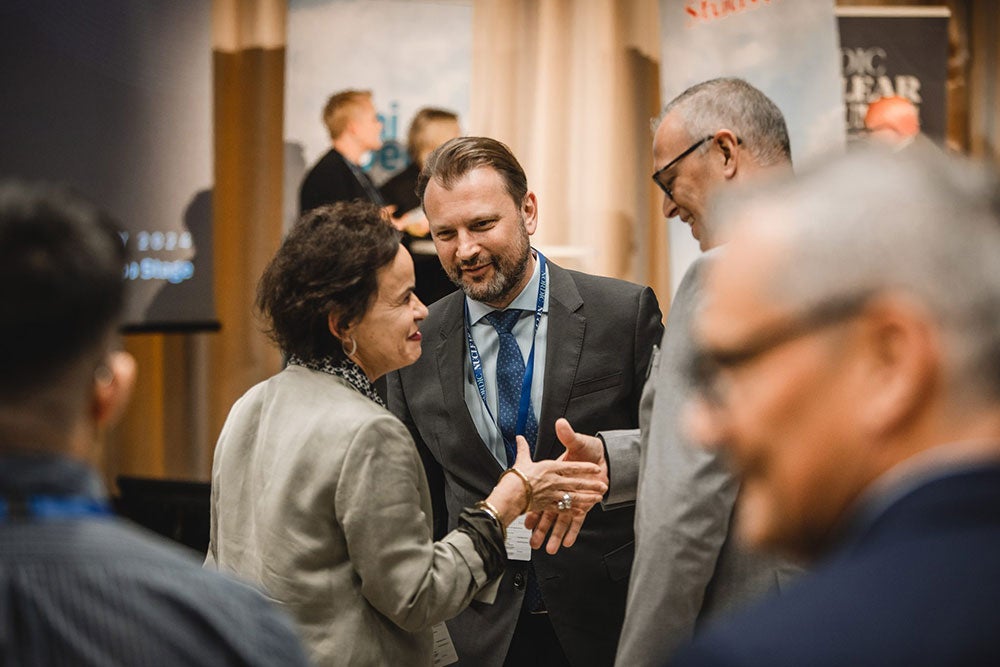
Events like the Nordic Nuclear Forum highlight this strengthening co-operation and momentum in Nordic nuclear. The 2026 event in Stockholm takes place at a pivotal moment for the region’s nuclear sector, serving as a key meeting point for policy, industry, and investment. It provides a platform for governments and regulators to clarify strategic direction. At the same time, the forum connects utilities, developers, technology providers, and supply chain actors, supporting early-stage business development and engagement in emerging nuclear projects.
Join the discussion at NNF26 and be a part of the momentum
Conclusion: The Nordic nuclear industry is undergoing a structural transformation driven by electrification, energy security requirements, and climate policy commitments. Sweden has already taken decisive investment-enabling decisions that move it into an active expansion phase. Finland provides regulatory excellence and lifecycle expertise, Norway represents emerging market potential, and Denmark is reassessing its policy framework. Together, these developments are creating an integrated Nordic nuclear ecosystem supported by increasing regional cooperation.
As a result, the Nordic region is emerging as one of Europe’s most important future nuclear development hubs, and early engagement will be essential for stakeholders seeking to participate in this transition. Purchase your ticket to the NNF26 today and be a part of the momentum!


