
US-based nuclear waste storage and disposal company Deep Isolation Nuclear has been selected for the Department of Energy’s (DOE’s) ARPA-E SCALEUP Ready programme. This will support the commercial deployment of Deep Isolation’s Universal Canister System (UCS) for integrated nuclear waste management.
SCALEUP Ready is ARPA-E’s latest DOE initiative to accelerate technologies toward market adoption and committed up to $40 million to support two projects, including the Deep Isolation project. The second project was not identified.
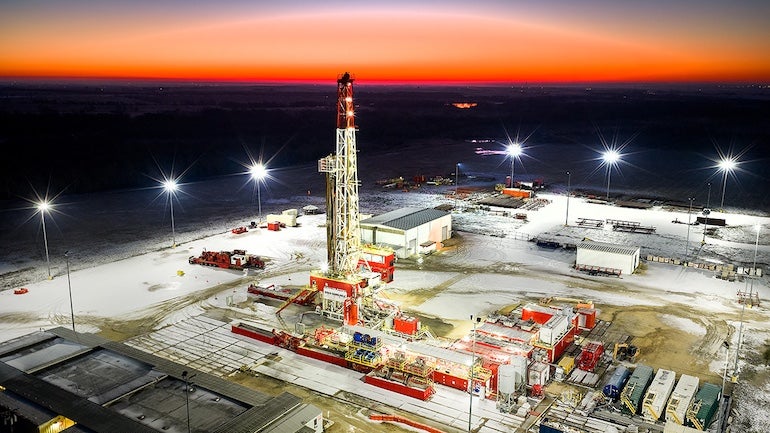
The SCALEUP programme bridges the gap between pilot-scale demonstration and full commercial deployment, providing funding and support to validate first-of-a-kind energy technologies. For Deep Isolation, the award would enable full-scale field testing of the UCS, including regulatory validation and demonstration of deep borehole disposal using a non-radioactive Commercial Pilot in Cameron, Texas.
The project brings together a project team, including Westinghouse, NAC International, Halliburton, Occlusion Nuclear Solutions, Amentum and the Deep Borehole Demonstration Center (DBDC), to demonstrate a fully integrated and permanent solution for advanced reactor and nuclear recycling waste.
Westinghouse will serve as the launch customer, working with Deep Isolation and its supply chain partners to secure certification from the Nuclear Regulatory Commission (NRC) to enable the UCS to store and transport used fuel from its eVinci microreactor. Halliburton will lead borehole construction, Occlusion will manage subsurface operations, NAC will lead UCS fabrication, surface operations, and licensing, and Amentum will oversee operational safety and quality assurance, ensuring the system is ready for commercial deployment.
“Being selected for this award is the single biggest milestone in Deep Isolation’s history,” said President and CEO Rod Baltzer. “It validates years of pioneering work on the Universal Canister System and positions us to deliver the world’s first full-scale, end-to-end, commercial-ready deep borehole disposal solution. We are creating a deployable, regulatory-approved system that will transform how the world manages nuclear waste safely, efficiently, and permanently.”
Westinghouse Chief Technology Officer Dr Lou Martinez Sancho noted: “The integration of UCS with our eVinci microreactor technology provides a comprehensive solution for managing spent nuclear fuel through its entire lifecycle. This partnership showcases the impact of innovation, where we are merging our next-generation nuclear technology with a reliable, economical and adaptable method for handling nuclear waste. The Commercial Pilot will generate valuable insights which will set the stage for wider adoption and global confidence in advanced nuclear solutions.”
Mark Whitney, President Energy & Environment at Amentum, said: “Deep boreholes have long been considered a promising solution for spent nuclear fuel and high-level nuclear waste disposal. Amentum is excited to work with Deep Isolation and its collaborators to move this concept toward commercialisation and turn it into a practical reality.”
The UCS SCALEUP project advances critical national priorities, supporting President Trump’s May 2025 Executive Order 14302, Reinvigorating the Nuclear Industrial Base, which directs the DOE to strengthen US nuclear energy leadership and develop permanent solutions for used fuel and high-level waste. The project also directly aligns with ARPA-E’s mission to improve radioactive waste management and maintain US technological leadership in advanced energy technologies.
The UCS, designed for storage, transportation, and disposal of nuclear waste across multiple waste forms, was recently featured at Deep Isolation’s groundbreaking event in Cameron, Texas, which marked the launch of the Company’s full-scale, at‑depth demonstration programme.
The UCS was developed through the DOE-funded Project UPWARDS and was engineered, fabricated, and rigorously tested over a three-year period to manage used fuel and high-level waste from advanced reactors. Separately, Project SAVANT validated that the materials used in the UCS and borehole systems can resist corrosion and maintain structural performance under realistic deep borehole conditions. Together, these initiatives established integrated safety and performance criteria and produced the world’s first disposal-ready UCS prototype.
“The UCS builds on our earlier canister designs to provide a single system capable of storing, transporting and disposing of waste from both advanced reactors and the existing nuclear fleet,” said Jesse Sloane, Executive Vice President of Engineering at Deep Isolation.


