
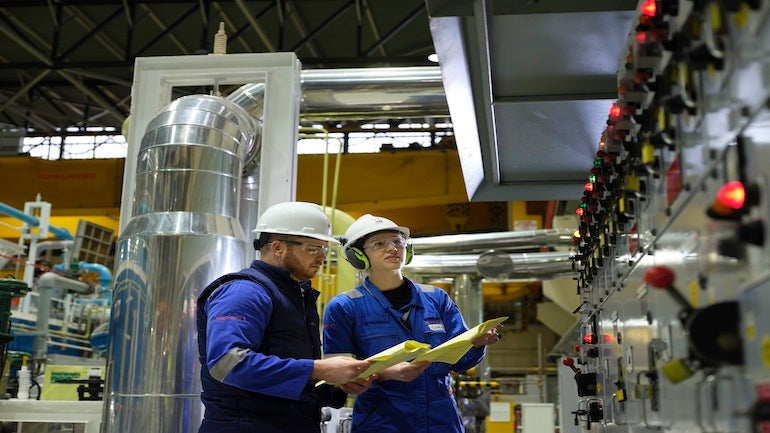
Throughout the years, security has acted as a proving ground for new technologies. Hardware and software have taken the worlds of manufacturing, mining and refining by storm, streamlining workflows and handling the mundane tasks that drive workers insane. But for the nuclear industry there exists an extra layer of scrutiny when it comes to adopting these innovations in a capacity that could potentially negatively impact human lives in this highly safety conscious sector.
Considering the many responsibilities security teams face the onus falls rightly on the technology to prove it can operate with the consistency and transparency required. Robotics and automation are among the most impactful advancements of modern times and have played a pivotal role in industry since the 19th century. Both, at their inception, were designed for routine, though they now sit at the forefront of AI applications and adaptive learning. It is this evolution that has led to their growing adoption by the largely unpredictable sectors of security and maintenance, where tasks can be handled with greater specificity and unexpected developments can be anticipated with data.
The current state of robotics and automation
Though related in many ways, it’s worth outlining exactly what separates automation and robotics as concepts. Robots are the product of multiple disciplines, such as engineering and computer science. They are physical, programmable machines that work alongside humans and, in the context of maintenance and security, can perform both repairs and patrols. Their presence in factories and industrial settings has more than doubled in the past decade, growing 10% year-on-year since 2021.
Automation is the process of carrying out assigned tasks without human intervention. This is a broad concept that can include robotics but also applies to software and broader machines that churn away without the need for direct oversight. In industrial environments, two types of automation reign supreme:
Fixed automation: A single machine or a set of machines that perform a specific set of operations. Assembly lines in automotive factories are good examples of this so-called hard automation. They’re built for speed and efficiency, not versatility. Intelligent automation: Machines and software that learn through iteration and are capable of making decisions related to their own processes. AI and machine learning have expanded the scope and scale of how these systems can be used, for example, through smart sensors that predict when a machine will need maintenance by analysing data on operating temperature, failure rate, and wear and tear. We will explore this technology more later.
As for why automation and robotics are seeing such widespread adoption, the answer is twofold. Firstly, innovations in the development and manufacturing of these systems are reducing overall costs and enabling tasks that were previously too niche or low-value to be automated. Secondly, they address fundamental socioeconomic concerns, including labour shortages, specialist training costs, and increasingly costly downtime driven by rising consumer and industrial demand. Any cost-benefit analysis or risk assessment aimed at identifying potential future shocks would identify automation as a means of addressing many concerns; however, its implementation is not a one-size-fits-all solution, particularly with respect to maintenance and site security for nuclear installations.
The risks and advantages of automation
On paper, both maintenance and site security are prime candidates for automation, either through robotics or through background data analysis. These domains share similar day-to-day challenges in:
- Repetitive tasks, such as patrols, manual inspections, observation and reporting
- Hazardous environments with complicated machinery that obscures vision, or the presence of dangerous materials that require PPE to inspect safely
- Human fatigue resulting from long shifts that require prolonged focus and out-of-hours work
Together, these operational issues make consistency difficult to achieve through manual means. Automation and robotics can handle repetitive tasks in hazardous environments, but it’s important to consider barriers that can stop further adoption in safety-critical fields:
Ambiguity: Automated systems thrive within clearly set parameters and when fed consistent data. In security and maintenance, these are never guaranteed, as an incident or machine breakdown can be completely different from any previous event and can evolve quickly. False positives: Without advanced contextual understanding gained through time and iteration, automated systems can flood operators with low-quality alerts, desensitising them to genuine incidents that require attention. Environmental factors: Differences in lighting, visibility and even weather can impact the performance of robots and automated systems.
Skill gaps: Labour and skill shortages are major drivers of increasing use of automation, but configuring and maintaining these systems requires specialised expertise. Recruitment remains a pervasive issue for the nuclear industry, and although fewer staff are needed when automation and robotics are implemented, those left must possess sufficient knowledge of the technology.
Accountability and trust: Public sentiment regarding AI and automation remains largely negative, driven primarily by concerns about job loss and a lack of accountability. These feelings are important to consider, especially in high-trust fields that rely on co-operation. Several of these downsides will be mitigated over time, whereas addressing trust and transparency will require a shift in workplace culture and strategy.
Robotics in site security
Security robots come in many forms, each equipped to perform both specified tasks and routine operations. Among the most common models are:
- Patrol robots: Mobile ground units capable of patrolling an area 24/7. They function as roving cameras, providing visibility in the regions that traditional static cameras can’t see. Patrol robots come in various sizes and shapes to suit different environments, such as wheeled, tracked or quadrupedal models that adapt to rocky terrain with uneven elevations, as in mining sites.
- Fixed robots: Fixed robots act as augmented smart cameras and sensors. They integrate with existing security infrastructure, increasing visibility with automated pan-and-tilt object tracking.
- Aerial robots: Drones are one of the most useful security tools for rapid deployment, particularly in challenging environments or large open spaces. Their complexity makes them unsuitable for routine patrols, so they are often integrated into a robot security strategy alongside mobile ground units.
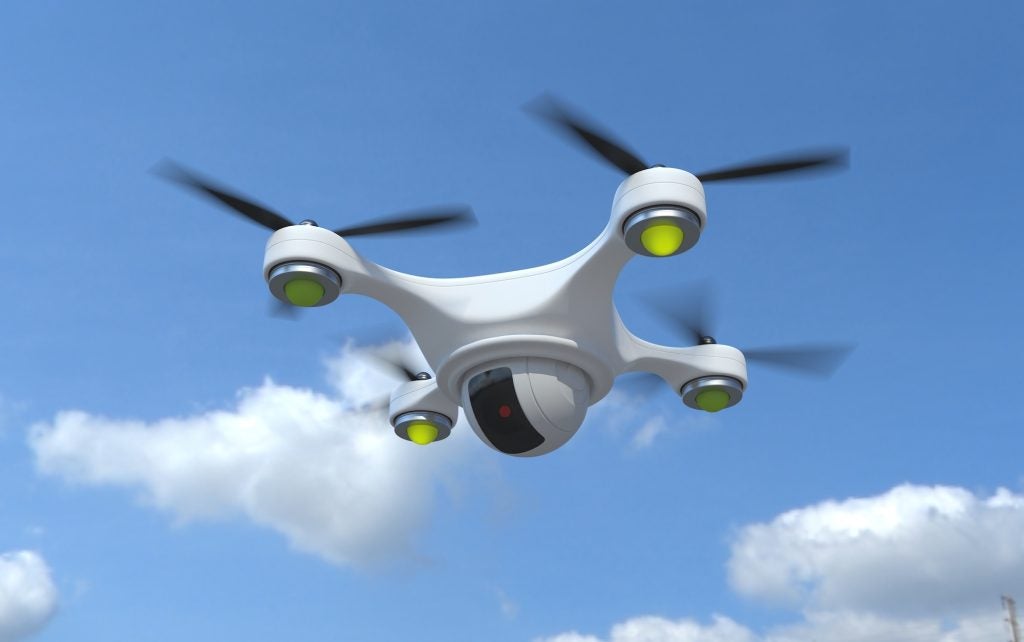
These constitute the bulk of site security usage, providing operators with a consistent means to monitor perimeters and assess environmental threats without exposing human personnel to risk. They do not succumb to fatigue and can maintain continuous surveillance, which is beneficial in industries prone to equipment and material theft, such as construction and manufacturing.
Compared with robotics, which, despite its routine use, remains flashy and impressive as a technology, automation assumes a more background role. Tasks that cannot be assigned to a robot, such as manual feed observation and report writing, are streamlined through integrated cameras, automated alerts and dedicated AI agents.
Automation enhances productivity by handling menial tasks that contribute to operator burnout, and transparent reasoning keeps humans firmly in the loop and capable of investigating and overriding decisions.
Automation in maintenance
The introduction of Internet of Things (IoT) sensors in manufacturing facilities and power plants has fundamentally changed how maintenance is scheduled and performed. Instead of waiting for a machine to malfunction, which, depending on the nature of the incident, can force shutdown close and incur vast costs, IoT-enabled data now predicts issues in advance. They provide a continuous stream of information on:
- Condition: Vibrations, temperature, and other indicators of normal function, such as acoustics. Subtle deviations that could indicate impending failure trigger alerts, enabling maintenance staff to intervene based on real-time health rather than a fixed schedule.
- Past breakage: By comparing historical data with present readings, sensors can alert operators to patterns that typically indicate faults.
- Environmental conditions: Humidity, air quality, dust, and gases can affect machinery and adversely affect human staff. Sensors track these changes and alert relevant staff when levels spike outside of safe ranges.
- Usage: Not all machines are used as much as initially expected. Some components may be under greater strain with more frequent run cycles, and IoT sensors are used to inform maintenance efforts.
Relevant readings reduce the need for manual inspection, enabling maintenance teams to determine at a glance whether a machine is operating as expected. These notes are automatically logged to support the creation of more comprehensive and detailed reports, which are helpful for incident investigation and insurance claims.
Central to the appeal and utility of IoT sensors in automation is, ironically, their lack of autonomy. No decisions are made by sensors that are not explicitly specified by the operators who calibrate them. They filter, based on real-time information and past records, low-priority fluctuations that are ultimately irrelevant to standard operation.
The evolution of predictive maintenance is unsurprising to industry insiders. A 2013 paper, ‘Recent advances and trends in predictive manufacturing systems in big data environment’ by Jay Lee et al, noted that most manufacturing strategies assume that every facet of production is optimal, which was not the case then, nor is it the case now. However, continuous monitoring enabled by IoT devices helps bridge the gap between expectations and reality, facilitating planning and adaptation based on reliable evidence.
Trust and transparency
Even if, hypothetically, automation performs as well as or even better than a human, security and maintenance directly affect physical safety and any error can have severe consequences. Systems that do not communicate their processes degrade human decision-making, so understanding why a robot or sensor has flagged a particular variable or suggested a course of action is vital for both compliance and the continued productivity and effectiveness of the teams that use them. When staff do not trust the automated suggestions, they may ignore valid alerts, and if they’re overly reliant on them, they will waste time investigating false alarms. Trust and transparency are a balancing act and have only become more relevant since the proliferation of AI, which is embedded in robotics and automation. Frameworks from the US National Institute of Standards and Technology (NIST) and the European Commission highlight the need for human oversight to ensure accountability and the opportunity to intervene. They also suggest that systems should be explainable to the operators who use them, not only to the engineers who develop them, and that rigorous stress testing is required to determine the limits of sensors under non-ideal conditions.
Automation, in particular, is valued for the scaling it enables, and when these considerations are not baked into a site’s growth strategy, any progress is built on shaky foundations. Untrained and reliant staff train new members, who in turn become even more dependent on systems they don’t understand, and the risks associated with the technology compound as it assumes greater responsibilities.
A well-trained, tech-literate team understands:
- Where and how systems store logs throughout their lifecycle
- How the system behaves
- What limitations they need to keep in mind
- How to override automated decisions
This, along with clear and robust outlines of who is responsible for outcomes and the chain of command in the event of an emergency, best equips organisations to mitigate the human impact of automation on teams.
Robotics operate in a similar ethical space, with the added limitation of a physical presence. Reports and academic papers on mechanical workers emphasise the importance of worker acceptance. In order for robots to deliver the benefits listed, human teams must view them as collaborators rather than competitors. Standard security and maintenance applications of these machines challenge this perception, as robots that perform repetitive or hazardous tasks are typically welcomed. Robotics must be implemented with the same care as automation. Hands-on training and refresher sessions, as the technology evolves, keep workers aligned with their robotic counterparts and clarify who bears responsibility for operations in the event of an error.
The new normal across industries
The days of speculation on robotic workers and predictive systems are behind us, though we’re evidently not past the learning curve yet. They have proven capable of performing; that much is clear, but exactly how they fit into existing nuclear industry workflows and how they can be meaningfully leveraged without adversely affecting human teams still requires fine-tuning.
Robots that handle hazardous or menial tasks are widely supported, and IoT sensors reduce much of the routine work that maintenance teams face, but these technologies are only the beginning. As more tasks become the responsibility of machines and automated processes, little of the general discussion will concern their effectiveness. In security and maintenance, however, where a high barrier to entry should be assumed, this will remain a primary area of focus, alongside their fair and transparent implementation.


