
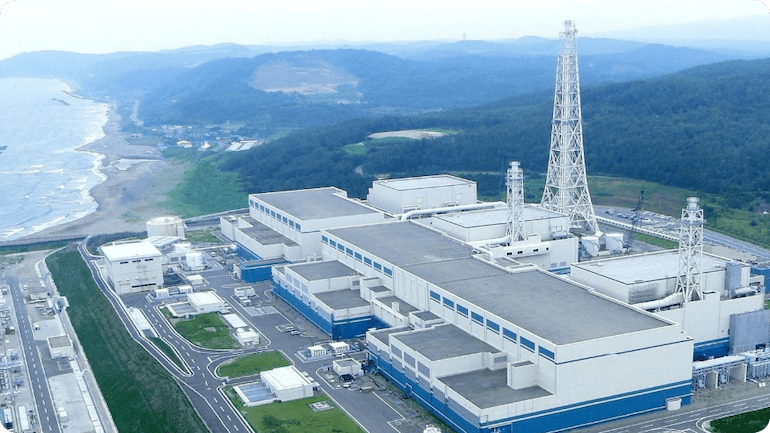
Tokyo Electric Power Company Holdings (Tepco) has told nuclear regulators that it will push back the planned commercial operation of unit 6 of the Kashiwazaki-Kariwa NPP in Niigata Prefecture following indications of an electricity leak. Unit 6, which resumed operation on 9 February following a false start on 21 January, was slated to begin commercial operation on 18 March.
Tepco decided on the postponement after an alarm went off, signalling a small electricity leak at a power generator. Tepco President Tomoaki Kobayakawa told reporters that it is unclear when the company will be able to begin commercial operation, noting that an investigation is ongoing. “We will stop if there are any concerns. We believe identifying the cause is most important,” he said. Kashiwazaki-Kariwa NPP Director Takeyuki Inagaki said an electricity leak seems more likely than a malfunction in the alarm system.
Initially, Tepco had been investigating the cause of the alarm while continuing operations. However, as the investigation was taking longer than expected, it determined that proceeding with the investigation while the plant was generating power was unsafe. The company plans to reduce the reactor’s thermal output to 20% of capacity, disconnect the turbine and generator to halt power generation, and conduct a full-scale investigation into the cause.
Kashiwazaki-Kariwa has faced a series of problems involving its electricity and alarm system. When Tepco initially tried to restart unit 6, a 1,356 MWe Advanced Boiling Water Reactor (ABWR), on 21 January, it had to be closed the following day after a monitoring system alarm sounded. The alarm had picked up slight changes to the electrical current in one cable. That restart had been delayed by a day to investigate why an alarm had failed to sound during a test withdrawal of control rods.
Japan approved the restart of Kashiwazaki-Kariwa 6 in November 2025. It had been closed for more than a decade since the 2011 Fukushima disaster. Although Kashiwazaki-Kariwa was unaffected by the March 2011 earthquake and tsunami all seven of the plant’s reactors had been offline for two to three years following the earlier 2007 Niigata-Chuetsu earthquake, which caused damage to the site. Work has since been carried out to improve the plant’s earthquake resistance. Tepco applied for Nuclear Regulation Authority (NRA) approval of its design and construction plan for Kashiwazaki-Kariwa units 6&7 in 2013.
Tepco submitted information on safety upgrades across the site and at those units, which began commercial operation in 1996 and 1997 and were the first Japanese boiling water reactors to be considered for restart. NRA cleared the safety screenings in 2017 but security breaches and delays in completing safety upgrades caused delays.
Kashiwazaki-Kariwa 6 is the first reactor to be restarted by Tepco since the Fukushima disaster. The last time Tepco operated a nuclear plant was in March 2012 when Kashiwazaki-Kariwa 6 was taken offline for a periodic inspection but remained closed due to the need to meet the stricter post Fukushima safety regulations. Because of the 14-year hiatus, Tepco now lacks experienced personnel. The utility said about 60% of those scheduled to operate Kashiwazaki-Kariwa 6&7 have no experience. However, the workers have gone through simulation exercises at the Kashiwazaki-Kariwa site as well as training at other NPPs.
The resumption of Kashiwazaki-Kariwa 6 is the 15th restart since all 54 of Japan’s nuclear power reactors were closed in the wake of the Fukushima accident. Following the permanent closure of some units, Japan now has 33 operable reactors. Most of the restarted units are pressurised water reactors (PWRs) as boiling water reactors (BWRs), like those at Fukushima require more complex upgrades to satisfy NRA requirements.


