

As it expands worldwide, the nuclear industry’s biggest challenge is attracting the engaged workforce it needs. But, for all the attention paid to skills shortages in the nuclear sector, one part of the talent pipeline remains surprisingly under-examined: the people who shape young people’s career choices long before they ever consider any particular route in life, never mind a specific college course.
In the UK specifically, that would likely mean a T-Level, apprenticeship, or engineering degree. But whatever the exact education route, across the globe, teachers, tutors, pastoral staff, careers advisers, and – crucially – parents, play an outsized role in steering the next generation toward or away from the nuclear industry. But the industry cannot meaningfully expand its workforce if the adults guiding young people don’t themselves understand what nuclear careers look like today.
This ‘knowledge gap’ is becoming a strategic risk. Across global markets, nuclear operators and their supply chains are accelerating plans for new build, life-extension programmes, and advanced-reactor deployment. Large organisations and tier-one companies have established outreach programmes, university partnerships, and increasingly structured pathways into the sector. But small and medium enterprises (SMEs) – which are often the firms doing some of the most innovative, hands-on engineering work – remain an under-used asset.
Unlike the potentially scary, unattainable beasts that the big players might represent for some young people, SME companies sit closer to the ground and often can act in a more agile way than the industry goliaths. They can train locally, adapt quickly, and offer young people meaningful exposure to practical skills that resonate strongly with Gen Z’s interest in sustainability, repair culture and real-world problem solving.
What’s missing is a coordinated commitment to educating the educators: giving teachers and parents the confidence, language and practical insight to recommend nuclear careers with authority. Without this, even the best-designed qualifications risk undershooting their potential.
Closing the knowledge gap
In conversations with teachers, careers advisers and parents in Like Technologies’ own locale of Lancashire and Cumbria in northwest England, one theme recurs: a vague sense that ‘nuclear’ is distant, slightly archaic, or overly academic, often tied in people’s minds to large power stations, strict degrees, or conceptual science careers. Rarely do they associate it with the modern, dynamic, high-tech work that defines much of the industry today.
Those perceptions have real effect, especially in a world where nuclear is already competing with other disciplines. Many teachers have never had a site visit, a masterclass or even a meaningful conversation with someone working at ground-level in the sector.
As a result, a powerful early filter sits upstream, effectively blocking many talented young people from even considering nuclear. If the industry is serious about growth, it’s this knowledge gap that the industry needs to work to close.
Practical engagement: What actually works
From our own experience, we have seen first-hand how effective early engagement can be through our outreach work with local Further Education colleges, with whom we work on T-Level placements and provide ‘masterclasses’ to help raise the overall level of knowledge with both tutors and their students. In our context, a masterclass is a hands-on, practical session hosted by industry professionals, where Further Education students (and their teachers) get exposure to real-world nuclear-related engineering problems. For Like Technologies, an obsolescence-management focused SME, that often concerns obsolescence management, asset sustainability, and systems maintenance. These sessions demystify what nuclear work is actually like today. In the real world, it’s about problem-solving, the technical rigour, the sustainability mindset, the collaborative environment.
These sessions matter because they allow students and teachers to meet real people working in the sector, not just see glossy marketing or generic science fair images. They break down myths. Nuclear isn’t only about big power stations, safety walls and radiation, but also about electronics, lifecycle management, repair, supply-chain resilience, and modern engineering. They help embed a sense that nuclear is accessible and concrete – as much about nuts, bolts, circuits, and logic as about theory or abstract physics. These kinds of practical exposures are especially valuable from the SME side of the supply chain. Many SMEs don’t have the resources of large multinationals, but they do have flexibility, local roots, and a readiness to engage, which often means giving students a clearer, more relatable sense of what a career in nuclear could look like in their hometown environment.
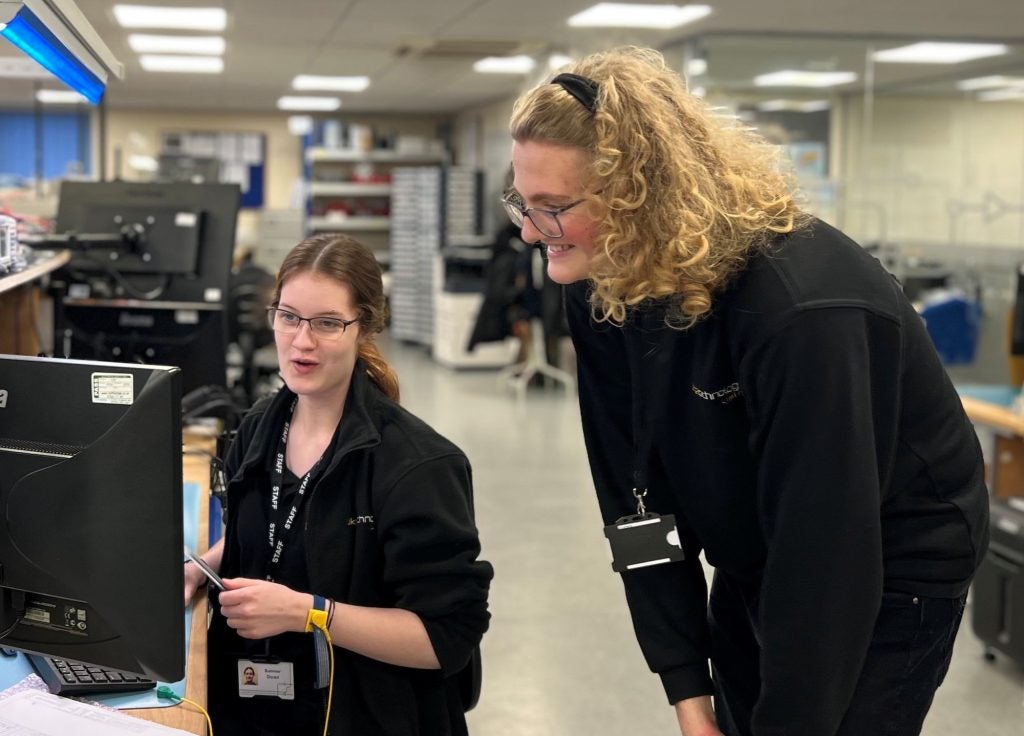
In the UK, the growing provision of T-Level placements by energy and manufacturing firms also shows what’s possible when employers open their doors. These placements give students a real working environment, aligned with what industry needs, and they help employers evaluate young talent early, shaping what technical training looks like. But schemes like this only reach their potential when educators and parents understand them. And, moreover, are confident enough to support a nuclear-sector placement or technical route instead of assuming university is the only respectable option.
Rethinking the pathways to nuclear
It’s no secret that young people’s relationship with higher education has become more nuanced in recent years. Rising tuition costs – and a growing realisation that a university degree does not always guarantee a stable, well-paid job – has led some parents and teachers to question whether the ‘go to university, get a degree, then a desk job’ script still holds. In this climate, well-structured technical routes like T-Levels and their international equivalents, apprenticeships and direct industry placements are emerging as viable alternatives. But the shift is fragile. Without sufficient knowledge of what nuclear work looks like now, parents might still view STEM as purely academic and steer their children away from technical or engineering paths. Teachers might lack confidence in recommending nuclear careers if they don’t understand what the day-to-day involves.
That is why industry-led engagement with educators is so important. By offering masterclasses, site tours, placement programmes, curriculum support, and direct dialogue, nuclear employers – especially SMEs – can help move nuclear from the ‘unknown sector’ box to ‘real career path’ status in the minds of their influencers.
If the industry is serious about scaling to meet global demand, safely, sustainably, and equitably, then closing the educator/parent knowledge gap should be a strategic objective. With the right steps, nuclear can begin to build not just talent pipelines, but talent ecosystems, rooted in communities, trusted by educators, and understood by the people influencing the next generation.


