
The impending emergence of new nuclear technologies like Small Modular Reactors (SMRs), Advanced Reactors and even fusion power is prompting a wave of developments that will enable a stream of new operators, designers and even policymakers and regulators to emerge to meet the various challenges these new technologies will bring. Despite the still nascent nature of operating reactors, the development of training solutions for these new technologies is already gathering pace with a swathe of announcements over recent months.
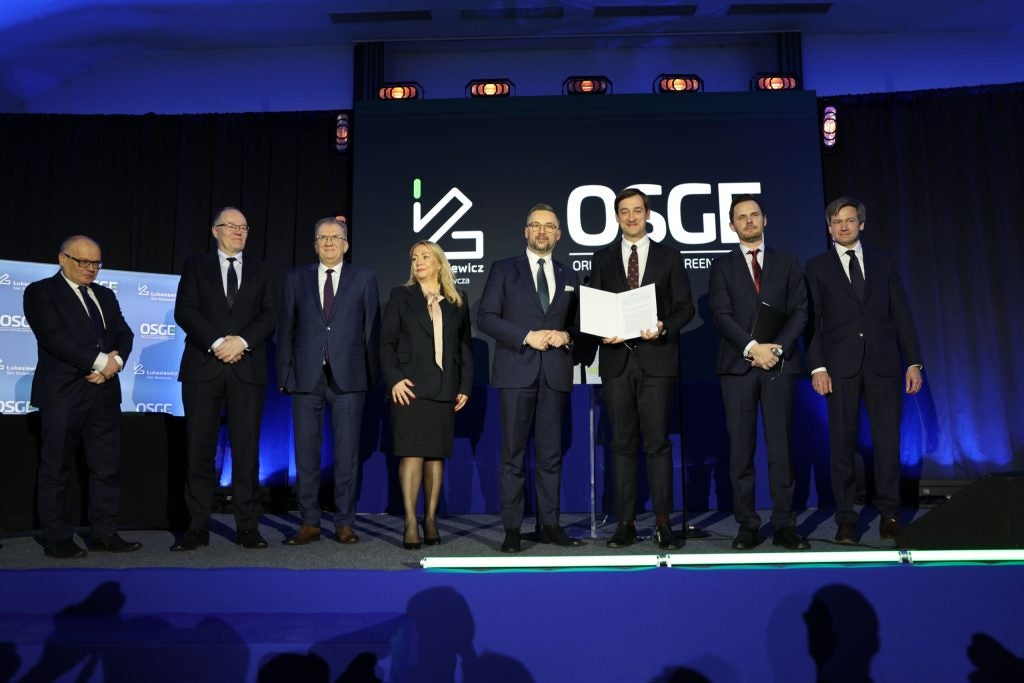
Earlier in 2026, for instance, the Łukasiewicz Research Network and ORLEN Synthos Green Energy launched a collaboration to establish and jointly operate a nuclear energy training centre for the construction of SMRs in Poland. Set to be located at the Łukasiewicz–Electrotechnical Institute in Warsaw’s Wawer district, the training centre will support the development of personnel to safely operate a fleet of GE Vernova Hitachi Nuclear Energy BWRX-300 reactors, which OSGE plans to build. As well as a training centre and an SMR reactor simulator, the facility will also serve as a hub for information, training, and educational programmes for the European market. The cooperation will include constructing and equipping the training centre for which the Łukasiewicz Research Network will provide specialised scientific and technical personnel.
“We see this partnership as a real opportunity to train specialists, validate and certify technologies in line with international safety standards, and create innovations that will strengthen the Polish economy. Together, we aim to develop a sustainable ecosystem of competencies that will facilitate the effective and responsible execution of our nuclear programme and promote the country’s energy transition,” said Bartosz Fijałkowski, Vice President of ORLEN Synthos Green Energy, commenting on the deal in a statement. This training agreement followed on from a similar deal between ABB and SimGenics who plan to collaborate on simulator-based training for the nuclear sector in North America.
A recent Memorandum of Understanding (MoU) between the two companies will support the development and provision of engineering, training and distributed control system (DCS) simulators for the nuclear energy industry, primarily in North America with a particular focus on greenfield developments including complete plant process model and simulation across SMR and advanced reactor facilities, as well as conventional large nuclear power plants. The simulators can also be used onsite at operational nuclear power plants as engineering and training systems. ABB will supply automation, electrification and digitalisation solutions to non-critical areas of nuclear facilities, as well as long-term service support, while SimGenics will provide engineering, training and DCS check-out simulators to develop dynamic process models that mimic the behaviour of various types of nuclear power plants. An ABB simulator can then integrate these process models within control system infrastructures, to create a realistic simulator. As Per Erik Holsten, President of ABB’s Energy Industries division, noted: “Comprehensive simulation and training capabilities will be crucial to enable capacity growth in nuclear power as part of the future energy ecosystem.”
The collaboration comes as both US and Canadian governments are implementing policy frameworks to stimulate the deployment of nuclear energy. In Canada, for example, the government has created the Canada SMR Action Plan to drive development, demonstration and deployment of SMRs while GE Vernova Hitachi’s first BWRX-300 is already under construction at Ontario Power Generation’s Darlington site in Canada, with completion expected by the end of the decade.
Beyond Europe and North America and in regions where nuclear power is still an emerging force, training is also ramping up, building the knowledge and experience that policymakers and regulators will need to engage with SMR technologies as they hit the market. Africa, for example, is working to build training and skills in reference to the potential for SMR development in the continent through an initiative from the International Atomic Energy Authority (IAEA). Launched last year to inform governments, regulators and industry players about SMRs and their potential role in the energy mix, the programme serves to allow senior figures to familiarise themselves with the technology and the issues associated with its use. Dohee Hahn, IAEA SMR Platform Coordinator, explains: “The new IAEA SMR School aims to fill a critical gap for countries in better understanding the array of issues involved in the development and deployment of this promising new technology.”
The first SMR workshop was hosted by the government of Kenya and took place in Nairobi. With a focus on African countries, the participants included officials, policy makers and managers of organisations implementing nuclear programmes in Kenya, Ghana, Niger, Nigeria, Uganda and Zambia. The sessions covered key aspects of SMRs, including technology development and demonstration, legal frameworks, stakeholder engagement, and safety, security and safeguards.
“Kenya recognises the critical role of SMRs in bridging gaps in clean and affordable energy access, supporting industrial growth, and complementing our renewable ambitions. This school serves as a catalyst, equipping our technical teams, regulators, and future leaders with the expertise required to navigate the complexities of nuclear technology deployment responsibly and efficiently,” said Serah Esendi, Acting CEO of the Nuclear Power and Energy Agency (NuPEA) of Kenya.
In Africa, nuclear power is already expanding with Egypt building its first plant and South Africa planning to expand capacity but many more African countries are exploring the potential role of SMRs in their energy mix.
Future SMR Schools are also planned for Asia and Latin America. Thailand will host a school in July with participants from Azerbaijan, Cambodia, Estonia, Jordan, Kazakhstan, Kuwait, Malaysia, Mongolia, Saudi Arabia, Thailand and Uzbekistan. The Latin America session will take place in August with participants from Argentina, Bolivia, Brazil, Colombia, the Dominican Republic, El Salvador, Guatemala, Jamaica, Paraguay and Peru.
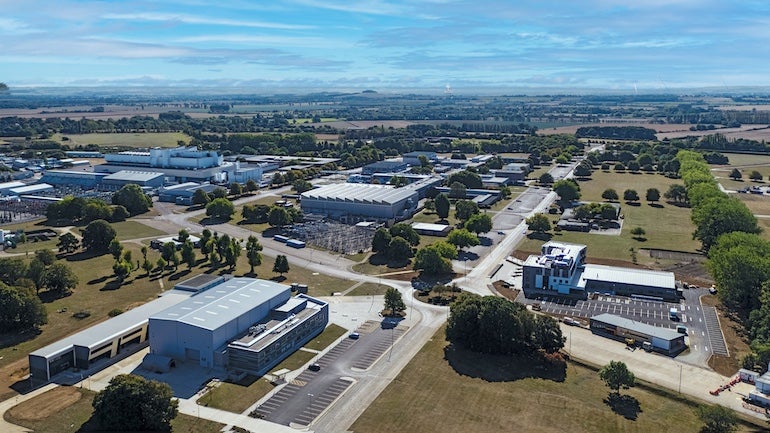
While SMRs are clearly a near-term prospect with units already under construction and with multiple designs deep in the process of regulatory approval, fusion is also coming under scrutiny in terms of development of training and simulation services. For examole, Bilfinger has been appointed by the UK Atomic Energy Authority (UKAEA) to create a virtual control room and digital simulator for a tritium fuel cycle facility at the Culham Campus in Oxfordshire. Tritium recovery and re-use will play a key role in the supply of fusion fuel and will be crucial in making the technology increasingly efficient. The UKAEA-Eni H3AT Tritium Loop Facility is a tritium research centre that gives industry and academia the chance to study how to process, store and recycle tritium. The platform will allow future engineers to train for a range of situations that wouldn’t be possible in the real world, which in turn provides UKAEA with the ability to build a digital library of training scenarios. The system also allows UKAEA to simulate potential changes to the plant’s operating parameters and any possible knock-on effects, allowing it to optimise processes. Furthermore, it will be used to showcase the potential of fusion to other stakeholders.
Stephen Wheeler, Executive Director for Fusion Technology and Tritium Fuel Cycle, at UKAEA, said: “By creating this digital control room with the support of Bilfinger, we’re increasing technical capability and supporting industry to deliver the mechanisms that will serve fusion in the future. The development provides an unprecedented opportunity to train the next generation of fusion engineers through cutting-edge virtual simulation technology.
In a related development, the UKAEA and the Manufacturing Technology Centre (MTC) have also launched a new fusion apprenticeships programme, expanding their nuclear training offer at the Oxfordshire Advanced Skills (OAS) Training Centre at Culham. The new apprenticeships are designed to reflect the realities of the fusion workplace with apprentices benefitting from hands-on experience. The initiative is supported by UKAEA’s Fusion Opportunities in Skills, Training, Education & Research (FOSTER) programme, which is part of the UK government’s Fusion Futures investment scheme to develop a strong, sustainable skills pipeline for the UK. Commenting Chris Rooum, Business Development Director at MTC Training, said: “As the country undergoes a nuclear renaissance and starts to introduce a new generation of nuclear power technologies, demand for skilled professionals in this sector is expected to rise even further. By collaborating with UKAEA to design and offer these apprenticeships, we can provide the industry with a future workforce to support the clean energy transition.”
It is clear that virtual engineering and training simulators serve as environments where solutions and scenarios can be tested and refined in a safe way. That will ultimately enable the nuclear workforce and those in adjacent fields to develop the necessary skillsets to reduce risk, prevent failures and unplanned shutdowns, and identify potential operational issues early on, even as new nuclear technology emerges.


