

Over recent decades human societies at global scale have been increasingly characterised by ever-greater size, interconnectedness and complexity. This ‘direction of travel’ for the world is commonly described positively in terms of technological gains, economic growth and general progress, but an alternative and more cautionary perspective recognises that it may also introduce risk. This is because increasing rates of change and interconnectedness, along with growing and evolving hazards, stressors and threats of different types, are driving a generalised increase in ‘systemic risk’.
Systemic risks are defined as those which may arise from the unique features and behaviours characteristic of ‘complex systems’. These types of systems differ from simple and complicated systems in that they comprise very large numbers of deeply networked actors or ‘nodes’ (for example people, companies, species) which interact through phenomena such as feedback loops and emergence, and produce characteristic nonlinear, dynamic and unpredictable behaviours and outputs. Complex systems are widely distributed in both natural and human contexts, such as the climate system and ecosystems, and the internet and the global economy. They in turn drive a range of phenomena we are familiar with in everyday life such as the weather and the viral spread of ‘memes’.
Any disruptions to a given complex system that affect the function and operation of that system may be described as a ‘crisis’. The capacity and tendency for crises to grow and spread within and/or between different systems is central to ‘systemic risk’. Where crises may interact in time and space to generate rapidly escalating and cascading effects greater than their contributing parts, this may be labelled as a ‘polycrisis’. This concept, which has seen increasing use in recent years, has no singular definition but the specialist research body The Cascade Institute (based at Royal Roads University) suggests: “A global polycrisis occurs when crises in multiple global systems become causally entangled in ways that significantly degrade humanity’s prospects. These interacting crises produce harms greater than the sum of those the crises would produce in isolation, were their host systems not so deeply interconnected”
Systemic risk and polycrisis differ in that the former describes the potential for crises to occur, and the latter the realisation of that risk. Polycrisis also describes the tendency for disruptions to ‘spill over’ within and between systems. which ‘activates’ the properties of systemic risk and generates characteristic escalatory and spreading effects. Where this occurs, a crisis may cause cascading ‘layers’ of first, second and nth order effects. Taking the example of human greenhouse gas emissions, increasing storm frequency/intensity in a given region may be the first order effect of these accumulated emissions; the resultant damage to infrastructure the second order effect; the breakdown of supply chains from this damage the third; and all other consequent societal disruptions – such as shortages of goods – the nth order effects.
Modern complex societies have become wholly reliant on multiple extensively interlinked systems. Examples include energy, food/agriculture, water, finance, and their interlinking supply chains. Such systems acquire, process, distribute and make use of stocks and flows of essential commodities, materials and data to keep everything continuously operational. These key supporting systems have become increasingly densely interconnected and interdependent in the characteristic manner of complex systems. They therefore foster the ideal conditions for the development of systemic risk and therefore crises and nth order impacts, which could potentially evolve into a polycrisis if disruptions become ‘runaway’.
The range of potential hazards sources (or vectors) which may cause crises and drive systemic risk in the contemporary world is very large. These may be biophysical/natural phenomena or socio-economic and/or technological in nature and may occur at different scales of time and space. Some of the key hazard vectors in the contemporary world include natural phenomena such as Climate change; Biodiversity loss; Resource depletion; Pollution and toxification; Epidemics and pandemics, and; Demographic changes. Anthropogenic impacts may include Technological change (e.g., AI); Financial system instability; Inequality; Mis-/Dis-information; Political polarisation and unrest, and; Great power rivalry and conflict
Historical context
There are many well-known historical events that arose from the realisation of systemic risk, with many of the most severe examples occurring from the industrial era onwards. As new technologies appeared and societies grew in magnitude, interconnectivity and complexity increased in turn, raising the scope for more severe disruptions, and for runaway polycrisis scenarios to become a more credible possibility. There has likely not been an historical event which could be described as a ‘true’ polycrisis at global scale, but several past events have exhibited characteristic escalating and compounding behaviours which could be described as ‘near-polycrisis’.
The Global Financial Crisis of 2007-2009 is a key recent example. In the years before the crisis, stresses built up through increasing global financial institution interdependencies, and the increasing prevalence of opaque financial instruments secured against risky loans – notably ‘subprime’ mortgages in the United States. The crisis was triggered by widespread loan defaults, the collapse of major financial institutions – famously Lehman Brothers, for example – and the rapidly escalating feedbacks between these events. Finance had become increasing networked and linked to all economic activity in the decades leading to these events, which made this a truly systemic crisis once it was triggered. Escalation to a full global polycrisis was only averted by rapid government interventions in the form of large financial bailouts, quantitative easing and interest rate reductions.
Systemic risk and the nuclear industry
Systemic risk and its consequences are applicable to the global nuclear industry. The first step in demonstrating this is to contextualise this industry in systemic terms as a singular, coherent and discrete system. This is itself a complex system that is also deeply entangled with a range of other global-scale complex systems. The nuclear system comprises the aggregate of nuclear installations and their supporting technology and infrastructure that operates beyond national and other boundaries. It is a technological and organisational system made up of varied and deeply interconnected subsystems which provide key functions like highly specialised and specific materials, components, people/skills, and data, operating at different scales, and nested within each other.
This system operates within the wider socio-political-technological global human system which comprises all parts of civilisation at global scale. This in turn operates within the Earth system comprising natural systems – the atmospheric, oceanic, and geologic systems, and the global biosphere – that underpin everything. At the smallest scales, the nuclear system comprises the nodes of nuclear technology themselves such as reactor and reprocessing sites, fuel fabrication and waste management facilities. At the wider scale is the dispersed infrastructure which underpins and supports nuclear technology such as mines, manufacturing facilities, data centres, and supply chains. At larger scales is the key supporting national infrastructure and institutions including power and water grids, treasuries, and regulatory bodies. And, at the largest scales is international governance and institutions that allow and coordinate the function of key global systems, such as the UN, IAEA, and WTO.
The extensive interconnections, mutual dependencies and reliance between the nuclear system and these other systems distributed nationally and globally is the origin of systemic risk in this context. Any failures, degradation or disruptions to the scope, nature or continuity of these supporting functions has scope to cascade into the key functions of the nuclear system, potentially affecting its ability to operate safely and efficiently. Systemic risks could apply through a large range of direct and indirect connections, arising from different vectors operating at different scales of time and space. The nuclear system is also distinct amongst technological systems in that it has inherent and unique vulnerabilities and exposures – as well as strengths and resiliencies – to systemic risks and potential future polycrisis scenarios.
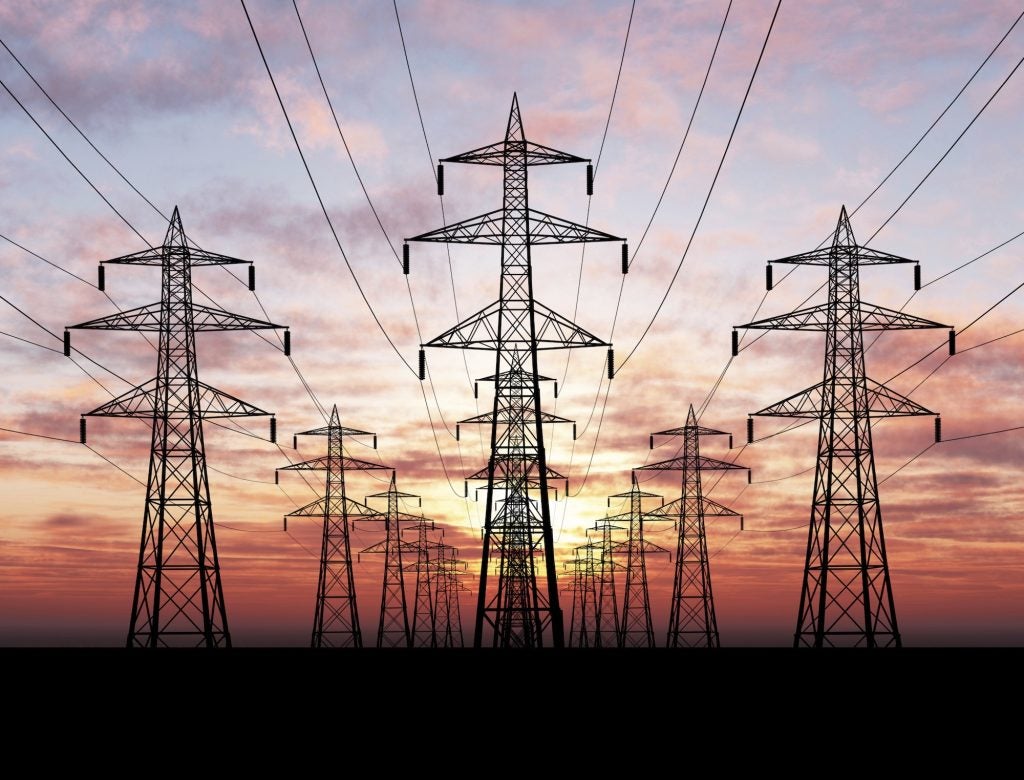
Features that could provide strengths and resiliencies to systemic risks include the high integrity nature of nuclear infrastructure; systems, structures and components are designed and constructed to withstand underpinned design basis events. Similarly, quantified risk assessment frameworks, emergency planning and rigorous operating standards are enforced by competent regulators.
Conversely, vulnerabilities and exposures include the very high complexity and non-fungibility of nuclear technology; systems, structures and components rely on specialised processes such as manufacturing that cannot be readily interchanged without impacting efficiency and safety. Furthermore, many nuclear facilities require active hazard management and continuous active supervision and interventions to prevent loss of control and containment of nuclear materials.
It is the balance and interplay of these resiliencies and exposures, and how this may shift in response to evolving systemic risks, that will determine how the nuclear system may be affected in future. A fundamentally key aspect of this is that the effects of systemic risks and polycrisis could manifest directly and/or indirectly at nuclear sites. For example, a severe storm may directly impact a nuclear site through damage to structures within the site footprint, but this same event may also act on wider societal systems by damaging transport infrastructure or power grids remote from the site. This could impact on the nuclear site (potentially in addition to the direct damage it experiences) via loss of access to key supplies, commodities and personnel, for instance.
Additionally, the nuclear system may have a unique role in the wider human system in that it dampens some large-scale systemic risks, for example through the greenhouse gas emissions it averts which reduces the severity of overall climatic changes. However, it also has the potential to compound polycrisis scenarios, for example a nuclear accident induced by the nth order effects of a polycrisis scenario could exacerbate that situation.
Nuclear industry response to systemic risk
The world is increasingly shifting towards a future general ‘risk environment’ characterised by volatile, uncertain, complex and ambiguous (VUCA) conditions. Combined with the multiple, highly visible disruptive global events of recent years, this supports the conclusion that systemic risks are likely to rise in prevalence and likelihood. Given their potential exposure and vulnerability to systemic risks, the nuclear operators, regulators and other stakeholders have a responsibility to develop an understanding of the scope of new and potentially novel hazards. This may also provide the opportunity for the industry to ‘get ahead of the curve’ in anticipating and understanding how these hazards might apply, before impacts potentially start to accumulate.
Nuclear industries around the world have extensive and robust risk management and emergency planning frameworks for different hazards which were developed in, and have proven effective in, the relatively ‘steady state’ world of the past. However, as existing hazards change and new ones develop, the existing basis of nuclear risk assessment could be increasingly challenged in future by multiple, novel, complex, disparate and indirect hazards relating to systemic risks. There may therefore be a need to review, update and optimise existing frameworks and approaches to better respond to evolving hazards. This may include changing mindsets regarding coincident and combined faults and common cause failures, and challenging assumptions around the levels of self-sufficiency that nuclear sites should seek to achieve under emergency conditions.
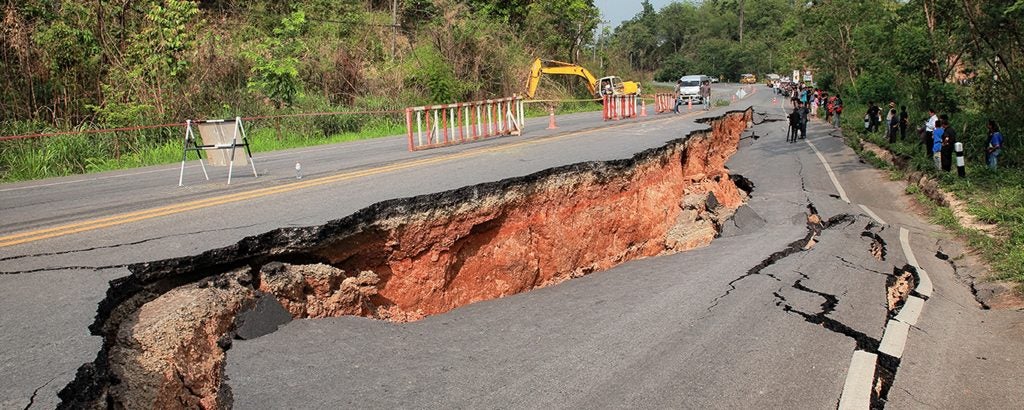
The range of events and consequences that could emerge from systemic risk and polycrisis are vast and highly uncertain. Therefore, the basis of assessing these hard-to-quantify possibilities should be around underpinned qualitative scenarios which allow credible large-scale events to be causally linked to specific and bounded effects on sites and their specific features. More specifically, a large range of events occurring in the wider societal setting would likely ‘funnel down’ to a smaller subset of consistent, bounded impacts such as the ‘islanding’ of nuclear sites from key systems and commodities. That could then allow events to be ‘translated’ into impacts to systems, structures and components at given nuclear sites. This approach may be best undertaken using interactive digital and visualisation approaches and tools, which could be made available to nuclear operators, regulators, governments and other stakeholders to help assess and identify site-specific risks.
Reflecting on risk
Modern global society has reached unprecedented levels of size, interconnectedness and complexity, but has also experienced a rise in instabilities and challenges. The extreme interdependence between the global systems has increased systemic risks, and polycrisis has emerged as a concept which captures how this situation may evolve. Together, these ideas provide an incisive means to describe this growing global predicament.
It is possible that the current global trend towards instability may spontaneously ‘simmer down’, but historical evidence and contemporary analysis suggest this cannot be assumed. In any case, the precautionary principle should drive a responsible industry to prepare for disruptive conditions to extrapolate. If nuclear technology is to continue to play a critical role, this will need to be addressed. Approaches and tools that will help all parts of the nuclear system understand the potential future impact of systemic risk and polycrisis are in the early stages of development. There is, nonetheless, an increasingly urgent need to further develop and then apply these tools to make the industry robust to future risks whilst also keeping safe the societies in which it operates.
Systemic risk and polycrisis may present some profound challenges for the world in future and given that the global nuclear industry likely has linkages and exposure to systemic risks, there is an increasingly urgent need for the industry to recognise this. Although a future defined by rising levels of disruption and uncertainty is not an easy or pleasant subject to consider, downplaying or ignoring such risks will not benefit the industry; an analogy may be that an individual would not ignore or disparage a serious medical diagnosis, even if the symptoms weren’t yet apparent. There is no time like the present to start addressing this situation, and success in this sphere will be an enabler towards building safer and more sustainable societies fit for the future, with nuclear power playing a key role.


