
As the Ninh Thuận nuclear plants break ground, they signal a strategic shift in Vietnam’s energy landscape, boosting baseload power, cutting emissions, and advancing technology for decades ahead.
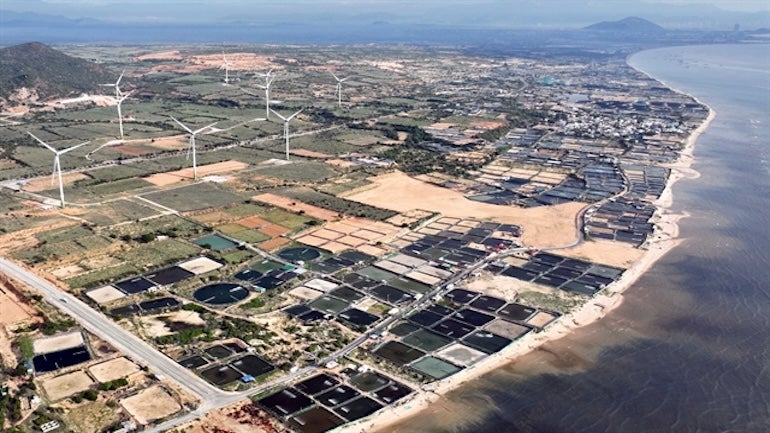
Vietnam’s nuclear project comprises two nuclear plants – Ninh Thuận 1 and 2. It has now cleared key legal and policy hurdles. Khánh Hòa Province is racing to prepare infrastructure and clear land for the project. Since the beginning of this year, following the Government’s assignment for land clearance, Khánh Hòa has undertaken a series of urgent measures to ensure the land for the two NPPs is ready by 31 December.
In April, Prime Minister Phạm Minh Chính officially assigned the Vietnam Electricity Group (EVN) and the Vietnam National Oil and Gas Group (Petrovietnam) as investors, while delegating the province to manage resettlement and land clearance. The province has coordinated closely with the investors, reviewing and adjusting prior preparations to stay on schedule.
Khánh Hòa has established a provincial steering committee and specialised teams to survey land, population, and infrastructure in the project areas. The authorities have made progress transparent and addressed obstacles promptly to ensure timely handover.
The total land to be prepared for Ninh Thuận 1 and 2 exceeds 1,130 hectares, affecting 1,153 households with 5,229 residents. The estimated cost for land clearance, relocation, resettlement, and livelihood stabilisation stands at VND12,392bn ($469m), of which the central government has so far allocated VND3,236bn. Ninh Thuận 1 will be built in Phước Dinh Commune on 485.54 hectares and Ninh Thuận 2 in Vĩnh Hải Commune on 643.6 hectares.
Vice-chairwoman of Vĩnh Hải Commune Đào Thị Loan said land clearance was a complex task, affecting hundreds of households, various types of land and even sections of Núi Chúa National Park. She added that the commune was working closely with residents to address concerns promptly and prevent any information gaps.
Since May, task forces from the Government and inter-ministerial teams, including the Ministries of Finance, Industry & Trade, and Science & Technology, have worked with Khánh Hòa Province to resolve issues around funding, resettlement policies, clean land handover and technical preparation.
The province has committed to issuing detailed land price approvals by October and completing verification and public notices in both communes by the fourth quarter of the year. Resettlement areas will be fully equipped with schools, health stations, and cultural facilities, ensuring residents enjoy improved living conditions.
Hồ Xuân Ninh, Director of the Khánh Hòa Department of Industry and Trade, said that land clearance still faced obstacles due to legal issues, as nuclear safety distance regulations had not yet been standardised. Limited manpower at the commune level has slowed the processing of documents, especially following administrative unit reorganisation, while central government funding remained insufficient.
The province has proposed adjustments to accelerate procedures and ensure sufficient legal and financial support. National Assembly officials have pledged continued support, facilitating special mechanisms for land, finance, and resettlement to ensure smooth implementation. Provincial People’s Committee Vice-Chairman Trịnh Minh Hoàng confirmed that the province would mobilise maximum resources to hand over clean land to investors by 30 December.
Nuclear power in Vietnam began with the 250 kW TRIGA Mark II research reactor in Đà Lạt in 1963, laying the foundation for domestic nuclear training and research. After a pause, during the Vietnam war, the reactor was restored in 1984 with Soviet support, doubling its capacity to 500kW and training hundreds of engineers and researchers.
In 2009, the National Assembly approved investment in the Ninh Thuận nuclear power project, planning two plants with a combined capacity exceeding 4,000 MWe. However, economic and financial difficulties led to a temporary suspension in 2016, although nuclear research continued, maintaining a skilled workforce and preserving decades of expertise.
At the end of 2024, the National Assembly officially restarted the nuclear programme with Resolution 174/2024/QH15. The Government’s subsequent Resolution 70/NQ-CP outlined clear steps for preparation, emphasising mastery of nuclear technology, absolute safety, workforce development and international technology transfer.
The National Power Development Plan VIII recognises nuclear power as a strategic resource for long-term stable operations and a key contributor to achieving net-zero emissions by 2050.
A training programme has been mapped out to 2035 to prepare some 3,900 personnel for the two NPPs. It covers basic, university, and postgraduate levels, with trainees to gain practical experience at the Đà Lạt reactor and at partner facilities abroad, leading to certification in nuclear operation. Collaboration with EVN, Petrovietnam, universities, and organisations, such as the International Atomic Energy Agency, ensures up-to-date exposure to Generation III+ technologies and small modular reactors (SMRs).


