
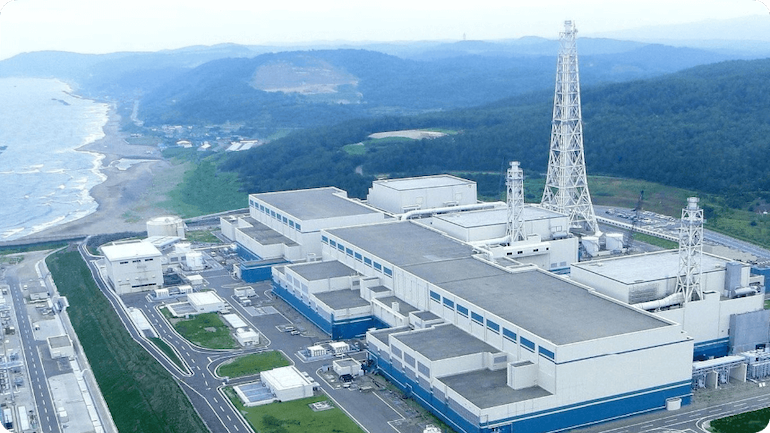
Tokyo Electric Power Company Holdings (Tepco) is to review and delay its August 2029 completion target for the mandatory anti-terrorism facility at unit 7 of the Kashiwazaki-Kariwa NPP in Niigata Prefecture. This setback pushes back the 1,356 MWe advanced boiling water reactor’s (ABWR’s) planned restart, which cannot legally occur until the structure is finished.
The construction contractor informed Tepco that the timeline needs to be extended by more than a year due to labour shortages, site conditions, and an inability to execute planned parallel work. Additionally, Tepco discovered a concrete flaw in September – specifically an uneven finish and inadequate concrete strength in part of a main structure – which requires a detailed cause investigation and repair.
Plant superintendent Takeyuki Inagaki stated it is too early to set a firm new schedule, although Tepco now aims to finish the facility by April 2031.
The anti-terrorism facility, officially termed a “specified severe accident response facility” is a hardened structure mandated by Japanese regulators following the 2011 Fukushima disaster. It is designed to house backup cooling and depressurisation equipment capable of withstanding a deliberate large aircraft crash.
The plant’s unit 6 ABWR resumed commercial operations in April 2026. However, its own anti-terrorism facility is also still under construction and faces a strict regulatory deadline of April 2031, otherwise it will be forced to shut down.
Japan approved the restart of Kashiwazaki-Kariwa 6 in November 2025. It had been closed for more than a decade since the 2011 Fukushima disaster. Although Kashiwazaki-Kariwa was unaffected by the March 2011 earthquake and tsunami all seven of the plant’s boiling water reactors (BWRs) had been offline for two to three years following the earlier 2007 Niigata-Chuetsu earthquake, which caused damage to the site.
Work has since been carried out to improve the plant’s earthquake resistance. Tepco applied for Nuclear Regulation Authority (NRA) approval of its design and construction plan for Kashiwazaki-Kariwa units 6&7 in 2013.
Tepco submitted information on safety upgrades across the site and at those units, which began commercial operation in 1996 and 1997 and were the first Japanese BWRs to be considered for restart. NRA cleared the safety screenings in 2017 but security breaches and delays in completing safety upgrades caused delays.
Kashiwazaki-Kariwa is the world’s largest nuclear power station by capacity and serves the Tokyo metropolitan area. However, units 1-5 – older design BWRs – are not expected to restart and are scheduled for decommissioning. Delaying Unit 7’s return prolongs Japan’s reliance on thermal power and liquefied natural gas (LNG) imports amid tight global supplies.
Separate from the concrete issue, Tepco temporarily suspended all construction across the Kashiwazaki-Kariwa site to review safety protocols following a fatal accident on 22 November, in which a contractor died while working on a new office building.


